Best Moisturizer for Acne Prone Skin: 10 Non-Clogging Picks Dermatologists Trust
Many people with acne skip moisturizer because they worry it will make breakouts worse. That is one of the most common skincare mistakes. When skin gets too dry, it can produce more oil to compensate, which may lead to more clogged pores. Acne treatments like benzoyl peroxide, salicylic acid, and retinoids also dry and irritate skin, and a good moisturizer helps you tolerate them.
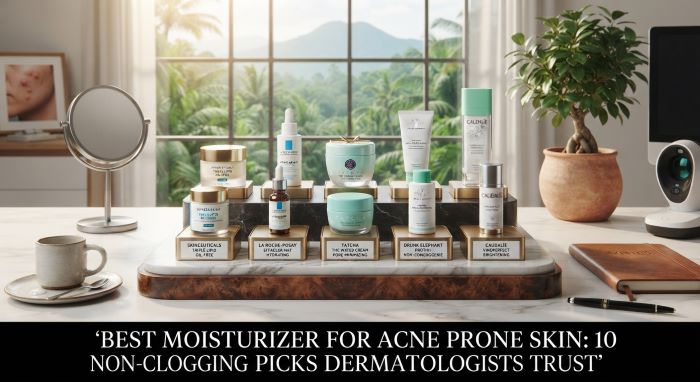
The key is choosing the right formula. You want a moisturizer that hydrates without clogging pores, calms irritation, and supports the skin barrier. This guide lists 10 specific products, compares them side by side, and explains how to choose the best moisturizer for acne prone skin for your skin type and routine.
What to Look For
Non-comedogenic label: This means the formula is designed not to clog pores. It is the most important thing to check.
Oil-free or lightweight texture: Gel and gel-cream textures absorb quickly and feel lighter on oily skin.
Barrier-supporting ingredients: Ceramides, fatty acids, and cholesterol help repair a damaged skin barrier.
Humectants: Hyaluronic acid and glycerin draw water into skin without adding oil.
Soothing ingredients: Niacinamide, allantoin, and panthenol calm redness and irritation.
Gentle actives (optional): Some moisturizers include low levels of salicylic acid or zinc to help control breakouts.
Ingredients to Avoid or Use With Caution
- Heavy oils like coconut oil and cocoa butter can clog pores for many people.
- Fragrance can irritate sensitive, acne-prone skin.
- Isopropyl myristate and some heavy esters are known to be comedogenic.
- Drying alcohols high on the ingredient list can irritate skin.
Everyone’s skin is different, so a product that works for one person may not work for another. Patch testing helps you find what your skin tolerates.
Comparison Table: Best Moisturizer for Acne Prone Skin
| Product | Texture | Key Ingredients | Approx. Price | Best For |
|---|---|---|---|---|
| La Roche-Posay Toleriane Double Repair Face Moisturizer | Lightweight lotion | Ceramides, niacinamide, prebiotic thermal water | around $23 | Best overall, sensitive skin |
| CeraVe PM Facial Moisturizing Lotion | Light lotion | Ceramides, niacinamide, hyaluronic acid | around $17 | Nighttime, budget |
| Cetaphil Gentle Clear Mattifying Moisturizer | Matte lotion | Salicylic acid, PHA, zinc | around $7 to $15 | Oily skin with active breakouts |
| Neutrogena Hydro Boost Water Gel | Gel | Hyaluronic acid | around $20 | Oily skin, lightweight hydration |
| EltaMD UV Clear SPF 46 | Light lotion | Niacinamide, zinc oxide | around $43 | Daytime sun protection |
| Paula’s Choice Clear Oil-Free Moisturizer | Light lotion | Niacinamide, antioxidants | around $34 | Acne-focused routines |
| Vanicream Daily Facial Moisturizer | Light cream | Ceramides, squalane, hyaluronic acid | around $15 | Very sensitive skin |
| Differin Oil Absorbing Moisturizer SPF 30 | Matte lotion | Oil-absorbing agents, SPF | around $15 | Pairing with retinoids |
| Clinique Dramatically Different Moisturizing Gel | Gel | Hyaluronic acid, cucumber extract | around $32 | Combination and oily skin |
| Illiyoon Ceramide Ato Concentrate Cream | Rich cream | Ceramides, fatty acids, cholesterol | around $27 | Dry, irritated skin from acne treatments |
1. La Roche-Posay Toleriane Double Repair Face Moisturizer
La Roche-Posay’s Toleriane Double Repair is a dermatologist favorite for acne-prone and sensitive skin. It contains ceramides to restore the skin barrier, niacinamide to calm redness, and prebiotic thermal water to soothe irritation. It is oil-free, fragrance-free, and non-comedogenic.
Its balanced weight works for both day and night, and it layers well under sunscreen and makeup. Many dermatologists consider it the best moisturizer for acne prone skin because it pairs so well with acne treatments.
2. CeraVe PM Facial Moisturizing Lotion
CeraVe PM is a lightweight, oil-free lotion made with three essential ceramides, niacinamide, and hyaluronic acid. It hydrates without feeling heavy and supports the skin barrier overnight.
It is affordable and widely available. It is an excellent choice for nighttime, especially if you use retinoids that can cause dryness.
3. Cetaphil Gentle Clear Mattifying Moisturizer
Cetaphil’s Gentle Clear line is designed for acne-prone skin. This mattifying moisturizer includes salicylic acid, a gentle polyhydroxy acid, and zinc to help clear pores and control shine. It leaves a matte finish, which suits oily skin.
It is one of the most affordable options on this list. It is a smart pick for people with oily skin and active breakouts.
4. Neutrogena Hydro Boost Water Gel
Neutrogena Hydro Boost Water Gel uses hyaluronic acid to deliver lightweight hydration in a fast-absorbing gel. It feels refreshing and does not leave a greasy residue.
It is ideal for oily and combination skin that needs hydration without heaviness. Choose the fragrance-free version if your skin is sensitive.
5. EltaMD UV Clear SPF 46
EltaMD UV Clear is a sunscreen and moisturizer in one, and it is one of the most recommended sunscreens for acne-prone skin. It contains niacinamide to calm inflammation and zinc oxide for broad-spectrum protection.
Sun protection is essential when using acne treatments, which can make skin more sensitive to sunlight. Using a moisturizing sunscreen simplifies your morning routine.
6. Paula’s Choice Clear Oil-Free Moisturizer
Paula’s Choice designed this moisturizer as part of its Clear acne line. It is lightweight, oil-free, and contains niacinamide and antioxidants to calm redness and support skin health.
It works well alongside Paula’s Choice BHA exfoliants and other acne treatments.
7. Vanicream Daily Facial Moisturizer
Vanicream is known for products made without common irritants like fragrance, dyes, lanolin, and parabens. The Daily Facial Moisturizer contains ceramides, squalane, and hyaluronic acid in a gentle, non-comedogenic formula.
It is a top choice for very sensitive skin that reacts to many products.
8. Differin Oil Absorbing Moisturizer SPF 30
Differin, known for its over-the-counter adapalene gel, makes this moisturizer to pair with retinoid treatment. It absorbs excess oil, provides SPF 30 protection, and has a matte finish.
It is a convenient morning moisturizer for anyone using Differin gel at night.
9. Clinique Dramatically Different Moisturizing Gel
Clinique’s gel version of its classic moisturizer is oil-free and lightweight. It contains hyaluronic acid and cucumber extract and absorbs quickly.
It is a popular choice for combination and oily skin types who want a simple, reliable daily moisturizer.
10. Illiyoon Ceramide Ato Concentrate Cream
This Korean moisturizer is richer than most on this list, which makes it ideal for acne-prone skin that has become dry and irritated from treatments. It contains ceramides, fatty acids, and cholesterol to rebuild the skin barrier without feeling greasy.
Use it at night or during winter when skin needs extra repair.
Matching a Moisturizer to Your Skin Type
Oily skin: Choose gels or mattifying lotions, like Neutrogena Hydro Boost, Cetaphil Gentle Clear, or Clinique’s moisturizing gel.
Combination skin: Lightweight lotions like La Roche-Posay Toleriane Double Repair or Paula’s Choice Clear work well.
Dry, acne-prone skin: Richer barrier creams like CeraVe PM, Vanicream, or Illiyoon provide moisture without clogging pores.
Sensitive skin: Fragrance-free formulas like Vanicream and La Roche-Posay reduce irritation.
The best moisturizer for acne prone skin always depends on your specific skin type, so start with your skin’s needs rather than a product’s popularity.
Building an Acne-Friendly Routine
Morning:
- Gentle cleanser
- Acne treatment if prescribed for morning use
- Moisturizer
- Sunscreen, or a moisturizer with SPF
Evening:
- Gentle cleanser
- Acne treatment like a retinoid, salicylic acid, or benzoyl peroxide
- Moisturizer
If your acne treatment causes dryness, try the sandwich method. Apply a thin layer of moisturizer, then your treatment, then another layer of moisturizer. This buffers irritation while still letting the treatment work.
Adding Targeted Treatments
A good moisturizer supports your skin, but many people with acne also benefit from targeted treatments once or twice a week. Clay masks absorb excess oil, sulfur masks calm breakouts, and niacinamide masks reduce redness. The best face masks for acne can complement your daily moisturizer, especially if you apply them only to oily or breakout-prone areas and follow with moisturizer afterward to prevent dryness.
Starting a Skincare Routine as a Beginner
If you are new to skincare, the options can feel overwhelming. Start simple with a gentle cleanser, a non-comedogenic moisturizer, and sunscreen. Add acne treatments one at a time so you can see how your skin reacts.
Drugstore brands are a great starting point, since many offer affordable, well-tested products. Beginners often compare brands like Nivea and Garnier, and it helps to understand whether Nivea is a good starting brand compared to Garnier. For acne-prone skin specifically, check each product’s label for “non-comedogenic” and “oil-free,” since some classic moisturizers from general skincare brands are richer than acne-prone skin needs.
Does Moisturizer Cause Breakouts?
Many people blame moisturizer for breakouts, but the product is rarely the only cause. Acne develops when oil, dead skin cells, and bacteria clog pores and trigger inflammation. Hormones, stress, genetics, diet, and certain medications all play a role.
A heavy or comedogenic moisturizer can contribute to clogged pores, but a non-comedogenic formula usually does not. In fact, a damaged skin barrier from over-cleansing or harsh treatments can make acne worse. When skin is irritated, it becomes inflamed more easily. The best moisturizer for acne prone skin helps calm that inflammation and restore balance, which can make breakouts less frequent over time.
Day vs. Night Moisturizers
Your skin has different needs in the morning and at night.
Daytime: Choose a lightweight moisturizer that layers well under sunscreen and makeup, or a moisturizer with built-in SPF like EltaMD UV Clear or Differin Oil Absorbing Moisturizer SPF 30.
Nighttime: Skin repairs itself overnight, and acne treatments are often applied at night. A slightly richer, barrier-repairing moisturizer like CeraVe PM or Illiyoon helps counter dryness from retinoids.
Many people use two moisturizers, one for day and one for night. If you want to keep things simple, a single balanced formula like La Roche-Posay Toleriane Double Repair works well for both.
Seasonal Adjustments
Skin changes with the weather. In winter, cold air and indoor heating can dry skin out, so you may need a richer moisturizer or an extra layer at night. In summer, heat and humidity can make skin oilier, so a lighter gel may feel better. Adjusting your routine with the seasons helps you keep using the best moisturizer for acne prone skin for your needs throughout the year, rather than sticking with one product that only works half the time.
Moisturizer and Makeup
If you wear makeup, moisturizer helps it go on smoothly and prevents flaky patches. Give moisturizer a few minutes to absorb before applying foundation. Choose non-comedogenic makeup, and remove it completely every night with a gentle cleanser. Makeup brushes and sponges collect oil and bacteria, so wash them weekly to reduce breakouts. Pairing clean tools with the best moisturizer for acne prone skin supports clearer skin whether or not you wear makeup.
Lifestyle Habits That Support Clearer Skin
Skincare products work best alongside healthy daily habits. Change your pillowcase two or three times a week, since it collects oil, sweat, and bacteria. Avoid touching your face throughout the day, and clean your phone screen regularly. Wash your face after workouts to remove sweat before it clogs pores. Drink enough water, get regular sleep, and manage stress, since stress hormones can trigger breakouts.
Some people find that certain foods, like high-glycemic foods or dairy, make acne worse. Research is mixed, and triggers vary from person to person. If you suspect a connection, try keeping a simple food and skin diary for a few weeks to spot patterns before cutting foods out entirely.
Finally, resist picking or popping pimples. Picking pushes bacteria deeper into the skin, increases inflammation, and raises the risk of dark marks and scarring. Use a hydrocolloid pimple patch instead to protect the spot while it heals.
Budget vs. Premium Moisturizers
Price does not determine how well a moisturizer works for acne-prone skin. Some of the most recommended options, like CeraVe PM, Cetaphil Gentle Clear, and Vanicream, cost under $20 and are backed by dermatologists. Premium options like EltaMD UV Clear offer added benefits such as high-quality sun protection and elegant textures. Focus on ingredients, texture, and how your skin responds rather than brand prestige. A drugstore moisturizer used consistently will almost always do more for your skin than an expensive product used only now and then. If you want to splurge, spend on sunscreen, since daily sun protection prevents dark marks from lingering after breakouts heal.
How to Patch Test a New Moisturizer
- Apply a small amount to a small area, like behind your ear or along your jawline.
- Use it daily for about a week.
- Watch for redness, itching, or new breakouts in that area.
- If there is no reaction, apply it to your whole face.
New breakouts can take a few weeks to show up, so give a product time before deciding whether it works.
Common Mistakes to Avoid
- Skipping moisturizer entirely. This can lead to dryness, irritation, and even more oil production.
- Using heavy, oily creams. Rich body creams and coconut oil can clog pores.
- Overusing acne treatments. Using too many actives at once damages the skin barrier.
- Skipping sunscreen. Acne treatments increase sun sensitivity, and sun exposure darkens acne marks.
- Switching products too often. Give each product at least four to six weeks to show results.
When to See a Dermatologist
If over-the-counter products do not improve your acne after two to three months, or if you have painful cysts, scarring, or acne that affects your confidence, see a dermatologist. Prescription treatments like topical retinoids, antibiotics, hormonal therapy, or isotretinoin may help. A dermatologist can also recommend the best moisturizer for acne prone skin based on your specific treatment plan.
Choosing Your Moisturizer
For most people, La Roche-Posay Toleriane Double Repair is a safe, effective starting point. For nighttime and budget, CeraVe PM is a trusted classic. For oily skin with active breakouts, Cetaphil Gentle Clear Mattifying Moisturizer helps control shine. For daytime protection, EltaMD UV Clear combines moisture and SPF.
The best moisturizer for acne prone skin hydrates without clogging pores, supports your skin barrier, and works well with your acne treatments. Choose based on your skin type, patch test before full use, and stay consistent.
Key Takeaways
- Skipping moisturizer can make acne worse by triggering dryness, irritation, and extra oil production.
- Look for non-comedogenic, oil-free formulas with ceramides, hyaluronic acid, and niacinamide.
- La Roche-Posay Toleriane Double Repair is a top dermatologist-recommended pick for acne-prone and sensitive skin.
- CeraVe PM is an affordable nighttime choice, and Cetaphil Gentle Clear Mattifying Moisturizer suits oily skin with breakouts.
- EltaMD UV Clear SPF 46 combines moisture and sun protection for daytime use.
- Use the sandwich method if acne treatments cause dryness, and always patch test new products.
- See a dermatologist if acne does not improve after two to three months of consistent care.