I’m a Skincare Beginner. Is Nivea a Good Starting Brand Compared to Garnier?
Starting a skincare routine can feel overwhelming. There are thousands of products, countless brands, and conflicting advice everywhere you look. If you’re a skincare beginner asking “Is Nivea a good starting brand compared to Garnier?”, you’re asking the right question. Both brands are accessible, affordable, and widely available, making them popular entry points for people new to skincare.
The good news is that neither brand will damage your skin if you choose wrong. Both companies have been making skincare products for decades and generally focus on simplicity. The difference comes down to which formulations work better for your specific skin type and what you’re trying to achieve with your routine.
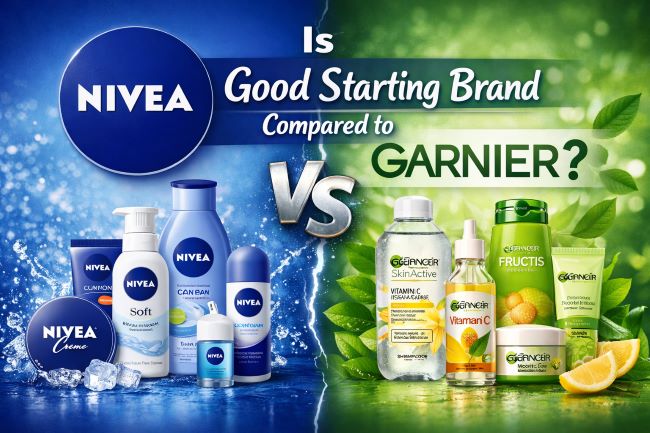
Understanding Both Brands
Nivea and Garnier sit in the drugstore skincare category. Both are owned by large parent companies (Beiersdorf owns Nivea, while L’Oreal owns Garnier). This ownership gives them the resources for research and quality control, but it doesn’t mean they’re inherently better or worse than each other.
Nivea built their reputation on moisturizers, particularly their iconic blue tin. The brand has expanded significantly, but moisturizing remains central to their product philosophy. They focus on hydration and creating products that feel good on the skin without complex ingredients.
Garnier positions themselves as a natural-focused brand. They use more plant-derived ingredients and often highlight botanical components in their formulations. This approach appeals to people seeking alternatives to heavy chemicals, though “natural” doesn’t automatically mean better for skincare.
Both brands price their products similarly, making cost not really a deciding factor between them. You can get excellent products from either brand at drugstore prices.
Key Differences in Product Lines
The biggest difference between the brands shows up in their product approach. Nivea keeps things straightforward. Their moisturizers tend to be rich and protective, working well for people with dry or sensitive skin. The brand doesn’t overcomplicate formulations.
Garnier offers more variety in product types. Their skincare lines branch into different categories based on skin concerns. This variety can help you find something targeted to your specific issues, but it also means making more choices.
Nivea works especially well for:
- Dry skin that needs deep hydration
- Sensitive skin that responds poorly to heavy ingredients
- People who prefer minimal ingredient lists
- Anyone wanting classic, proven formulations
Garnier works especially well for:
- Combination or oily skin types
- People looking for lightweight hydration
- Those interested in botanical ingredients
- Anyone wanting targeted solutions for specific concerns
Starting Your Skincare Routine as a Beginner
Before deciding between Nivea vs Garnier, understand what a basic routine looks like. You don’t need ten products. Most dermatologists recommend starting with:
- A gentle cleanser to remove dirt and oil
- A moisturizer appropriate for your skin type
- Sunscreen for daytime protection
That’s it. Adding more comes later if you want to address specific concerns like acne or aging. Starting simple prevents overwhelming your skin and makes it easier to identify what works for you.
Cleanser Comparison
Nivea offers gentle cleansers that don’t strip your skin. Their products tend toward the creamy side, which works well if you have dry or sensitive skin. The cleansers remove makeup and dirt without leaving your skin feeling tight.
Garnier provides more variety in cleanser types. They offer gel cleansers for oily skin, micellar water for gentle removal, and cream cleansers for dry skin. This range means you can find something closer to your specific needs.
For a skincare beginner, either brand’s cleanser works fine. The real key is choosing a cleanser for your skin type rather than what sounds good. Oily skin needs something different from dry skin.
Moisturizer Comparison
This is where the brands show their strengths more clearly. Nivea moisturizers are famous for being effective and affordable. The classic Nivea Creme works for most skin types, though some people find it too heavy for oily skin. Their moisturizers create a protective barrier that locks in hydration.
Garnier moisturizers tend to be lighter, even their richer formulations. They absorb faster and leave less of a greasy feeling on the skin. For combination or oily skin, Garnier often wins. For dry or very dry skin, Nivea often feels more satisfying.
The Nivea cream in the blue tin costs around five dollars and lasts months. Garnier products range similarly in price. Neither brand requires you to spend much money while testing what works.
Addressing Specific Skin Concerns
As a skincare beginner, you might not need to address specific concerns immediately. However, as you learn your skin, certain products emerge from each brand to handle particular issues.
Acne-prone skin benefits more from Garnier’s offerings. They have salicylic acid products and oil-control formulations specifically designed for breakout-prone skin. Nivea focuses less on acne-specific solutions.
Sensitive skin often does better with Nivea. Their formulations tend to be simpler with fewer irritating ingredients. The brand avoids overly active ingredients that can disrupt a compromised skin barrier.
Anti-aging concerns get addressed differently by each brand. Garnier emphasizes their retinol and vitamin C products. Nivea focuses on hydration as the foundation of anti-aging, which is solid skincare philosophy but less targeted.
Ingredient Philosophy
Nivea’s approach centers on proven, classic ingredients. They use things like glycerin, petrolatum, and mineral oil. These aren’t trendy, but they work. The brand avoids unnecessary additives and keeps formulations relatively simple.
Garnier embraces botanical ingredients more enthusiastically. You’ll see fruit extracts, plant oils, and natural-sounding components. This appeals to people seeking fewer synthetic chemicals, though it doesn’t automatically make products better. Some botanical ingredients irritate sensitive skin.
For a beginner, Nivea’s simpler approach might feel easier to understand. You know what’s in the product and why it’s there. Garnier’s ingredient lists get longer, which some people see as better efficacy and others see as unnecessary complication.
Price Considerations
Both brands occupy the same price bracket. A Nivea moisturizer costs roughly the same as a Garnier moisturizer. You won’t save or spend significantly more choosing one over the other.
Value differs slightly though. Nivea products tend to last longer because you need less product per application. The richer formulations mean a little goes a long way. Garnier products sometimes require more frequent application due to their lighter texture.
For a skincare beginner on a budget, both brands work. You can build a complete basic routine with either brand for under thirty dollars.
Finding Your Skin Type
The real answer to “Is Nivea a good starting brand compared to Garnier?” depends on your skin type. Understanding whether you have dry, oily, combination, or sensitive skin matters more than the brand choice.
Dry skin tends toward Nivea products that provide rich hydration and protection. Oily skin leans toward Garnier’s lighter formulations. Combination skin might need products from both brands. Sensitive skin usually prefers Nivea’s simplicity.
Determining your skin type takes observation. How does your skin feel after cleansing? Does it get oily throughout the day? Does it feel tight? Do certain products cause irritation? These questions guide your choice more than brand preference.
Testing Products
Whichever brand you choose, give products time to work. Skincare isn’t instant. Most dermatologists recommend using a new product for at least two weeks before deciding if it works. Your skin needs time to adjust to new ingredients and formulations.
When testing products, change one thing at a time. If you introduce a new cleanser and moisturizer simultaneously and your skin reacts badly, you won’t know which caused the problem. This methodical approach prevents confusion and helps you identify what actually works.
Common Beginner Mistakes
Many skincare beginners buy too many products at once. You don’t need serums, essences, toners, and masks while learning basics. Start with cleanser and moisturizer. Add sunscreen. Everything else comes later.
Another common mistake involves ignoring skin type. Just because a product works for your friend doesn’t mean it works for you. Your skin is unique. Experiment within your skin type category.
Beginners also switch products too quickly. If something doesn’t feel amazing on day one, resist the urge to replace it immediately. Give it two weeks. Real improvements take time.
Building Confidence in Your Choices
Starting skincare doesn’t require perfect knowledge. Both Nivea and Garnier offer quality products. The brand matters less than choosing products suited to your skin type and sticking with them long enough to see results.
As you use products, you’ll develop preferences. You might prefer how Nivea feels, or you might gravitate toward Garnier’s lighter textures. These preferences develop through experience, not through reading reviews online.
When to Move Beyond Beginner Brands
Many people build successful routines with drugstore brands and never feel the need to switch. Some eventually explore more targeted products for specific concerns. Neither path is wrong.
If your skin remains healthy and happy with Nivea or Garnier, there’s no reason to change. The most expensive products aren’t always the best products. Consistency and finding what works for your skin matter infinitely more than brand names.
When you do consider branching out, having a solid foundation from a beginner brand like Nivea or Garnier helps you identify what you actually need versus what clever marketing makes you think you need.
Making Your Decision
Choosing between Nivea and Garnier as a skincare beginner comes down to your skin type and personal preference. If you have dry or sensitive skin, start with Nivea. If you have oily or combination skin, start with Garnier. If you fall between categories, flip a coin. Honestly, both brands will serve you well.
The most important decision isn’t which brand to choose but committing to a simple routine and giving it time. Skincare works through consistency, not through choosing the perfect brand. Either brand provides a solid foundation for developing healthy skincare habits.
Key Takeaways
- I’m a skincare beginner. Is Nivea a good starting brand compared to Garnier? Both are excellent starter brands, with the choice depending on your skin type rather than overall quality.
- Nivea excels for dry, sensitive, and very dry skin types. Their rich formulations provide strong hydration and barrier protection.
- Garnier works better for oily, combination, and normal skin types. Their lighter formulations absorb quickly without feeling greasy.
- Start with just three products: a gentle cleanser, a moisturizer for your skin type, and sunscreen. Everything else comes later.
- Neither brand breaks the bank, making them perfect for learning what works without significant financial commitment.
- Understanding your skin type matters more than the brand you choose. Both Nivea and Garnier offer quality products across different skin categories.
- Give any new product at least two weeks before deciding if it works. Skincare improvements take time.
- Avoid common beginner mistakes like buying too many products, ignoring your skin type, and switching products too quickly.
- Your skin preferences develop through experience. What works perfectly for someone else might not work for you, and that’s completely normal.
- Many people build successful long-term skincare routines with drugstore brands like Nivea and Garnier. You don’t need expensive products to have healthy skin.
- If you remain happy with your beginner brand choice, there’s no need to switch. Consistency and finding what works for your skin matter more than brand prestige.