
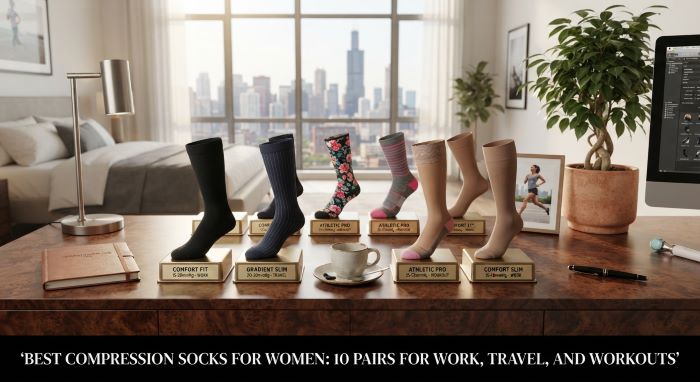
Best Compression Socks for Women: 10 Pairs for Work, Travel, and Workouts
If you spend long days on your feet, sit through long flights, or finish a run with heavy, achy legs, compression socks can make a real difference. They gently squeeze the lower leg to help blood flow back toward the heart, which reduces swelling, fatigue, and that tired, heavy feeling by the end of the day. Nurses, teachers, flight attendants, runners, and pregnant women have relied on them for years, and the best compression socks for women today look far better than the beige medical stockings of the past. This guide covers the best compression socks for women, how to choose the right compression level, and how to find a fit that feels good all day.
How compression socks work
Compression socks apply pressure to your legs, usually tightest at the ankle and gradually looser up the calf. This is called graduated compression. It helps veins push blood back up toward the heart instead of letting it pool in the lower legs, which is what causes swelling and heaviness after hours of standing or sitting.
Benefits people commonly report include:
- Less swelling in the feet and ankles
- Reduced leg fatigue after long shifts or travel
- Faster recovery after runs and workouts
- Better comfort during pregnancy, when swelling is common
- Lower risk of blood clots on long flights, especially for at-risk travelers
Understanding compression levels
Compression is measured in millimeters of mercury, written mmHg. Choosing the right level is the most important part of finding the best compression socks for women.
- 8 to 15 mmHg (mild): Light support for mild tiredness and all-day comfort.
- 15 to 20 mmHg (moderate): The most popular everyday level. Great for standing jobs, travel, pregnancy, and mild swelling. Available without a prescription.
- 20 to 30 mmHg (firm): Medical-grade support for more noticeable swelling, varicose veins, recovery, and athletes. Many people use it without a prescription, but it is wise to check with a doctor first.
- 30 to 40 mmHg and above (extra firm): Usually prescribed for specific medical conditions and fitted by a professional.
For most women buying their first pair, 15 to 20 mmHg is the sweet spot. It offers noticeable relief without feeling too tight.
The 10 best compression socks for women
Prices are approximate and vary by retailer, pattern, and pack size.
1. Figs Compression Socks (about 25 to 30 dollars per pair)
Figs made its name with scrubs for healthcare workers, and its compression socks are built for the same crowd: people who stand and walk through 12-hour shifts. They offer graduated 20 to 30 mmHg compression, a breathable nylon and spandex blend, and a huge range of fun colors and patterns.
Reviewers often rank them as the best overall pick for firm, all-day support that still looks good.
Best for: Nurses and healthcare workers who need firm support through long shifts.
2. Sockwell Women’s Graduated Compression Socks (about 25 to 30 dollars per pair)
Sockwell uses a blend of merino wool, bamboo rayon, nylon, and spandex, which makes these soft, breathable, and good at managing moisture and temperature. They come in women-specific sizing with moderate 15 to 20 mmHg graduated compression and plenty of patterns.
Because they feel more like a regular sock than a medical garment, they are easy to wear all day, every day.
Best for: All-day comfort, cooler weather, and anyone who wants natural fibers.
3. Vim & Vigr Compression Socks (about 40 to 55 dollars per pair)
Vim & Vigr is known for stylish designs and quality materials, including nylon, cotton, and merino wool options. Their socks come in 15 to 20 mmHg and 20 to 30 mmHg levels, and they offer wide calf sizing, which many brands overlook.
They cost more than most, but the look and comfort make them easy to wear with work outfits and dresses.
Best for: Style-conscious women and those who need wide calf options.
4. Bombas Compression Socks (about 30 to 35 dollars per pair)
Bombas brings its famous comfort focus to compression, with a moderate 15 to 20 mmHg level, cushioned footbeds, and a breathable knit. The brand also donates a pair to someone in need for every pair purchased.
They are a great entry point for people who want everyday compression that still feels like a comfortable, cushioned sock.
Best for: Everyday wear with extra cushioning and a give-back mission.
5. Comrad Compression Socks (about 30 to 35 dollars per pair)
Comrad designs its socks to look like regular fashion socks, with solid colors and patterns you would happily wear with sneakers or boots. They offer moderate graduated compression, a sustainable fabric mix, and cushioned soles.
Some reviewers find them a little snug to pull on, but they stay comfortable once they are on.
Best for: Women who want compression that looks like a regular stylish sock.
6. Physix Gear Compression Socks (about 15 to 25 dollars per pair)
Physix Gear offers firm 20 to 30 mmHg compression at a budget-friendly price, often sold in packs. The nylon and spandex blend is durable and works for both athletic use and long workdays.
They are less stylish than premium brands, but the value is hard to beat for firm compression.
Best for: Budget buyers who want firm, medical-grade support.
7. CEP Run Compression Socks (about 50 to 60 dollars per pair)
CEP, a German medical compression brand, makes some of the most trusted athletic compression socks. Their running socks offer targeted graduated compression, a snug, supportive fit, and moisture-wicking fabric designed for training and recovery. They come in women’s-specific sizing based on calf measurement.
They are pricier, but serious runners value the precise fit and durability.
Best for: Runners and athletes who want performance and recovery support.
8. Pro Compression Marathon Socks (about 45 to 50 dollars per pair)
Pro Compression’s Marathon socks deliver 20 to 30 mmHg graduated compression in bold, colorful designs popular with runners. They are built for recovery and long-distance events, with cushioned footbeds and durable construction.
Some find them tough to pull on at first, which is common with firmer compression.
Best for: Distance runners and post-race recovery.
9. Charmking Compression Socks (about 20 to 30 dollars for a multipack)
Charmking sells multipacks of 15 to 20 mmHg compression socks at a very low per-pair price, in a wide range of colors and patterns. They are a popular Amazon pick for anyone who wants to try compression without spending much.
They may wear out faster than premium brands, but for the price, you get plenty of pairs to rotate.
Best for: First-time buyers and anyone who wants many pairs on a budget.
10. Swiftwick Aspire Twelve (about 20 to 25 dollars per pair)
Swiftwick’s Aspire line offers light, athletic compression with a thin, sleek fabric that fits easily into running and hiking shoes. The Twelve refers to the 12-inch cuff height, which reaches up the calf. They are durable, moisture-wicking, and popular with runners and cyclists.
The compression is lighter than medical-grade options, so they suit active use more than significant swelling.
Best for: Runners, cyclists, and hikers who want light, supportive compression.
Quick comparison table
| Brand | Compression | Approx. price | Best for |
|---|---|---|---|
| Figs | 20 to 30 mmHg | 25 to 30 dollars | Healthcare shifts |
| Sockwell | 15 to 20 mmHg | 25 to 30 dollars | All-day natural fiber comfort |
| Vim & Vigr | 15 to 20 or 20 to 30 mmHg | 40 to 55 dollars | Style and wide calves |
| Bombas | 15 to 20 mmHg | 30 to 35 dollars | Cushioned everyday wear |
| Comrad | Moderate | 30 to 35 dollars | Fashion-style compression |
| Physix Gear | 20 to 30 mmHg | 15 to 25 dollars | Budget firm support |
| CEP Run | Graduated athletic | 50 to 60 dollars | Running and recovery |
| Pro Compression Marathon | 20 to 30 mmHg | 45 to 50 dollars | Distance runners |
| Charmking | 15 to 20 mmHg | 20 to 30 dollars (pack) | First-timers on a budget |
| Swiftwick Aspire Twelve | Light athletic | 20 to 25 dollars | Active wear |
Choosing the right pair for your needs
The best compression socks for women depend on how you plan to use them. Here is a quick guide:
- Standing all day at work: Figs, Sockwell, or Bombas.
- Long flights and travel: Sockwell or Vim & Vigr at 15 to 20 mmHg.
- Pregnancy swelling: 15 to 20 mmHg from Sockwell, Bombas, or Vim & Vigr, after checking with your doctor.
- Running and recovery: CEP, Pro Compression, or Swiftwick.
- Wide calves: Vim & Vigr, which offers dedicated wide calf sizing.
- Tight budget: Physix Gear or Charmking.
Knee-high, calf sleeves, or thigh-high?
Compression comes in several styles, and the right one depends on where you feel swelling and how you plan to wear it.
- Knee-high socks are the most common and cover the foot, ankle, and calf. They handle most swelling and fatigue needs and are the easiest to wear daily.
- Calf sleeves cover only the calf, leaving the foot free. Runners like them because they can pair them with their favorite regular socks.
- Thigh-high stockings and pantyhose extend support up the leg and are often recommended for varicose veins or pregnancy, when swelling reaches above the knee.
- Ankle compression socks offer light support mainly for the foot and ankle, useful for plantar discomfort.
For most everyday needs, knee-high socks are the best choice, and every brand on this list offers them. If your swelling extends above the knee, ask a doctor whether thigh-high compression is a better fit.
Compression socks for pregnancy and travel
Two groups especially benefit from compression. During pregnancy, increased blood volume and pressure from the growing baby often cause swollen feet and ankles, particularly in the third trimester. Moderate 15 to 20 mmHg socks can ease that discomfort, and many women wear them daily through the later months. Always check with your doctor or midwife first, especially if swelling appears suddenly, which can signal a more serious condition.
Travelers are the other big group. Sitting still on long flights slows circulation in the legs and raises the risk of swelling and, in some people, blood clots. Wearing compression during flights of four hours or more, along with walking the aisle and staying hydrated, helps legs feel far better on arrival. Many of the best compression socks for women, including Sockwell and Vim & Vigr, are popular choices for travel because they are comfortable enough to wear for a whole day of transit.
Getting the right fit
Fit matters more than brand. A sock that is too loose will not help, and one that is too tight can be uncomfortable or even harmful. To find the best compression socks for women for your legs:
- Measure your calf at its widest point, ideally in the morning before swelling sets in.
- Measure your ankle at its narrowest point.
- Check the brand’s size chart, since many use calf measurements rather than shoe size.
- Look for no bunching or rolling at the top, which can cut off circulation.
- Replace socks every three to six months, since elastic loses its compression over time.
How to put them on
Compression socks can be tricky to pull on, especially at firmer levels. A few tricks help:
- Put them on first thing in the morning, when swelling is lowest.
- Turn the sock inside out down to the heel, slip your foot in, then roll it up your leg.
- Smooth out wrinkles as you go, since folds create pressure points.
- Wear rubber gloves for extra grip on firmer socks.
- Keep skin dry and lotion-free before putting them on.
How long to wear them each day
Most people put compression socks on in the morning and take them off before bed. Wearing them throughout the day, especially during long periods of standing or sitting, gives the most benefit. For travel, put them on before the flight and keep them on until you arrive. Runners often wear them during a run, during recovery afterward, or both.
Unless a doctor advises otherwise, do not sleep in compression socks, since lying down already helps blood flow and the pressure is not needed overnight. If your socks leave deep marks, cause numbness, or feel painful, they are likely too tight, so try a larger size or a lower compression level.
Who should be careful
Compression socks are safe for most people, but they are not right for everyone. Talk to a doctor before wearing them if you have peripheral artery disease, diabetes with nerve damage, skin infections or fragile skin, or heart failure. Anyone considering 20 to 30 mmHg or firmer compression for a medical issue should get professional guidance on sizing and level. This article is general information, not medical advice.
Compression socks for active women
Many women discover compression through running or hiking, where it helps legs feel fresher during long efforts and recover faster afterward. For trail use, pairing the right compression with the right cushioning and moisture control makes a big difference in comfort. This guide to the Best Hiking Socks covers materials and fit that complement compression gear on long days outdoors.
Care tips to make them last
Compression socks are an investment, and good care keeps the elastic working longer:
- Wash after every wear, which helps the fibers bounce back to shape.
- Use cold or lukewarm water and a gentle detergent.
- Skip fabric softener, which breaks down elastic fibers.
- Air dry flat, since dryer heat weakens compression.
- Own at least two pairs so you can rotate while one dries.
The bottom line
Compression socks can transform how your legs feel after long shifts, flights, workouts, and pregnancy days. The best compression socks for women start with the right level: 15 to 20 mmHg for most everyday needs, and 20 to 30 mmHg for firmer support after checking with a doctor. Figs and Sockwell lead for all-day wear, Vim & Vigr and Comrad add style, Bombas offers cushioned comfort, CEP and Pro Compression serve runners, and Physix Gear and Charmking keep costs low. Measure your calf, follow the size chart, care for your socks properly, and replace them every few months. The right pair will leave your legs lighter and more energized at the end of every day.
Key Takeaways
- Compression socks use graduated pressure, tightest at the ankle, to push blood back toward the heart and reduce swelling and fatigue.
- For most women, 15 to 20 mmHg is the best everyday level, while 20 to 30 mmHg offers firmer, medical-grade support.
- Figs and Sockwell lead for all-day and long-shift wear, with Sockwell using soft merino wool blends.
- Vim & Vigr and Comrad offer stylish designs, with Vim & Vigr providing wide calf sizing, and Bombas adds cushioned comfort.
- CEP, Pro Compression, and Swiftwick suit runners and athletes, while Physix Gear and Charmking are strong budget picks.
- Measure your calf and ankle, follow each brand’s size chart, and replace socks every three to six months as elastic wears out.
- Check with a doctor before use if you have circulation problems, diabetes with nerve damage, fragile skin, or heart conditions.