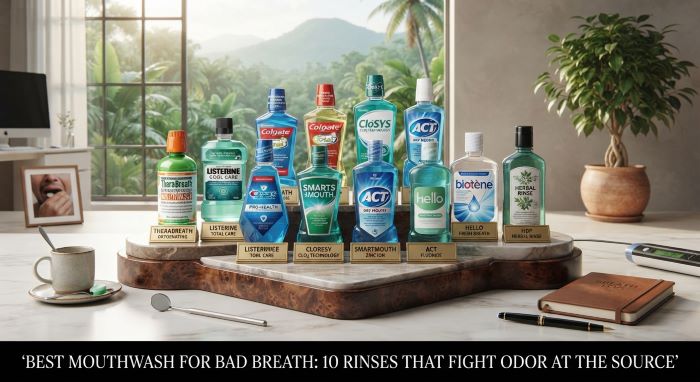
Best Mouthwash for Bad Breath: 10 Rinses That Fight Odor at the Source
Bad breath is one of the most common oral health complaints. Nearly everyone deals with it at some point, whether it is morning breath, coffee breath, or a lingering odor that brushing does not seem to fix. The good news is that most bad breath comes from bacteria in the mouth, and the right mouthwash can reduce those bacteria and neutralize odor.
Not every mouthwash works the same way, though. Some just cover odor with strong mint flavor for a short time. Others target the sulfur compounds and bacteria that cause bad breath in the first place. This guide lists 10 specific mouthwashes, compares their ingredients in a table, and explains how to choose the best mouthwash for bad breath for your needs.
What Causes Bad Breath?
Bad breath, also called halitosis, usually starts in the mouth. Bacteria break down food particles, dead cells, and proteins, producing volatile sulfur compounds. These compounds smell like rotten eggs, and they are the main cause of bad breath.
Common sources of odor-causing bacteria include:
- The tongue: The back of the tongue is rough and traps bacteria. It is the most common source of bad breath.
- Plaque buildup: Bacteria collect on teeth and along the gumline when brushing and flossing are inconsistent.
- Gum disease: Pockets between gums and teeth trap bacteria.
- Dry mouth: Saliva washes away bacteria. Less saliva means more odor.
- Food and drinks: Garlic, onions, coffee, and alcohol all contribute.
- Smoking and tobacco: These dry the mouth and leave strong odors.
Less commonly, bad breath can come from sinus infections, acid reflux, diabetes, or other medical conditions. If bad breath persists despite good oral hygiene, see your dentist or doctor.
How Mouthwash Fights Bad Breath
The most effective mouthwashes for bad breath use one of these active ingredients.
Chlorine dioxide and oxygenating compounds neutralize volatile sulfur compounds directly. TheraBreath and CloSYS use this approach.
Cetylpyridinium chloride (CPC) is an antibacterial agent that kills bacteria that cause plaque and odor. Crest Pro-Health uses CPC.
Zinc compounds bind to sulfur compounds and prevent them from producing odor. SmartMouth uses zinc ion technology.
Essential oils like eucalyptol, menthol, thymol, and methyl salicylate kill bacteria. Listerine uses these.
Chlorhexidine is a powerful prescription antibacterial used for gum disease. It is effective but can stain teeth with long-term use.
Comparison Table: Best Mouthwash for Bad Breath
| Product | Active Approach | Alcohol-Free | Approx. Price | Best For |
|---|---|---|---|---|
| TheraBreath Fresh Breath Oral Rinse | Oxygenating compounds | Yes | around $15 | Best overall for daily use |
| TheraBreath Plus Oral Rinse | Stronger oxygenating formula | Yes | around $17 | Stubborn, persistent odor |
| SmartMouth Clinical DDS | Zinc ion activation | Yes | around $20 | Long-lasting freshness |
| CloSYS Sensitive Mouthwash | Chlorine dioxide, pH balanced | Yes | around $14 | Sensitive mouths |
| Crest Pro-Health Advanced | CPC | Yes | around $8 | Plaque and gum health on a budget |
| Listerine Cool Mint Antiseptic | Essential oils | No | around $7 | Strong germ kill, classic taste |
| Listerine Total Care Zero Alcohol | Fluoride plus antibacterial agents | Yes | around $18 | Cavity protection plus fresh breath |
| StellaLife VEGA Oral Rinse | Herbal and natural antimicrobials | Yes | around $33 | Natural ingredient preference |
| Biotène Dry Mouth Oral Rinse | Moisturizing enzymes | Yes | around $10 | Dry mouth and related odor |
| Chlorhexidine Gluconate Rinse (Rx) | Chlorhexidine | Varies | Prescription | Gum disease under a dentist’s care |
1. TheraBreath Fresh Breath Oral Rinse
TheraBreath Fresh Breath Oral Rinse was created by a dentist specifically to treat bad breath. It uses oxygenating compounds that neutralize volatile sulfur compounds instead of masking them with flavor. It is alcohol-free, so it does not dry out your mouth, which can make bad breath worse.
It is widely available and affordable at around $15. Many dentists recommend it, and it is often considered the best mouthwash for bad breath for daily use.
2. TheraBreath Plus Oral Rinse
TheraBreath Plus is a stronger version designed for stubborn, persistent bad breath. It uses a more concentrated oxygenating formula and adds ingredients to help with dry mouth.
If regular mouthwash does not solve your breath problems, this is worth trying before moving to prescription options.
3. SmartMouth Clinical DDS
SmartMouth uses a two-bottle system that mixes zinc ions at the moment you pour. The activated zinc binds to sulfur compounds and prevents them from producing odor. The brand claims protection that lasts up to 24 hours.
It is a great pick for people who need long-lasting freshness, like those who talk with clients all day or have long meetings.
4. CloSYS Sensitive Mouthwash
CloSYS uses chlorine dioxide to neutralize odor, and its formula is pH balanced, alcohol-free, and unflavored by default. You can add the included flavor drops if you prefer a little mint.
It is ideal for people with sensitive mouths who find strong mint or alcohol mouthwashes irritating.
5. Crest Pro-Health Advanced
Crest Pro-Health uses cetylpyridinium chloride to kill germs that cause plaque, gingivitis, and bad breath. It is alcohol-free and affordable, making it a solid everyday option.
Some people notice mild, temporary tooth staining with long-term CPC use, but regular brushing usually prevents it.
6. Listerine Cool Mint Antiseptic
Listerine’s classic antiseptic formula uses essential oils to kill bacteria that cause bad breath and plaque. It has a strong, intense taste that many people associate with feeling truly clean.
The downside is its alcohol content, which can dry out the mouth and sting. People with dry mouth or sensitive gums may prefer an alcohol-free option.
7. Listerine Total Care Zero Alcohol
Listerine Total Care Zero Alcohol combines fresh breath benefits with fluoride for cavity protection and enamel strengthening. It is alcohol-free and gentler than classic Listerine.
It is a great all-in-one rinse for people who want to fight bad breath and cavities at the same time.
8. StellaLife VEGA Oral Rinse
StellaLife VEGA uses herbal and natural antimicrobial ingredients. It is alcohol-free and free of dyes and harsh chemicals. It was originally developed for post-surgical oral care and is gentle on sensitive tissues.
It suits people who prefer natural ingredients, though it costs more than most drugstore rinses.
9. Biotène Dry Mouth Oral Rinse
Dry mouth is a major cause of bad breath, especially for people who take certain medications or breathe through their mouths while sleeping. Biotène is designed specifically to moisturize the mouth and soothe dryness.
It does not directly neutralize sulfur compounds like TheraBreath, but by restoring moisture it helps reduce the conditions that lead to odor.
10. Chlorhexidine Gluconate Rinse (Prescription)
Chlorhexidine is a powerful antibacterial rinse that dentists prescribe for gum disease and after certain procedures. It significantly reduces bacteria that contribute to bad breath linked to gum problems.
It is only available by prescription in the United States and is typically used for short periods, since long-term use can stain teeth and change taste perception.
Alcohol vs. Alcohol-Free Mouthwash
Alcohol-based mouthwashes kill bacteria but can dry out the mouth. Since saliva helps wash away bacteria, a dry mouth can actually lead to worse breath a few hours after rinsing.
Alcohol-free mouthwashes avoid this problem. For most people fighting chronic bad breath, the best mouthwash for bad breath is alcohol-free. They are also better for people with sensitive gums, dry mouth, or those avoiding alcohol for other reasons.
How to Use Mouthwash Correctly
- Brush and floss first. This removes food and plaque so the mouthwash can reach more surfaces.
- Measure the right amount. Most rinses call for about 20 milliliters, or four teaspoons.
- Swish for 30 to 60 seconds. Move the rinse around your teeth and gums, and gargle to reach the back of the throat.
- Spit, do not rinse. Avoid rinsing with water afterward so active ingredients keep working.
- Wait before eating or drinking. Give the mouthwash 30 minutes to work, especially fluoride rinses.
Clean Your Tongue
Mouthwash works best when paired with tongue cleaning. The back of the tongue holds most of the bacteria that cause bad breath. Use a tongue scraper once or twice a day, gently pulling it from the back of the tongue to the front. You will likely notice a big improvement in breath within days.
Daily Habits for Fresh Breath
- Brush twice a day for two minutes with fluoride toothpaste.
- Floss daily to remove food and plaque between teeth.
- Scrape your tongue every morning.
- Drink plenty of water throughout the day.
- Chew sugar-free gum with xylitol to stimulate saliva.
- Limit coffee, alcohol, and strong-smelling foods.
- Quit smoking and tobacco products.
- Replace your toothbrush every three to four months.
- See your dentist for cleanings every six months.
Best Picks by Situation
The right rinse depends on what is causing your breath problem and how you live day to day.
- Morning breath: TheraBreath Fresh Breath Oral Rinse before bed, plus tongue scraping in the morning.
- Coffee drinkers: SmartMouth Clinical DDS for long-lasting protection after that first cup.
- Dry mouth from medications: Biotène Dry Mouth Oral Rinse or TheraBreath Plus.
- Sensitive gums: CloSYS Sensitive or StellaLife VEGA.
- Cavity-prone teeth: Listerine Total Care Zero Alcohol with fluoride.
- Gum disease under treatment: A chlorhexidine rinse prescribed by your dentist.
- Tight budget: Crest Pro-Health Advanced delivers germ-killing CPC at a low price.
Choosing the best mouthwash for bad breath for a specific situation often works better than using one rinse for everything. For example, some people use an oxygenating rinse at night and a fluoride rinse in the morning.
Mouthwash and Children
Most mouthwashes are not recommended for children under six, since they may swallow the rinse. Children’s fluoride rinses are available for older kids, often in fun flavors and alcohol-free formulas. Always supervise young children using mouthwash, and ask your dentist whether a rinse is appropriate for your child’s age.
Mouthwash for People With Braces, Implants, or Dentures
Braces trap food and plaque, which makes bad breath more common. An antibacterial, alcohol-free mouthwash helps reach areas a toothbrush misses. Fluoride rinses also help prevent white spots around brackets.
People with dental implants should choose gentle, alcohol-free rinses that do not irritate the gums around the implant. Denture wearers should clean dentures daily with a denture cleaner and use mouthwash on their natural gums and tongue. Remove dentures overnight so gum tissue can rest.
Natural Remedies That Help
Some natural habits can support fresh breath alongside mouthwash. Chewing fresh parsley or mint leaves can temporarily freshen breath. Green tea contains compounds that may reduce odor-causing bacteria. Crunchy fruits and vegetables like apples, carrots, and celery help clean teeth and stimulate saliva. Staying hydrated remains one of the simplest ways to keep bacteria in check.
These remedies work best as extras, not replacements. Pair them with the best mouthwash for bad breath and a consistent brushing routine for real results.
How Long Does Fresh Breath Last?
Most mouthwashes freshen breath immediately, but how long the effect lasts depends on the formula. Rinses that only add flavor wear off within an hour. Products that neutralize sulfur compounds or reduce bacteria last several hours, and some zinc-based rinses claim up to 24 hours of protection. Eating, drinking coffee, and talking all day can shorten the effect, so some people rinse again after lunch. Using the best mouthwash for bad breath twice a day, morning and night, gives the most consistent results.
Myths About Mouthwash
“Mouthwash replaces brushing.” It does not. Mouthwash cannot remove plaque stuck to teeth. Brushing and flossing are still essential.
“The stronger the burn, the better it works.” A burning feeling usually comes from alcohol, not effectiveness. Alcohol-free formulas can work just as well without the sting.
“More rinsing is always better.” Overusing certain rinses can irritate the mouth or disrupt healthy bacteria. Follow label directions, usually twice a day.
“Mint flavor means fresh breath.” Mint only masks odor for a short time. Look for active ingredients that target bacteria and sulfur compounds.
“Bad breath always means poor hygiene.” Not always. Dry mouth, medications, diet, and medical conditions can all cause odor even in people with excellent habits.
Reading Mouthwash Labels
Check the active ingredients first. Look for chlorine dioxide, CPC, zinc, essential oils, or fluoride depending on your goal. Check whether the formula is alcohol-free. Look for the American Dental Association Seal of Acceptance, which means the product has been tested for safety and effectiveness. Finally, read the directions for how much to use and how long to swish, since these vary between brands.
Storing and Traveling With Mouthwash
Keep mouthwash at room temperature and away from direct sunlight, since heat can break down active ingredients. Check the expiration date, because older bottles may lose effectiveness. For travel, pour mouthwash into a small leak-proof bottle under 3.4 ounces for airport security, or buy travel-size versions. Some brands also make single-use mouthwash packets and dissolvable strips, which are handy for work bags, gym bags, and road trips when you want a quick refresh after meals.
When to See a Dentist
If your bad breath persists despite brushing, flossing, tongue scraping, and using the best mouthwash for bad breath, it may signal an underlying issue. Gum disease, tooth decay, infected tooth roots, and poorly fitting dental work can all cause persistent odor.
See your doctor if dental causes are ruled out. Sinus infections, tonsil stones, acid reflux, diabetes, and kidney or liver conditions can all cause bad breath. Persistent, unusual breath odor deserves a professional evaluation.
Choosing the Right Mouthwash for You
Start with your main concern. For everyday odor control, TheraBreath Fresh Breath Oral Rinse is a trusted choice. For stubborn odor, try TheraBreath Plus or SmartMouth Clinical DDS. For sensitive mouths, CloSYS is gentle and effective. For cavity protection plus fresh breath, choose Listerine Total Care Zero Alcohol. For dry mouth, Biotène helps restore moisture.
The best mouthwash for bad breath is one you will use consistently alongside good brushing, flossing, and tongue cleaning. With the right routine, fresh breath can last all day.
Key Takeaways
- Most bad breath comes from bacteria producing volatile sulfur compounds, mainly on the back of the tongue.
- TheraBreath Fresh Breath Oral Rinse is a top daily pick that neutralizes odor instead of masking it.
- SmartMouth Clinical DDS uses zinc ions for long-lasting freshness, while CloSYS suits sensitive mouths.
- Alcohol-free mouthwashes are usually better for chronic bad breath, since alcohol can dry the mouth and worsen odor.
- Brush and floss first, swish for 30 to 60 seconds, and do not rinse with water afterward.
- Tongue scraping, drinking water, and chewing xylitol gum boost the effects of any mouthwash.
- See a dentist or doctor if bad breath persists, since it can signal gum disease or other health issues.