Best Face Masks for Acne: A Complete Guide by Skin Type and Ingredient
Breakouts have a way of showing up at the worst possible time, and the skincare aisle does not make things easier. Shelf after shelf promises clear skin, and it is hard to know what actually helps versus what just smells nice. A good mask can be a real tool in your routine, drawing out oil, calming inflammation, and clearing clogged pores. The trick is matching the right formula to your skin. This guide walks through the best face masks for acne, the ingredients that earn their spot, and how to use them without making things worse.
What a face mask can and cannot do
Let me set expectations first, because this matters. A mask is a supporting player, not a cure. It works alongside a solid daily routine of gentle cleansing, treatment, and moisturizer. Used once or twice a week, the best face masks for acne can reduce oil, soothe redness, and help keep pores clear. What they cannot do is fix persistent, painful, or scarring acne on their own. That kind of acne usually has deeper causes and needs a dermatologist’s help.
So think of a mask as a boost, not a rescue. When you keep that frame in mind, it is much easier to choose wisely and avoid chasing miracle claims. A mask that clears your oily T-zone will not touch deep cystic bumps along the jaw, and no formula erases a breakout overnight. Realistic expectations save you money and spare your skin from the frustration cycle of trying stronger and stronger products.
Why acne happens in the first place
A quick look at the cause helps everything else make sense. Acne forms when pores get clogged with a mix of excess oil, dead skin cells, and bacteria. That blockage leads to blackheads, whiteheads, and inflamed pimples. Hormones, stress, and genetics all play a role, which is why the same routine works differently for different people.
A mask steps into this picture at the pore level. The most effective options target one or more of those root factors: they soak up surplus oil, exfoliate away the dead cells that clog pores, or calm the inflammation that makes a spot red and sore. Understanding which factor is driving your breakouts points you toward the right kind of mask.
The ingredients that actually work
Before naming mask types, it helps to know what to look for on the label. The best face masks for acne tend to be built around a handful of proven ingredients, each doing a specific job.
- Salicylic acid (BHA): An oil-soluble acid that slips into pores and clears out the dead skin and oil that cause clogs. It is one of the most reliable acne ingredients and a top pick for blackheads and whiteheads.
- Clay (kaolin and bentonite): Natural minerals that absorb excess oil and pull impurities from the skin. Kaolin is gentler, while bentonite is more absorbent and better for very oily skin.
- Sulfur: An underrated ingredient that soaks up oil and has mild antibacterial and exfoliating effects. It suits oily and combination skin well.
- Glycolic acid (AHA): A water-soluble acid that exfoliates the skin’s surface, smoothing texture and helping fade marks left behind by old breakouts.
- Benzoyl peroxide: Targets acne-causing bacteria directly. It is powerful and can be drying, so it works best in short, spot-focused use.
- Niacinamide: Calms inflammation, regulates oil, and helps fade dark spots. It is gentle and pairs well with almost everything.
- Tea tree oil: A natural option with antibacterial properties that can reduce blemishes when used in a well-formulated product.
- Charcoal: Often paired with clay to help draw out oil and debris, popular in deep-cleansing masks.
- Soothing extras: Aloe vera, centella asiatica, green tea, honey, and oatmeal calm irritation and support the skin barrier while stronger ingredients do their work.
The strongest formulas usually combine an oil-absorbing or exfoliating base with a soothing ingredient so your skin gets the benefit without excess irritation. A clay mask with added niacinamide, or a salicylic acid mask blended with green tea, gives you results without leaving your face raw.
The main types of acne masks
Not every mask works the same way. Here are the main categories and who each one suits, so you can zero in on the right choice for your specific skin.
Clay masks
Clay masks are the classic choice for oily and acne-prone skin, and for good reason. They physically absorb oil and unclog pores, which reduces the congestion that leads to breakouts. Look for kaolin or bentonite as the star ingredient. Many clay formulas also add salicylic acid or charcoal for extra pore-clearing power.
One important rule: do not let a clay mask dry until it cracks and tightens painfully on your face. That over-drying strips the skin and can trigger more oil production. Rinse it off while it is still slightly tacky, usually around 10 minutes in.
Best for: oily and combination skin, blackheads, and clogged T-zones.
Sulfur masks
Sulfur does not smell glamorous, but it is effective. It absorbs oil and has gentle antibacterial and exfoliating action, making it a smart pick for those who find other actives too harsh. Sulfur masks tend to be calmer on the skin than benzoyl peroxide while still fighting breakouts.
Best for: oily skin and inflamed pimples, especially sensitive skin that reacts to stronger ingredients.
Exfoliating acid masks
These masks use salicylic acid, glycolic acid, or a blend to dissolve dead skin and clear pores chemically rather than by scrubbing. They are among the best face masks for acne when your main issues are texture, clogged pores, and lingering marks. Because they exfoliate, use them sparingly, usually once a week, to avoid over-doing it.
Best for: blackheads, uneven texture, and post-acne marks.
Charcoal masks
Charcoal masks work much like clay, drawing out oil and debris. They feel deeply cleansing and suit oily skin well. Skip the harsh peel-off charcoal versions, which can tug at the skin and irritate it. A rinse-off charcoal or charcoal-and-clay blend is a better bet.
Best for: oily skin that wants a deep-clean feeling.
Sheet and hydrating masks
Sheet masks are pleasant and hydrating, but they are not always ideal for active acne unless they are made specifically for acne-prone skin and are fragrance-free. That said, a soothing, non-comedogenic sheet mask with niacinamide or centella can calm irritated, over-treated skin. The best face masks for acne are not always the strongest ones, and sometimes calming the skin is exactly what it needs.
Best for: dehydrated or irritated acne-prone skin that needs soothing, not stripping.
Overnight and spot masks
Overnight or sleeping masks let ingredients work while you rest, and gentle, hydrating options can support the barrier of acne-prone skin. Spot treatments and pimple patches, though smaller than a full mask, target individual blemishes with concentrated actives and are worth keeping on hand for the occasional angry spot.
Best for: targeted treatment and overnight recovery.
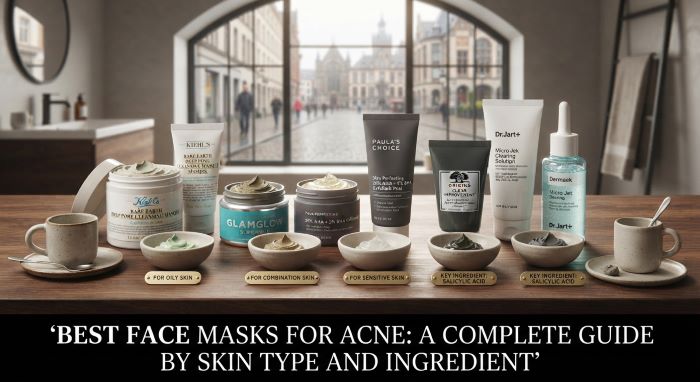
Matching a mask to your skin type
The same mask can help one person and break out another, so your skin type should guide your pick. Here is a quick way to narrow down the best face masks for acne for you.
| Skin type | Best mask choice | Ingredients to seek |
|---|---|---|
| Oily | Clay or charcoal | Bentonite, kaolin, salicylic acid |
| Combination | Clay or sulfur | Kaolin, sulfur, niacinamide |
| Sensitive | Sulfur or soothing | Kaolin, aloe, centella, oatmeal |
| Dry but acne-prone | Hydrating or gentle acid | Niacinamide, hyaluronic acid, low-percentage salicylic acid |
| Marks and scarring | Exfoliating acid | Glycolic acid, vitamin C, niacinamide |
Use this as a starting point, not a strict rule. Your skin can change with the seasons, your hormones, and the rest of your routine, so stay flexible. Oily skin in humid summer may want a stronger clay mask, while the same skin in dry winter might need something gentler.
Ingredients and habits to avoid
Knowing what to skip is just as valuable as knowing what to seek. Some products marketed for glow or hydration can actually clog acne-prone skin. When judging the best face masks for acne, steer clear of:
- Coconut oil and other heavy, pore-clogging oils
- Thick, heavy emollient bases and certain silicones
- Artificial fragrance, a common irritant for reactive skin
- Harsh physical scrubs or peel-off masks that tug the skin
- Anything that stings, burns, or leaves your skin tight and raw
Over-use is its own mistake. Piling on acids and exfoliating masks too often damages the skin barrier and can cause more redness and peeling, which makes acne look and feel worse. More is not better here. If your skin starts feeling tight, flaky, or unusually sensitive, that is a sign to scale back.
How to use acne masks the right way
Getting results is about technique as much as product. To get the most from the best face masks for acne, follow a few simple habits.
- Patch test first. Apply a small amount on your jaw or inner arm and wait 24 hours to check for a reaction, especially if your skin is sensitive.
- Start with clean skin. Cleanse before masking so the ingredients can actually reach your pores.
- Follow the timing. Leave the mask on only as long as directed. Longer is not stronger, and it usually just irritates.
- Do not overdo frequency. Most people do well with one to three masks a week. Limit clay and exfoliating masks to about once weekly.
- Moisturize after. Always follow with a light, non-comedogenic moisturizer to rebuild the barrier.
- Introduce one thing at a time. If you use prescription acne products, add a new mask slowly to avoid stacking too many actives.
A small tip: store sheet or gel masks in the fridge. The cool temperature soothes inflamed skin and feels great on an angry breakout, and it can temporarily calm redness before an event.
Building a simple routine around your mask
A mask only shines when the rest of your routine supports it. Keep the daily basics steady: a gentle cleanser morning and night, your treatment product, a light moisturizer, and sunscreen every day. Slot your mask in once or twice a week in the evening, after cleansing and before moisturizer.
Consistency beats intensity. A mask rewards regular, moderate use far more than occasional heavy sessions. Give any new routine several weeks before judging it, since skin turnover takes time and real change rarely shows up overnight.
When to see a dermatologist
Masks help with mild, everyday breakouts, but they have limits. If your acne is painful, cystic, widespread, or leaving scars, or if it simply will not respond to over-the-counter care, it is time for professional help. A dermatologist can prescribe stronger treatments and build a plan suited to your skin. Reaching for stronger and stronger masks in that situation usually backfires. This is general information, not medical advice, so treat persistent or severe acne as a reason to book an appointment rather than to keep experimenting.
The bottom line
The best face masks for acne are simple, non-comedogenic formulas that absorb oil, unclog pores, or calm inflammation without stripping your skin. Match the type to your skin: clay and charcoal for oily skin, sulfur for sensitive skin, exfoliating acids for texture and marks, and soothing masks when your skin needs a break. Look for proven ingredients like salicylic acid, clay, sulfur, and niacinamide, avoid heavy oils and fragrance, and use masks in moderation. Pair the right mask with a steady routine and a little patience, and you will give your skin its best shot at staying clear.
Key Takeaways
- Face masks are a supporting tool in an acne routine, not a cure, and work best alongside gentle cleansing, treatment, and moisturizer.
- The most effective acne mask ingredients are salicylic acid, clay (kaolin and bentonite), sulfur, glycolic acid, niacinamide, and tea tree oil.
- Clay and charcoal masks suit oily skin, sulfur suits sensitive skin, exfoliating acid masks target texture and marks, and soothing masks calm irritated skin.
- Match your mask to your skin type and current condition rather than reaching for the strongest formula available.
- Avoid coconut oil, heavy emollients, artificial fragrance, harsh scrubs, and peel-off masks, all of which can worsen breakouts.
- Patch test new masks, follow the directed timing, limit clay and exfoliating masks to about once a week, and always moisturize afterward.
- See a dermatologist for painful, cystic, widespread, or scarring acne, since those cases need more than an over-the-counter mask.