How to Clean Silverware Tarnish: Methods That Actually Work
You pull out the good silverware for a dinner party and find it has gone dark and dull in the drawer since the last time you used it. It is one of those small domestic irritations that feels like it should require professional help but genuinely does not. Tarnish is a surface reaction, not permanent damage, and removing it takes a few minutes with things you already own. Here is a practical guide on how to clean silverware tarnish and keep it from coming back so quickly.
Why Silver Tarnishes
Understanding the cause makes how to clean silverware tarnish straightforward. Tarnish forms when silver reacts with sulfur compounds in the air, creating a dark layer of silver sulfide on the surface. It is a chemical reaction rather than dirt, which is why washing tarnished silver rarely fixes it. Several things accelerate the process:
- Humidity and moisture in the storage environment.
- Exposure to air, particularly in poorly sealed storage.
- Contact with certain foods, especially eggs, onions, and anything containing sulfur.
- Rubber bands and newspaper, which release sulfur compounds.
- Some cleaning products and household chemicals.
The good news is that tarnish sits on the surface, so the right approach removes it and reveals the bright silver underneath.
Method 1: Mild Soap and Water
The gentlest approach to how to clean silverware tarnish is worth trying first for light tarnish and maintenance. Wash pieces in warm water with mild dish soap and a soft cloth, never anything abrasive. Rinse thoroughly and dry completely and immediately, since air drying causes water spots and encourages further tarnishing. This will not shift heavy tarnish, but it handles surface dirt and is safe for all silver.
Method 2: Silver Polish
For moderate tarnish, commercial silver polish is the most reliable option, formulated to remove the sulfide layer with minimal abrasion. Apply a small amount with a soft cloth, rub gently along the grain rather than in circles, then rinse and dry thoroughly. A dedicated polishing cloth also works well for maintenance, with no water or mess.
Method 3: The Aluminum Foil Trick
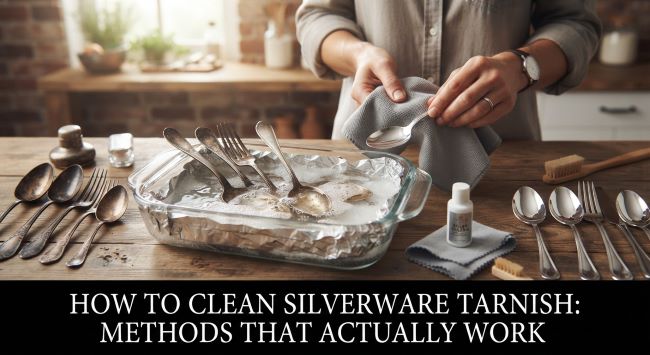
The most satisfying approach to how to clean silverware tarnish is the foil method, which uses a chemical reaction rather than scrubbing:
- Line a dish or basin with aluminum foil, shiny side up.
- Add hot water along with a few tablespoons of baking soda, and some people add salt as well.
- Place the silverware in so it touches the foil directly. The contact matters, since the reaction depends on it.
- Let it sit for several minutes while the tarnish transfers to the foil.
- Remove, rinse thoroughly, and dry completely with a soft cloth.
This works because the reaction pulls the sulfur from the silver onto the aluminum, meaning nothing is scrubbed away. It is genuinely effective on heavy tarnish and requires almost no effort.
One important caveat: this method is not suitable for everything. Avoid it for pieces with cemented or glued handles, delicate antiques, or anything with stones or non-silver elements, since the hot water and reaction can cause damage.
Method 4: Baking Soda Paste
For stubborn spots, another approach to how to clean silverware tarnish is a paste. Make one from baking soda and a little water, apply gently with a soft cloth, rub lightly, then rinse and dry. Use this sparingly, since baking soda is mildly abrasive and repeated aggressive use scratches silver. Reserve it for spots other methods have not shifted.
What to Avoid
Knowing what not to do matters as much as knowing how to clean silverware tarnish:
| Avoid | Why |
|---|---|
| Abrasive scrubbers | Scratch the surface permanently |
| Harsh chemicals like bleach | Can damage silver |
| The dishwasher | Detergents and heat accelerate tarnish |
| Rubbing in circles | Creates visible swirl marks |
| Leaving silver wet | Causes spots and speeds tarnishing |
| Over-polishing | Removes tiny amounts of silver each time |
That last point deserves emphasis for antique or valuable pieces. Every polish removes a microscopic layer, and heavily polished antiques can lose their patina and value. Gentle, occasional cleaning beats aggressive frequent polishing.
Preventing Tarnish
The most useful part of how to clean silverware tarnish is not having to do it often. Prevention comes down to limiting exposure:
- Store in anti-tarnish cloth or bags, which are treated to absorb sulfur compounds.
- Use airtight containers or sealed drawers to limit air exposure.
- Add silica gel packets to storage to control humidity.
- Avoid rubber bands, newspaper, and cardboard, which release sulfur.
- Wash promptly after use, especially after contact with eggs, onions, or salt.
- Use it regularly, since silver in frequent use tarnishes more slowly than silver sitting in a drawer.
- Dry completely every single time before storing.
Good storage genuinely transforms how often you need to clean, turning a frequent chore into an occasional one.
When to Consult a Professional
Most silverware cleaning is simple, but some pieces warrant caution. Valuable antiques, heirlooms, silver-plated items with thin plating, and pieces with attached elements are better handled carefully or professionally, since plating worn through by aggressive polishing cannot be restored.
The same principles apply across silver items generally, including jewelry, where the methods overlap but the cautions differ. The guidance in How to Clean Silver Jewelry covers restoring shine to silver pieces safely, which pairs naturally here since jewelry often includes gemstones and delicate settings that need gentler handling than flatware, and knowing which method suits which item prevents accidental damage to things you care about.
The bottom line on how to clean silverware tarnish is that it is a surface reaction with sulfur, not permanent damage, so the right method restores the shine easily. Start with mild soap and water for light tarnish, use silver polish or a polishing cloth for moderate cases, and try the aluminum foil, baking soda, and hot water method for heavy tarnish since it lifts the sulfur off without scrubbing. Avoid abrasives, bleach, and the dishwasher, dry everything completely, and store pieces in anti-tarnish materials away from humidity so you rarely have to do it at all.
Key Takeaways
- Tarnish is silver reacting with sulfur compounds in the air, forming a surface layer rather than causing damage.
- Humidity, air exposure, sulfur-containing foods, rubber bands, and newspaper all accelerate tarnishing.
- Start with mild soap and warm water with a soft cloth for light tarnish and routine maintenance.
- Commercial silver polish or a polishing cloth handles moderate tarnish, rubbing along the grain rather than in circles.
- The aluminum foil, baking soda, and hot water method lifts heavy tarnish chemically without any scrubbing.
- Avoid the foil method for glued handles, delicate antiques, or pieces with stones or non-silver elements.
- Never use abrasive scrubbers, bleach, or the dishwasher, and always dry silver completely before storing.
- Over-polishing removes microscopic layers of silver, which matters especially for antiques and silver plate.
- Prevent tarnish with anti-tarnish bags, airtight storage, silica gel, and by avoiding rubber bands and newspaper.
- Consult a professional for valuable antiques, heirlooms, or silver plate where the plating may be thin.