How to Clean a Cast Iron Pan Rust: A Step-by-Step Guide to Restore and Re-Season Your Skillet
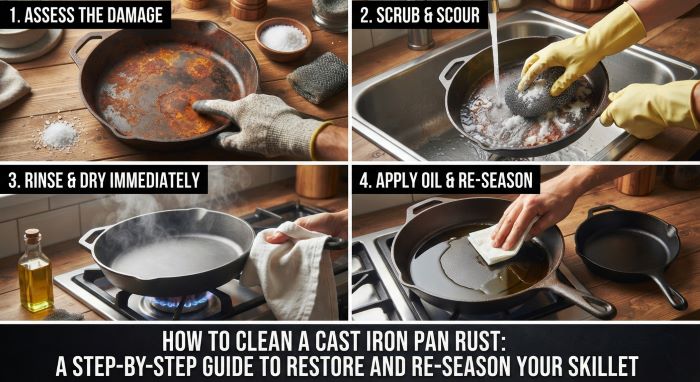
You pull your skillet from the cabinet and find orange spots on the surface. Maybe it sat wet in the sink overnight. Maybe it came from a yard sale covered in rust. The good news is that cast iron is very hard to ruin. If you want to know how to clean a cast iron pan rust, the answer is simple: scrub the rust off, wash and dry the pan, and bake on a fresh coat of oil.
This guide walks you through every step. It covers light surface rust, heavier rust, and badly neglected pans. You will find a comparison table of methods, a full seasoning guide, and tips to keep rust from coming back.
Why Cast Iron Rusts
Cast iron is mostly iron, and iron reacts with water and oxygen to form rust. A well-kept pan has a layer of seasoning that blocks this. Seasoning is oil that has been baked onto the metal until it hardens into a slick, dark coating.
When that layer wears thin or water sits on the pan, rust forms. Common causes include:
- Soaking the pan in the sink
- Putting it in the dishwasher
- Letting it air dry
- Storing it while still damp
- Keeping it in a humid place
- Cooking acidic food for a long time, which strips seasoning
- Leaving food in the pan overnight
Is a Rusty Pan Safe to Use?
A small amount of rust is not likely to harm you, but it tastes bad and will keep spreading. Do not cook on a rusty surface. Clean and re-season the pan first. Once the rust is gone and new seasoning is in place, the pan is safe to use again.
What You Need
- Steel wool, a stainless steel scrubber, or a stiff brush
- Coarse kosher salt
- Mild dish soap
- White vinegar, for heavier rust
- Baking soda
- Clean rags or paper towels
- Cooking oil with a high smoke point, such as vegetable, canola, or grapeseed oil
- Aluminum foil or a baking sheet
- An oven
- Rubber gloves
Comparison Table: Rust Removal Methods
| Method | Best For | Time Needed | Effort | Notes |
|---|---|---|---|---|
| Coarse salt scrub | Very light rust spots | 5 to 10 minutes | Low | Gentle, keeps most seasoning |
| Steel wool and soap | Light to moderate rust | 10 to 20 minutes | Medium | The standard method |
| Baking soda paste | Light rust and stuck residue | 15 to 30 minutes | Medium | Mild abrasive |
| Potato and salt | Light rust | 10 to 15 minutes | Low | A handy kitchen trick |
| Vinegar soak, half vinegar and half water | Moderate to heavy rust | 30 minutes to a few hours | Low | Check often, do not over-soak |
| Self-clean oven cycle or lye bath | Thick rust and old crud | Hours to days | High | For full restoration only |
| Electrolysis | Collector pieces, severe rust | A day or more | High | Needs special setup |
Method 1: Remove Light Surface Rust
Use this for a few orange spots or a thin rust film.
- Scrub. Wet the pan and scrub the rusty areas with steel wool or a stiff scrubber and a drop of dish soap. Work in small circles until you see bare gray or black metal.
- Rinse. Rinse with warm water.
- Check. Wipe with a white paper towel. If it comes away orange, scrub again.
- Dry fully. Towel dry right away. Then set the pan on a burner over low heat for a few minutes to drive off all moisture.
- Oil. Rub a thin coat of oil over the whole pan.
- Re-season. Follow the seasoning steps later in this guide.
For the lightest rust, you can skip steel wool. Pour in a few tablespoons of coarse salt and scrub with a damp cloth or half a potato, cut side down. The salt acts as a gentle abrasive.
Method 2: Remove Moderate Rust With Vinegar
When rust covers much of the pan or scrubbing alone does not work, a vinegar soak helps. The acid dissolves rust.
- Mix. Combine equal parts white vinegar and water in a sink or tub large enough to cover the pan.
- Soak. Place the pan in the mix. Start with 30 minutes.
- Check. Pull the pan out and scrub a test spot. If the rust wipes away, move on. If not, soak longer and check every 30 minutes.
- Do not over-soak. Vinegar eats rust first, then starts on the iron. Long soaks can pit the metal. Most pans need one to three hours at most.
- Scrub. Scrub off the loosened rust with steel wool.
- Neutralize. Wash with soap and water. A sprinkle of baking soda helps stop the acid.
- Dry at once. Bare iron rusts within minutes. Towel dry, then heat the pan on the stove or in a warm oven.
- Oil and season. Coat with oil right away and season.
This is the method most people need when they search for how to clean a cast iron pan rust that covers the whole cooking surface.
Method 3: Restore a Heavily Rusted Pan
A pan left outside or stored for decades may have thick rust and layers of old, flaking seasoning. It can still be saved.
- Scrape. Knock off loose flakes with a putty knife or a wire brush.
- Strip. Use a vinegar soak as above, and repeat as needed. For thick, baked-on crud, some people use oven cleaner that contains lye, sealed with the pan in a plastic bag for a day or two. Wear gloves and eye protection, work outside, and follow the product label.
- Scrub hard. Use steel wool or a wire brush until the metal is an even gray.
- Wash and neutralize. Wash with soap, rinse well, and dry at once.
- Season several times. Bare iron needs three to six rounds of seasoning to build a good base.
The self-clean cycle on an oven can also burn a pan clean, but the extreme heat can warp or crack old or thin pans. Many restorers advise against it.
Check for Damage Before You Start
Before you spend an afternoon on how to clean a cast iron pan rust, make sure the pan is worth the work. Rust is fixable. Some other problems are not.
- Cracks: A cracked pan can break while hot. Retire it.
- Warping: A pan that rocks on a flat surface will heat unevenly, most of all on glass cooktops.
- Deep pits: Small pits are fine. Deep ones hold food and are hard to season.
- Holes: A pan with a hole is done.
If the pan rings like a bell when you tap it, it is likely sound. A dull thud can mean a crack.
How to Re-Season After Removing Rust
Cleaning is only half the job. Bare iron will rust again within hours without seasoning.
- Heat the oven. Set it to 450 to 500 degrees Fahrenheit.
- Warm the pan. A warm pan takes oil more evenly.
- Apply oil. Rub a small amount of oil over every surface: inside, outside, and handle.
- Wipe it off. Use a clean cloth to wipe away as much oil as you can. The pan should look almost dry. Too much oil turns sticky.
- Bake upside down. Place the pan upside down on the middle rack. Put foil or a baking sheet on the rack below to catch drips.
- Bake for one hour.
- Cool in the oven. Turn the oven off and let the pan cool inside.
- Repeat. For a pan stripped to bare metal, repeat two to five more times.
The pan is ready when it has a dark, even, semi-gloss finish that feels smooth and dry, not tacky.
Best Oils for Seasoning
| Oil | Smoke Point | Notes |
|---|---|---|
| Vegetable oil | About 400 to 450°F | Cheap, reliable, recommended by Lodge |
| Canola oil | About 400°F | Easy to find, works well |
| Grapeseed oil | About 420°F | A favorite of many cooks |
| Vegetable shortening | About 360°F | The classic choice, easy to apply |
| Avocado oil | About 500°F | Works well, costs more |
| Flaxseed oil | About 225°F | Hard finish, but can flake |
Any of these will work. Use what you have. Thin coats matter more than the type of oil.
Can You Use Soap on Cast Iron?
Yes. The old rule against soap dates from a time when soap contained lye, which strips seasoning. Modern dish soap is mild. A small amount will not harm a well-seasoned pan. What does harm cast iron is soaking, the dishwasher, and leaving it wet.
How to Clean Cast Iron After Each Use
Good daily care means you will rarely need to deal with rust again.
- Clean the pan while it is still warm.
- Rinse with hot water and scrub with a brush or a chainmail scrubber.
- Use a little soap if needed.
- For stuck food, simmer a little water in the pan for a minute, then scrape with a wooden spoon.
- Dry with a towel right away.
- Heat on the stove for a minute or two to remove all moisture.
- Rub in a few drops of oil and wipe off the excess.
- Store in a dry place.
How to Prevent Rust
- Never soak cast iron.
- Never put it in the dishwasher.
- Dry it at once, and finish on the burner.
- Oil it lightly after each wash.
- Store it in a dry cabinet with good airflow.
- Place a paper towel between stacked pans to absorb moisture.
- Store lids off or ajar so air can move.
- Cook with it often. Regular use builds seasoning.
- Limit long simmering of tomato sauce, wine, or vinegar in a newly seasoned pan.
Storing Cast Iron for a Long Time
If you put a pan away for months, as with camping gear, give it extra care. Clean it and dry it with heat. Rub on a slightly heavier coat of oil. Wrap it in paper or a cloth, not plastic, which traps moisture. Keep it indoors, not in a damp garage or shed. Check it every few months.
Dutch Ovens, Grill Pans, and Griddles
The same steps work for all bare cast iron. Grill pans take more effort, since rust hides between the ridges. Use a stiff brush or a folded piece of steel wool to reach the grooves. For Dutch ovens, remember the lid, the rim, and the handles. Rust often starts on the rim where the lid sits.
Enameled Cast Iron Is Different
Enameled cast iron has a glass-like coating. Do not use steel wool or a vinegar soak on enamel. If you see rust, it is usually on the bare rim. Scrub that spot gently with a nylon pad and baking soda, dry it, and rub in a drop of oil. If the enamel inside has chipped and bare metal shows, contact the maker, since cooking on chipped enamel is not advised.
Troubleshooting After Restoration
The pan is sticky. You used too much oil or too low a heat. Bake it again at 450 to 500 degrees for an hour.
The seasoning is blotchy. This is normal on a newly restored pan. It evens out with use.
Rust came back right away. The pan was not fully dry, or the oil coat was too thin. Scrub the spot, dry with heat, and season again.
Black flecks come off on food. Old seasoning is flaking. Scrub the loose bits away and add a round of seasoning.
Food sticks. The seasoning is still thin. Cook fatty foods such as bacon or shallow-fried potatoes a few times to build it up.
There is a metallic taste. The seasoning is too thin, or you cooked acidic food too long. Add more layers.
Common Mistakes to Avoid
- Soaking in vinegar overnight, which pits the iron
- Letting the pan air dry after stripping
- Applying a thick coat of oil
- Seasoning at too low a heat
- Using the dishwasher
- Scrubbing enamel with steel wool
- Skipping the re-seasoning step
- Giving up too soon on a pan that can be saved
First Meals in a Restored Pan
Help the new seasoning along with the right foods.
- Good first choices: Bacon, sausage, cornbread, fried chicken, seared steak, sautéed onions, roasted vegetables with oil.
- Wait on these: Tomato sauce, dishes with wine or citrus, eggs, and delicate fish. Try them after a few weeks of regular use.
Frequently Asked Questions
Can a rusty cast iron pan be saved? Almost always. Only cracks, holes, and severe warping end a pan’s life.
Does vinegar damage cast iron? Only if you soak too long. Use a half vinegar, half water mix and check every 30 minutes.
Can I use a rust remover product? Many are not food safe. Stick with vinegar, salt, baking soda, and scrubbing.
Can I use sandpaper or a wire wheel? Fine sandpaper works on stubborn spots. Power tools can remove metal and leave marks, so use them with care, and avoid them on collector pieces.
How many times should I season after rust removal? At least once for light rust. Three to six times for bare metal.
Will Coca-Cola remove rust? It contains acid and can loosen light rust, but vinegar works better and costs less.
What is the fastest answer to how to clean a cast iron pan rust? Scrub with steel wool and soap, rinse, dry on the stove, oil, and bake at 450 degrees for an hour.
How long does the whole process take? Light rust takes about 20 minutes of work plus an hour in the oven. A full restoration can take a weekend.
Why did my pre-seasoned pan rust? Factory seasoning is thin. Water left on the surface will still cause rust.
Final Thoughts
Now you know how to clean a cast iron pan rust, from a few orange specks to a full restoration. Scrub the rust away, use vinegar for stubborn cases, dry the pan with heat, and build new seasoning in thin, baked layers. The work is simple, and the tools are already in most kitchens.
Cast iron can last for generations. A rusty skillet is not trash. It is a short project. Once you learn how to clean a cast iron pan rust and keep the pan dry and oiled after each use, you may never see rust on it again. Keep this guide handy the next time a friend asks how to clean a cast iron pan rust, and pass the pan along in better shape than you found it.
Key Takeaways
- Rust forms when water reaches bare iron. Seasoning is what protects the pan.
- The core of how to clean a cast iron pan rust is four steps: scrub, wash, dry with heat, and re-season.
- Use steel wool and soap for light rust, and a half vinegar, half water soak for heavier rust.
- Never soak in vinegar for long, since the acid can pit the metal.
- Dry bare iron at once and oil it, or rust returns within hours.
- Season with thin coats of oil at 450 to 500 degrees for one hour, and repeat for stripped pans.
- Prevent rust with daily habits: no soaking, no dishwasher, dry on the burner, and oil lightly.