How to Clean Silver Jewelry: Simple Methods That Restore Shine
There is nothing quite like the bright, lustrous gleam of well-polished silver, and nothing quite as disappointing as pulling out a favorite piece to find it dull, dark, and tarnished. Silver naturally tarnishes over time as it reacts with the air, but the good news is that restoring its shine is usually quick and easy with methods and materials you already have at home. Whether it is a treasured ring, a delicate necklace, or heirloom pieces, you can bring silver back to life. Here is how to clean silver jewelry with simple methods that restore its shine.
Why Silver Tarnishes
Understanding tarnish helps with cleaning effectively. Silver tarnishes because it reacts with sulfur compounds in the air and from contact with skin, cosmetics, and other substances, forming a dark layer on the surface. This is a natural chemical process, not damage, and it can be removed to reveal the bright silver beneath.
Knowing that tarnish is a surface layer explains why gentle cleaning restores the shine, and why prevention (limiting silver’s exposure to air and chemicals) reduces how often you need to clean. The methods for how to clean silver jewelry all work by removing or reversing that tarnish layer.
Method 1: Gentle Soap and Water
The simplest and gentlest approach is mild soap and warm water, ideal for light tarnish and regular cleaning:
- Mix warm water with a little mild dish soap.
- Soak the jewelry briefly, or dip a soft cloth in the solution.
- Gently rub the silver with a soft cloth to lift dirt and light tarnish.
- Rinse with clean water.
- Dry thoroughly with a soft cloth, buffing to a shine.
This gentle method is safe for most silver and a good first approach, especially for light tarnish and routine cleaning. It is the safest starting point for how to clean silver jewelry.
Method 2: Silver Polishing Cloth
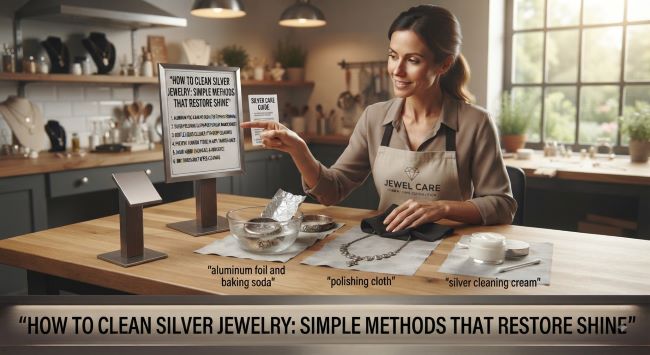
A dedicated silver polishing cloth is one of the easiest tools to use. These specially treated cloths remove tarnish and restore shine simply by rubbing the silver. They are gentle, effective, and convenient, making them a great tool to keep on hand. For light to moderate tarnish, a polishing cloth often does the job with no water or mess, and it is safe for regular use.
Method 3: The Baking Soda Method
For more stubborn tarnish, a popular approach uses baking soda:
As a gentle paste: Make a paste of baking soda and a little water, apply it gently to the silver with a soft cloth, rub softly, then rinse and dry. Use this sparingly and gently, since baking soda is mildly abrasive.
The foil method: For heavily tarnished silver, line a bowl with aluminum foil, add hot water, baking soda, and salt, and place the silver so it touches the foil. A chemical reaction transfers the tarnish off the silver. This works well for tarnished pieces, though it is best avoided for jewelry with certain gemstones or delicate elements.
The baking soda methods are effective for tougher tarnish in how to clean silver jewelry, but should be used carefully and gently to avoid scratching.
What to Avoid
Knowing what not to do is as important as knowing how to clean silver jewelry:
- Avoid harsh abrasives like rough scrubbers or heavy scouring, which scratch silver.
- Be cautious with gemstones, since some cleaning methods can damage certain stones. Check whether a piece has stones before using stronger methods.
- Avoid harsh chemicals not intended for silver.
- Do not scrub too hard, since silver is relatively soft and scratches easily.
- Be careful with the foil method on pieces with glued elements, pearls, or delicate stones.
Gentle handling protects your jewelry while still removing tarnish effectively.
Preventing Tarnish
The best part of how to clean silver jewelry is reducing how often you need to do it, through prevention:
- Store silver properly, in airtight bags or anti-tarnish containers, away from air and humidity.
- Keep it dry, since moisture accelerates tarnish. Remove silver before swimming or showering.
- Avoid contact with chemicals, including perfumes, lotions, and cleaning products. Put jewelry on after applying cosmetics.
- Wear it often, since regular wear and the natural oils of skin can actually help slow tarnish on some pieces.
- Clean before storing, so tarnish does not build up during storage.
Good storage and care dramatically reduce tarnish, meaning less frequent cleaning and jewelry that stays bright longer.
When to See a Professional
While how to clean silver jewelry is usually a simple home task, some situations call for a professional. Valuable, antique, or heirloom pieces, jewelry with delicate gemstones, or pieces that are damaged, loose, or need repair are best handled by an expert to avoid accidental harm. If a cherished piece is very tarnished, damaged, or needs restoration beyond cleaning, professional help is wise. The guidance in Jewelry Repair Near Me covers finding a reputable jeweler for repairs and restoration, which is useful here since some silver pieces need more than cleaning, and a professional can safely clean, repair, and restore valuable or delicate jewelry that you would not want to risk with home methods.
The bottom line on how to clean silver jewelry is that restoring its shine is usually quick and easy with simple home methods: gentle soap and water for light tarnish, a silver polishing cloth for convenience, or the baking soda methods for stubborn tarnish. Avoid harsh abrasives, be careful with gemstones, and prevent future tarnish through proper storage and care. For valuable, antique, or damaged pieces, turn to a professional. With these approaches, your silver jewelry will stay bright, lustrous, and beautiful for years.
Key Takeaways
- Silver tarnishes naturally as it reacts with sulfur in the air; tarnish is a surface layer that cleaning removes.
- Gentle soap and warm water with a soft cloth is the safest first method for light tarnish and regular cleaning.
- A silver polishing cloth is a convenient, effective tool for light to moderate tarnish with no mess.
- For stubborn tarnish, a baking soda paste or the aluminum foil, baking soda, and hot water method works well.
- Avoid harsh abrasives and scrubbing, since silver is soft and scratches easily.
- Be cautious with gemstones and delicate or glued elements, which some methods can damage.
- Prevent tarnish by storing silver in airtight containers, keeping it dry, and avoiding chemicals and cosmetics.
- For valuable, antique, delicate, or damaged pieces, consult a professional jeweler for cleaning, repair, or restoration.