How to Clean Glass Stovetop
A glass stovetop looks sleek on day one. Then a pot boils over, sauce spatters, and a cloudy ring forms around your favorite burner. The smooth surface that makes these stoves attractive also shows every mark. The good news is that learning how to clean glass stovetop surfaces is simple. You need a few gentle products, the right order of steps, and a little patience.
This guide covers the quick daily wipe, a weekly deep clean, and how to lift burnt-on food without scratching. It also compares cleaners, lists what never to use, and explains how to keep the surface clear for years.
Know Your Cooktop
“Glass” stovetops are made of a glass-ceramic material that handles high heat. They come in two main types.
- Radiant electric. Heating elements glow red under the glass.
- Induction. Magnets heat the pan directly, and the glass stays cooler.
Both clean the same way. Induction tops tend to have fewer burnt spills, since the surface does not get as hot.
The material is tough against heat but can scratch, pit, and stain. Gritty cleaners, rough pads, and dragged pans do most of the damage.
What You Need
- Microfiber cloths
- A soft sponge with a non-scratch side
- Dish soap
- White vinegar in a spray bottle
- Baking soda
- A towel large enough to cover the cooktop
- A single-edge razor scraper made for cooktops
- A cooktop cleaning cream
- Paper towels or a dry cloth for buffing
Before You Start
- Let the surface cool fully. Check that the hot surface light is off. Cleaning a hot top can burn you and bake cleaner onto the glass.
- Check the manual. Makers list approved products and methods. Following them protects your warranty.
- Remove loose crumbs. Wipe them away with a dry cloth so they do not scratch during scrubbing.
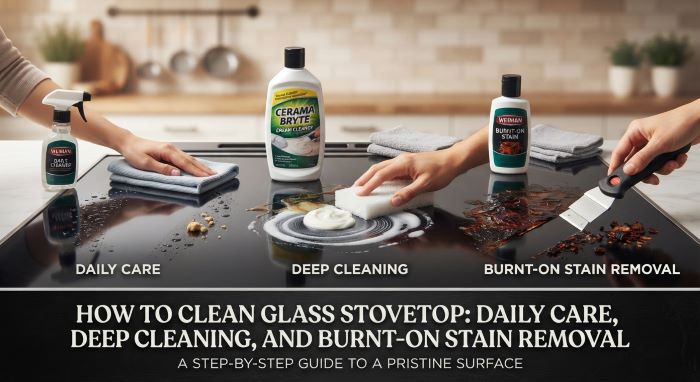
Daily Cleaning: The Two-Minute Wipe
A quick wipe after cooking prevents most buildup.
- Wait until the cooktop is cool.
- Spray the surface lightly with white vinegar, or use a drop of dish soap on a damp cloth.
- Wipe with a microfiber cloth in overlapping strokes.
- Rinse the cloth and wipe again with plain water.
- Buff dry with a clean cloth to prevent streaks.
This habit is the core of how to clean glass stovetop surfaces. Spills that sit get cooked on the next time you turn on the burner.
Weekly Deep Clean With Baking Soda
Use this method when you see haze, grease film, or light rings.
- Make sure the surface is cool and free of crumbs.
- Spray the cooktop with vinegar.
- Sprinkle a generous layer of baking soda over the surface. It will fizz a little.
- Soak a large towel in hot water with a squirt of dish soap. Wring it out so it is wet but not dripping.
- Lay the towel over the baking soda.
- Wait 10 to 15 minutes. The warmth and moisture loosen grime.
- Use the towel to wipe the baking soda away with gentle, circular strokes.
- Wipe with a clean, damp cloth until no white residue remains.
- Spray once more with vinegar and buff dry.
Baking soda is a mild abrasive. Rub gently, and keep the surface wet while you work.
How to Remove Burnt-On Food
For crusty, blackened spots, a razor scraper is the tool most cooktop makers recommend. Used correctly, it does not scratch.
- Let the cooktop cool.
- Wet the spot with vinegar or a little cooktop cream. Never scrape dry glass.
- Hold the scraper at about a 45-degree angle.
- Push forward with light, even pressure. Let the blade slide under the residue.
- Wipe the blade and the surface as debris lifts.
- Repeat until the spot is flat.
- Finish with a cooktop cream to remove the last film.
Safety and care tips:
- Use a new, clean blade. A nicked or rusty blade can scratch.
- Keep the blade flat against the glass. Do not dig in with a corner.
- Store the scraper with its guard on, away from children.
How to Use a Cooktop Cleaning Cream
A dedicated glass stove top cleaner cuts grease and polishes the surface. Common brands include Weiman, Cerama Bryte, and Affresh.
- Shake the bottle.
- Squeeze a few small drops onto the cool cooktop.
- Rub with a non-scratch pad or a damp cloth in small circles.
- Let the cream dry to a light haze, if the label says to.
- Buff with a dry microfiber cloth until the glass shines.
Many creams leave a thin protective layer that makes the next cleanup easier.
Cleaner Comparison
| Cleaner | Best For | Pros | Cons |
|---|---|---|---|
| Dish soap and water | Daily grease and spills | Cheap, gentle | Can streak if not rinsed |
| White vinegar | Daily shine, light film, water spots | Cuts streaks, cheap | Weak on burnt food |
| Baking soda and hot towel | Weekly deep clean | Loosens stuck grime | Leaves residue that needs rinsing |
| Cooktop cleaning cream | Grease, haze, polish | Made for the surface, adds protection | Costs more |
| Razor scraper | Burnt-on food | Removes what nothing else can | Needs care and a wet surface |
| Melamine foam sponge | Light scuffs and marks | Easy to use | Mildly abrasive, so use lightly and check the manual |
For most kitchens, the best glass stove top cleaner routine is simple: vinegar or dish soap daily, baking soda or cream weekly, and a scraper when needed.
How to Remove Specific Stains
White haze or cloudy film. Minerals from hard water or boiled-over pots cause this. Spray with vinegar, let it sit for five minutes, wipe, and buff. Follow with cooktop cream.
Rainbow or metallic marks. Aluminum and copper pan bottoms can leave shiny streaks. Rub with cooktop cream and a non-scratch pad. Clean pan bottoms to stop the marks from returning.
Dark rings around burners. These are layers of cooked-on grease. Use the baking soda method, then scrape, then polish.
Melted sugar or syrup. Sugar can bond to the glass and pit it as it cools. Turn off the heat. While the area is still warm, put on an oven mitt and carefully scrape the spill to a cooler part of the top with a razor scraper. Clean the rest when the surface is cool.
Melted plastic or foil. Handle these like sugar. Scrape gently while warm, with hand protection, then clean with cream when cool.
Scratches. Fine scratches cannot be removed, though cream can make them less visible. Deep scratches and cracks are permanent. A cracked cooktop is unsafe and must be replaced.
What Never to Use
- Steel wool or metal scouring pads. They scratch the surface.
- Abrasive powders. Gritty cleansers leave fine scratches.
- Green scrubbing pads. The rough side is too harsh.
- Ammonia-based glass cleaner. Many makers warn that it can leave stains or streaks that show when the cooktop heats.
- Bleach and oven cleaner. These can damage and discolor the surface.
- Knives or metal spatulas. Use only a flat razor scraper.
- Dirty sponges or cloths. Grease and grit transfer back to the glass.
Habits That Prevent Damage
- Wipe spills as soon as the surface is cool.
- Lift pots and pans. Do not slide them.
- Use cookware with flat, smooth bottoms.
- Wash and dry pan bottoms before you cook.
- Avoid dragging cast iron, stoneware, or rough ceramic across the glass.
- Do not use the cooktop as a cutting board or a counter.
- Do not place hot lids face down on the glass. They can trap air and stick.
- Match the pot size to the burner.
- Watch pots that may boil over, and lower the heat in time.
- Never cook on a dirty surface. Old spills burn in deeper.
How to Clean Electric Stove Top Types
Glass is not the only kind of electric stove. If you want to know how to clean electric stove top models with coil burners, the steps differ.
- Unplug the stove or switch off the breaker, and let the burners cool.
- Lift each coil and pull it straight out of its socket.
- Wipe the coils with a damp cloth and a little dish soap. Do not soak them or wet the electrical ends.
- Remove the drip pans. Soak them in hot, soapy water, then scrub with baking soda paste.
- Wipe the stove surface under the pans.
- Dry every part fully and put it back.
For a smooth electric top, follow the glass methods in this guide. When people ask how to clean electric stove top surfaces of any kind, the shared rules are the same: let it cool, use gentle products, and dry it well.
A Simple Cleaning Schedule
| When | What to Do |
|---|---|
| After each use | Wipe with a damp cloth once cool |
| Daily | Spray with vinegar and buff dry |
| Weekly | Deep clean with baking soda or cooktop cream |
| As needed | Scrape burnt spots with a razor scraper |
| Monthly | Polish with cream and inspect for scratches or chips |
Troubleshooting
| Problem | Likely Cause | Fix |
|---|---|---|
| Streaks after cleaning | Cleaner residue | Wipe with plain water, then buff dry |
| White film returns | Hard water or leftover baking soda | Vinegar spray and a dry buff |
| Stain will not lift | Layers of burnt grease | Repeat the baking soda soak, then scrape |
| New scratches | Grit under pans or rough pads | Clean pan bottoms and switch to microfiber |
| Brown discoloration | Cooked-on oil | Cooktop cream with a non-scratch pad |
| Pitted spot | Sugar or plastic spill | Permanent. Prevent future spills from cooling in place |
Step-by-Step Summary: How to Clean Glass Stovetop Surfaces in 10 Minutes
If you want one routine to remember, use this one. It covers how to clean glass stovetop surfaces from start to finish with items most kitchens already have.
- Turn off every burner and wait until the surface is cool to the touch.
- Wipe away loose crumbs with a dry microfiber cloth.
- Spray the surface lightly with white vinegar and wipe off the grease.
- Sprinkle baking soda over the stained areas.
- Lay a hot, damp towel over the baking soda and leave it for 10 to 15 minutes.
- Wipe in small circles with the towel to lift the residue.
- Hold a razor scraper at a low angle and gently lift anything that remains.
- Spray once more with vinegar and wipe clean.
- Buff dry with a fresh microfiber cloth until the glass shines.
On days when you are short on time, skip steps 4 through 7 and use a glass stove top cleaner cream in their place. Rub in a small amount, let it haze, and buff it off.
How to Clean a Glass Stovetop After a Boil-Over
Boil-overs are the most common cause of stubborn marks, so they deserve a plan of their own. Anyone learning how to clean glass stovetop spills should know that timing matters more than scrubbing.
- Water and pasta starch. Let the surface cool, then wipe with a damp cloth. A white film that stays behind is mineral residue. Vinegar dissolves it.
- Milk and sauces. These burn on fast. Soften them with a hot, damp towel for 10 minutes before you wipe.
- Sugar, syrup, and jam. These are the exception to the “wait until cool” rule. Melted sugar can bond to the glass and pit it as it cools. Turn off the heat, put on an oven mitt, and carefully lift the spill with a razor scraper while it is still warm. Follow your manual’s guidance here, since makers describe this step in detail.
- Oil and grease. Wipe with a drop of dish soap on a damp cloth, then rinse with a clean one.
Why the Glass Looks Cloudy After Cleaning
A clean cooktop can still look dull. Three things usually cause it.
- Leftover cleaner. Soap and cream residue dry to a haze. Wipe again with a damp cloth and buff dry.
- Hard water. Minerals in tap water leave white spots. Use vinegar or distilled water for the final wipe.
- Fine scratches. Tiny scratches scatter light. They cannot be removed fully, but a polish made for ceramic cooktops can make them less visible.
The buffing step matters most. People who ask how to clean glass stovetop surfaces without streaks nearly always skip the dry cloth at the end.
Is It Time to Call a Professional?
Cleaning cannot fix every problem. Stop using the cooktop and contact the maker or a repair technician if you see a crack, a chip near a burner, or a burner that glows unevenly. A cracked surface can let liquid reach the electrical parts below. Once you know how to clean glass stovetop surfaces the right way, most other marks are only cosmetic.
Frequently Asked Questions
Can I use a razor blade on a glass stovetop? Yes, if the maker allows it. Keep the surface wet and hold the blade at a low angle.
Is baking soda safe? Yes. It is mild. Rub gently and rinse well.
Can I use vinegar every day? Yes. It is a good daily cleaner for shine.
Can I use window cleaner? Most makers advise against ammonia-based products on cooktops.
How do I get rid of the cloudy look? Vinegar removes mineral film. Cooktop cream restores the shine.
How often should I deep clean? Once a week for regular cooks, or when you see buildup.
Do the same steps work for induction? Yes.
Can a scratched cooktop be repaired? Light marks can be masked with cream. Deep scratches cannot be fixed.
What is the fastest way to learn how to clean electric stove top glass after a boil-over? Let it cool, soak the spill with a hot, soapy towel for 15 minutes, wipe, and scrape any crust.
Final Thoughts
Once you know how to clean glass stovetop surfaces, the work takes minutes. Wipe the top after it cools each day. Give it a baking soda soak or a cream polish once a week. Use a razor scraper, wet and flat, for anything burnt on.
Skip steel wool, gritty powders, and harsh chemicals. Lift your pans, keep their bottoms clean, and deal with sugary spills right away. With those habits, how to clean glass stovetop messes stops being a chore, and your cooktop keeps its showroom shine.
Key Takeaways
- The basics of how to clean glass stovetop surfaces: wait for it to cool, wipe daily, and deep clean weekly.
- Vinegar or dish soap with a microfiber cloth handles everyday messes.
- Baking soda under a hot, damp towel for 15 minutes loosens stuck grime.
- A razor scraper at a low angle on a wet surface removes burnt-on food without scratches.
- Never use steel wool, abrasive powders, rough pads, or ammonia-based cleaners.
- Scrape melted sugar or plastic while still warm, with hand protection, to prevent pitting.
- Lift pans, keep their bottoms clean, and wipe spills before they burn in.