Couples Therapy What to Expect First Session: A Complete Guide
Booking that first appointment can feel like a big step, and the unknown often makes it feel bigger. Walking into a room to talk about your relationship with a stranger, alongside your partner, is understandably nerve-wracking, and not knowing what will happen only adds to the anxiety. The good news is that the first session is usually far gentler and more straightforward than people fear. If you are wondering about couples therapy what to expect first session, this guide walks through exactly what tends to happen, how to prepare, and how to make the most of it, so you can arrive feeling informed rather than uneasy.
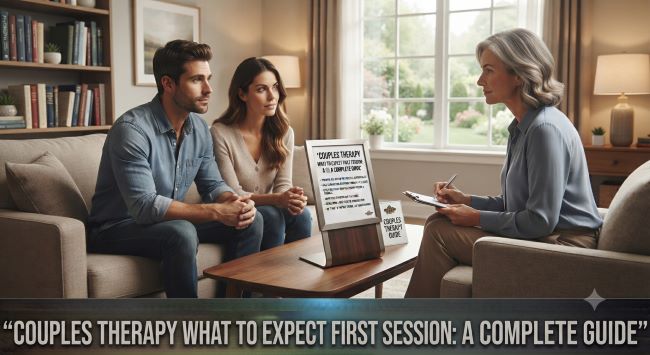
It Is Normal to Feel Nervous
First, a reassurance: feeling anxious before your first session is completely normal, and therapists know it. Most couples arrive feeling some mix of nervousness, hope, skepticism, or vulnerability, and a good therapist expects this and works to put you both at ease from the start. There is no need to have the right words ready or to perform. When considering couples therapy what to expect first session, the most important thing to know is that the first meeting is designed to be a gentle beginning, not an intense confrontation. You are simply starting a conversation.
Before the Session Begins: Paperwork and Logistics
The practical side of couples therapy what to expect first session usually starts before the real conversation does. Most therapists have some intake paperwork to complete, either beforehand or at the start of the session. This typically includes basic information, consent forms, and often a discussion of confidentiality and how the practice works.
This is also when logistics get covered: how long sessions last (often around fifty minutes to an hour, though couples sessions are sometimes longer), how often you will meet, fees and insurance if relevant, and cancellation policies. Getting these details out of the way early means the rest of the session can focus on you and your relationship. It is perfectly fine to ask questions about any of this, since understanding the practical framework helps you feel more comfortable.
Introductions and the Therapist’s Approach
Once the paperwork is done, the session usually opens with introductions. The therapist will introduce themselves, explain a little about how they work, and describe what couples therapy with them generally looks like. Different therapists use different approaches and methods, and many will briefly explain their style so you know what to expect going forward.
This part of couples therapy what to expect first session is also your chance to get a feel for the therapist. The relationship between a couple and their therapist matters a great deal to whether therapy works, so pay attention to whether you both feel reasonably comfortable and heard. Feeling at ease with the therapist, even amid the nervousness, is a good early sign.
Sharing What Brings You In
The heart of the first session is usually a conversation about what brought you to therapy. The therapist will typically invite each partner to share their perspective on why you are there, what has been difficult, and what you hope to change. This is a central part of couples therapy what to expect first session: both of you getting the chance to be heard.
A skilled therapist manages this carefully so that it does not turn into an argument or a blame session. They will often make sure each person gets space to speak, and they guide the conversation so both perspectives come out. You do not need to have everything figured out or perfectly articulated. Simply describing, in your own words, what has been going on and how you feel is exactly what is needed. It is normal for emotions to come up here, and that is okay.
Exploring Your Relationship History
Beyond the immediate concerns, the therapist usually wants to understand the broader picture, so part of couples therapy what to expect first session often involves some questions about your relationship history. This might include how you met, how long you have been together, significant events or transitions, and a general sense of your life together. Some therapists also ask about individual backgrounds, since each partner brings their own history into the relationship.
This history-gathering is not about digging for problems; it helps the therapist understand the context of your relationship and how you got to where you are. Think of it as giving the therapist the background they need to genuinely understand your situation rather than working from a blank slate.
Setting Goals for Therapy
An important part of the first session is beginning to identify what you both want from therapy. The therapist will often ask what you hope to achieve, whether that is better communication, rebuilding trust, resolving specific conflicts, reconnecting emotionally, or working through a particular challenge. Clarifying goals is a key element of couples therapy what to expect first session, since it gives your work together direction.
Your goals as a couple might not perfectly align at first, and that is normal too. Part of the therapist’s job is helping you find common ground and shared objectives. Even a rough sense of what you both want, expressed in the first session, gives the therapist something to build on in the sessions that follow.
Understanding the Therapist’s Neutral Role
One of the most reassuring things to understand about couples therapy what to expect first session is that a good couples therapist does not take sides. They are not there to judge who is right or wrong, or to declare one partner the problem. Instead, they act as a neutral, supportive guide for the relationship itself, helping both of you communicate and understand each other better.
This neutrality is essential, and a skilled therapist works to make both partners feel equally heard and respected. If you have worried that therapy will become two-against-one, or that the therapist will simply side with your partner, understanding their genuinely neutral role should ease that concern. The relationship is the focus, and both people matter equally.
Confidentiality and Trust
Confidentiality is a foundation of therapy, and the therapist will usually explain their confidentiality policies during the first session. Understanding what is kept private helps build the trust that makes therapy effective. This is another reason the opening logistics matter, since knowing your conversations are handled professionally and privately allows you both to open up more honestly. If you have questions about confidentiality, the first session is the time to ask them.
What the First Session Is Not
It helps to set realistic expectations about couples therapy what to expect first session by knowing what it is not. The first session is not going to fix everything, and it is not meant to. It is a beginning, a chance for the therapist to understand your relationship and for you to get comfortable with the process. Deep change happens over time, across multiple sessions, not in a single meeting.
The first session is also not a courtroom where blame is assigned, nor an intense emotional excavation of every problem you have ever had. It is generally a calm, structured conversation focused on understanding and getting started. Releasing the expectation that everything must be resolved immediately, or that the session will be brutally difficult, makes the experience far less intimidating.
How to Prepare for Your First Session
A little preparation helps you get more from couples therapy what to expect first session. Before you go, it can help to reflect on why you are seeking therapy and what you hope to gain, so you can express it when asked. Thinking about the main concerns you want to address gives you a starting point. It also helps to go in with an open mind and a willingness to participate honestly, since therapy works best when both partners engage genuinely.
Practically, arrive on time (or early, if there is paperwork), and try to approach the session as a shared effort rather than a chance to prove a point. You do not need to script anything or prepare a case; you just need to show up willing to talk and listen.
Getting the Most Out of It
To make the most of couples therapy what to expect first session and the sessions that follow, a few attitudes help enormously. Be honest, since therapy only works when the therapist has an accurate picture. Be willing to listen to your partner’s perspective, even when it is hard to hear. Stay open to the process, recognizing that meaningful change takes time and consistency. And give the therapist and the process a fair chance, since the first session is just the beginning of building understanding and trust.
Remember that seeking couples therapy is a positive, proactive step, not a sign of failure. Choosing to work on a relationship together takes courage and care, and simply showing up for that first session is something to feel good about.
After the First Session
By the end of the first session, you will usually have a clearer sense of the therapist, the process, and the direction of your work together. The therapist may share some initial thoughts, discuss how you might proceed, and schedule future sessions. You and your partner can also talk afterward about how it felt and whether the therapist seems like a good fit, which is a reasonable thing to consider. If the fit feels right, you continue building on the foundation the first session created.
The bottom line on couples therapy what to expect first session is that it is a gentle, structured beginning, not the intense ordeal many people fear. Expect some paperwork and logistics, introductions, a conversation about what brought you in, some relationship history, and the start of setting goals, all guided by a neutral therapist focused on helping you both. Feeling nervous is normal, the first session will not fix everything overnight, and simply showing up is a meaningful, courageous step toward a stronger relationship.
Key Takeaways
- Feeling nervous before the first session is completely normal, and therapists expect it and work to put you at ease.
- The session usually begins with paperwork and logistics like session length, frequency, fees, and confidentiality.
- The therapist introduces their approach, giving you a chance to see whether you both feel comfortable with them.
- The core of the session is each partner sharing what brought you in, guided so it does not become an argument.
- The therapist often asks about your relationship history to understand the full context, not to find fault.
- You begin identifying goals for therapy, which gives your work together direction even if your goals differ at first.
- A good couples therapist stays neutral, taking no sides and treating both partners as equally important.
- The first session will not fix everything; it is a beginning, and simply showing up is a positive, courageous step.