Which Item Is a Benefit of Using the Travel Card?
Travel cards appear in two distinct contexts: government-issued travel cards for employees on official business, and consumer travel credit cards for individuals who want to earn rewards on personal travel spending. The benefits of each differ in important ways, and the question of which item is a benefit of using a travel card depends on which type you’re working with. This guide covers both, clearly identifying the key benefits in each context.
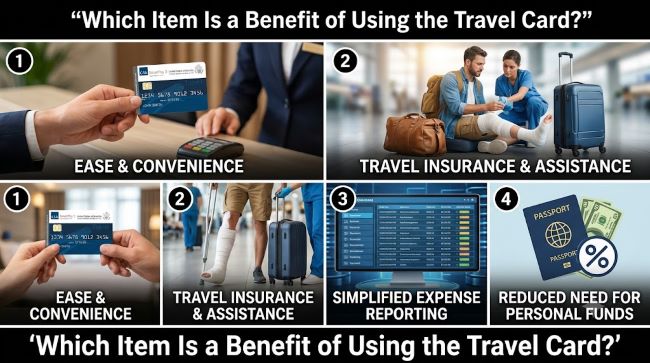
Government Travel Cards: Key Benefits
In the government and military context, a travel card (often called a government travel charge card or GTC) is issued to federal employees, military service members, and government contractors for use when traveling on official government business. The most widely used program in the US federal government is administered through GSA SmartPay.
The primary benefits of using the government travel card for official business include:
Simplified expense tracking and reconciliation. Rather than requiring employees to pay personal funds and submit for reimbursement, the travel card creates a centralized record of all official travel expenses. This simplifies the reporting process for both the employee and the agency, produces a clean audit trail, and reduces the administrative burden of processing cash advances and reimbursement claims.
Acceptance of government rates. Government travel cardholders traveling on official business can access government negotiated rates for hotels, rental cars, and other services. These rates are often lower than publicly available rates and are contingent on using the travel card as the payment method.
No interest if paid on time. Government travel cards are intended to be paid from reimbursed funds within the billing cycle. When the agency reimburses the employee and the employee pays the bill on time, no interest accrues. This is a direct financial benefit: the employee uses the card, gets reimbursed, pays the bill, and bears no financing cost.
Fraud protection and dispute resolution. Government travel cards carry liability protections. If the card is lost, stolen, or used fraudulently, the cardholder has a defined dispute resolution process and limited personal liability. This is a significant benefit compared to carrying large amounts of cash while traveling on official business.
Emergency assistance services. Most government travel card programs include emergency travel assistance services: help with lost cards, emergency cash advances, medical referral assistance, and other travel emergency support.
Eliminates need for personal funds during travel. Without a travel card, employees would need to front potentially significant sums out of pocket and wait for reimbursement. The travel card eliminates this cash flow burden, which is particularly meaningful for lower-income employees or those traveling internationally where costs accumulate quickly.
Which Item Is the Primary Benefit: Expense Tracking
If answering this as a financial literacy or government training question where a single benefit must be identified, the primary benefit most consistently cited is expense tracking and simplified reconciliation. The government travel card’s core purpose is to create a transparent, auditable record of official travel spending that reduces fraud, simplifies reimbursement, and enables accurate agency budget management.
The card is not designed as a personal reward vehicle or a general-purpose credit tool. It’s a financial management instrument that benefits both the employee (by eliminating the need to use personal funds) and the agency (by centralizing and documenting travel spending).
Consumer Travel Cards: Key Benefits
For personal travel credit cards, the benefit landscape is broader and more reward-focused. The answer to which item is a benefit of using a travel card in this context typically centers on:
Earning travel rewards (points or miles). Travel cards earn points or miles on purchases, typically at an accelerated rate on travel-related categories (flights, hotels, car rentals, dining). These rewards are redeemable for flights, hotel stays, upgrades, or cash back, providing a meaningful return on spending you’d make anyway.
Airport lounge access. Premium travel cards (Chase Sapphire Reserve, Amex Platinum, Capital One Venture X) include lounge access through networks like Priority Pass, Amex Centurion, or Capital One Lounges. This benefit provides comfortable waiting areas with free food, beverages, showers, and Wi-Fi, a significant upgrade from standard airport terminals.
Travel insurance and protections. Consumer travel cards typically include trip cancellation insurance, trip interruption insurance, lost baggage reimbursement, travel delay coverage, and rental car collision damage waiver. These protections can save hundreds to thousands of dollars when travel plans go wrong and replace the need to purchase separate travel insurance for many trips.
No foreign transaction fees. Most travel-focused credit cards waive foreign transaction fees (typically 3% on cards that charge them), saving money on every international purchase. This benefit is particularly valuable for frequent international travelers.
Global Entry or TSA PreCheck credit. Many travel cards reimburse the application fee for Global Entry ($100 every 4.5 years) or TSA PreCheck ($85 every 4.5 years), which provide expedited security screening. The reimbursement alone often justifies the annual fee on mid-tier travel cards.
Sign-up bonuses. New cardholder bonuses on travel cards are among the highest in the credit card industry: often 60,000-100,000 points or miles worth $600-$1,500+ in travel redemptions.
Annual travel credits. Many travel cards include annual credits for travel purchases ($300 on Chase Sapphire Reserve, $200 on Amex Platinum) that offset a significant portion of the annual fee.
The Single Most Cited Benefit
Across both government and consumer contexts, if one item must be identified as a benefit of using a travel card, the answer depends on context:
Government context: expense tracking and simplified reimbursement reconciliation.
Consumer context: earning travel rewards (points and miles) that can be redeemed for flights, hotel stays, and upgrades, often at a value that exceeds what cash back cards provide on the same spending.
For broader context on how travel card benefits fit within smart financial decision-making, why should you work to be an informed consumer is directly relevant: understanding the full terms of any travel card, including annual fees, interest rates, and reward expiration rules, is exactly the kind of informed consumer behavior that determines whether a travel card is genuinely beneficial for your situation.
Key Takeaways
- Government travel cards (GTCs) are issued for official business travel: the primary benefit is expense tracking and simplified reconciliation that creates an auditable record and eliminates the need for employees to use personal funds
- Other government travel card benefits include access to government negotiated rates, no interest when paid from reimbursed funds on time, fraud protection, and emergency assistance services
- Consumer travel cards’ primary benefit is earning points or miles on purchases redeemable for flights, hotel stays, and upgrades, often at a value exceeding equivalent cash back
- Premium consumer travel cards add airport lounge access, comprehensive travel insurance, no foreign transaction fees, Global Entry/TSA PreCheck credits, and annual travel credits
- In a government training or financial literacy context, the most commonly tested single benefit of the travel card is expense tracking and the elimination of out-of-pocket costs during official travel
- The value of a consumer travel card depends heavily on whether you actually travel enough to use the benefits: an annual-fee travel card that goes unused provides no benefit and costs the fee
- Both types of travel card carry responsibility: government travel cards used for personal expenses create serious compliance violations; consumer travel cards carrying balances incur high interest that erases reward value