Urban Air: A Complete Guide to the Adventure Park Chain
If you have a kid with seemingly unlimited energy and a rainy weekend to fill, an indoor adventure park starts to look very appealing. Urban Air has become one of the biggest names in that space, growing from a single trampoline park into a sprawling chain of indoor attractions that goes well beyond just bouncing. This guide covers what Urban Air actually offers, what it costs, how to find a location near you, and how it stacks up against competitors.
Whether you are planning a birthday party, looking for a way to wear out the kids, or just curious what the hype is about, this breaks down everything worth knowing before you go.
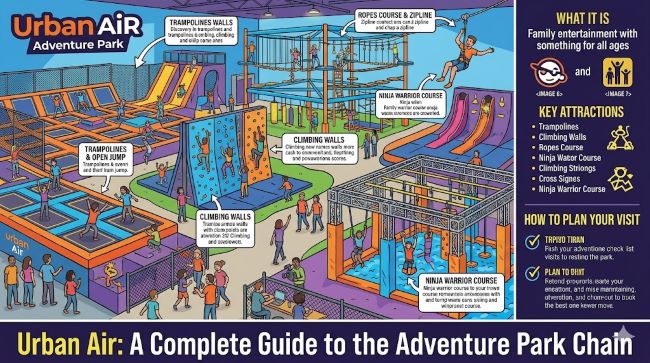
What Is Urban Air?
Urban Air, officially known as Urban Air Trampoline and Adventure Park, is a franchise chain of indoor adventure parks aimed primarily at kids and families. It started as a trampoline park concept and expanded dramatically over the years into something much larger, adding attractions that turn each location into a full indoor adventure center rather than just a room full of trampolines.
The brand has grown into one of the largest operators in the indoor entertainment space, with hundreds of locations across the United States and beyond. Each Urban Air adventure park operates as a franchise, meaning individual locations are independently owned but follow the same branding, attraction standards, and safety guidelines set by the parent company.
The core idea is to give kids a place to be physically active and have fun regardless of the weather outside, while giving parents a relatively contained, supervised environment. As an Urban Air adventure park combines many different attractions under one roof, it has become a go-to option for birthday parties, family outings, and rainy-day energy burning.
Attractions at Urban Air
The big difference between Urban Air and a basic trampoline park is the range of attractions. While trampolines remain central, a typical location packs in a wide variety of activities, though the exact lineup varies by location and the size of the park.
Trampolines
The foundation of the brand is still its trampoline offerings. Most locations feature open jump areas, trampoline courts, and dedicated zones for activities like dodgeball or basketball dunking using trampolines to add height. This is the classic trampoline park experience that started it all.
The Sky Rider
One of Urban Air’s signature attractions is the Sky Rider, an indoor coaster-style ride where participants are harnessed in and travel along a suspended track above the park. It is one of the features that sets the brand apart from a standard trampoline park and tends to be a highlight for kids tall enough to ride.
Climbing Walls
Many locations include climbing walls of varying difficulty, giving kids a different kind of physical challenge. These are usually equipped with auto-belay systems for safety, allowing kids to climb without needing a person holding the rope.
Ropes Courses and Obstacle Courses
Adventure-focused attractions like elevated ropes courses and warrior-style obstacle courses appear at many locations. These challenge balance, coordination, and confidence, and they are often among the more popular features for older kids.
Tubes Playground and Soft Play
For younger children, many Urban Air locations include a tubes playground or soft play structure, a multi-level maze of tunnels, slides, and climbing areas suited to smaller kids who are not ready for the more intense attractions.
Other Attractions
Depending on the size and tier of the location, additional attractions can include bumper cars, go-karts, virtual reality experiences, battle beams, drop zones, and more. Larger flagship locations tend to offer the widest range, while smaller parks focus on the core trampoline and climbing attractions.
Because the lineup varies, it is always worth checking a specific location’s attraction list before visiting, since not every Urban Air adventure park offers every feature.
How Much Is Urban Air Per Child?
One of the most common questions parents ask is how much is Urban Air per child, and the honest answer is that it depends on a few factors: the location, the attraction package, and when you go.
Urban Air typically uses a tiered pricing structure, where different wristband levels unlock different sets of attractions. The lower tiers cover the basic attractions like trampolines and the playground, while higher tiers add access to the more elaborate features like the Sky Rider, ropes courses, and climbing.
So when figuring out how much is Urban Air per child, the key variable is which attraction package you choose. A basic package costs less but limits which attractions the child can access, while an all-access or top-tier package costs more but unlocks everything the location offers. For a family wanting the full experience, the higher tiers usually make more sense, while for younger kids who will mostly stick to the playground and trampolines, a lower tier can be enough.
A few other things affect the answer to how much is Urban Air per child:
- Membership options. Urban Air offers monthly memberships that can significantly reduce the per-visit cost for families who go regularly, which often works out cheaper than paying full price each time for frequent visitors.
- Time and day. Some locations have different pricing or promotions for weekdays versus weekends, or for certain times of day.
- Online versus walk-in. Booking ahead online sometimes comes with better pricing than buying at the door, and it can also guarantee entry during busy periods.
Because pricing is set by individual franchises and changes over time, the most accurate way to find out how much is Urban Air per child at a specific park is to check that location’s website directly, where current wristband tiers and prices are listed.
Finding an Urban Air Near Me
For parents searching “urban air near me,” the chain’s wide footprint means there is a reasonable chance of a location within driving distance, particularly in and around suburban areas where these parks tend to cluster.
The most reliable way to act on an “urban air near me” search is through the official Urban Air website, which includes a location finder. Entering your location shows nearby parks along with their specific attractions, hours, and pricing, since these vary from one franchise to another.
A few things worth checking when you find a location through an “urban air near me” search:
- Which attractions that specific park offers, since the lineup is not identical everywhere
- Hours of operation, which can vary by day and may differ during school breaks and holidays
- Whether reservations are needed, especially during peak times like weekends and school vacations
- Current promotions or membership deals that might lower the cost
Birthday Parties and Group Events
A large part of Urban Air’s business comes from birthday parties, and the chain has built out dedicated party packages to capture that.
Party packages typically bundle admission for a group of kids with reserved party space, a party host to help run things, and often food and drink options. The exact inclusions vary by package tier and location, but the appeal is convenience: the park handles setup, supervision of the attractions, and cleanup, which removes most of the work from the parents hosting.
Beyond birthdays, many locations accommodate other group events like school field trips, team celebrations, and fundraisers. For larger groups, contacting the location directly to discuss options usually gets the best arrangement, since group pricing and availability depend on the specific park. For milestone celebrations especially, some families like to mark the day with a keepsake, and ideas like a personalized travel souvenir pin translate well to commemorating any memorable family outing, not just trips.
Safety at Urban Air
Any activity involving trampolines, climbing, and elevated courses comes with some inherent physical risk, so safety is a reasonable concern for parents.
Urban Air locations implement various safety measures, including padded surfaces, auto-belay systems on climbing walls, harnesses on attractions like the Sky Rider and ropes courses, and staff monitors stationed around the attractions. Most locations require special grip socks for the trampoline areas, which are usually sold at the park and help with traction.
As with any trampoline park, common-sense precautions reduce the risk of injury. Following the posted rules for each attraction, making sure kids use attractions appropriate for their size and age, and not overcrowding trampolines all help. Parents of younger kids in particular tend to appreciate the separate soft play areas, which keep smaller children away from the more intense attractions where bigger kids are bouncing.
It is also worth noting that waivers are standard at these parks. Most locations require a signed waiver before kids can participate, which can usually be completed online ahead of time to save a step at check-in.
How Urban Air Compares to Competitors
Urban Air is not the only player in the indoor adventure park space, and parents often compare it against the main alternatives before deciding where to go.
Urban Air vs. Skyzone
Skyzone, also written Sky Zone, is one of the best-known names in trampoline parks and a frequent point of comparison. Sky Zone built its reputation specifically as a trampoline park, with a strong focus on trampoline-based attractions like freestyle jump, dodgeball, and foam pits. Compared to Skyzone, Urban Air tends to offer a wider variety of non-trampoline attractions, like the Sky Rider, go-karts, and ropes courses, positioning itself as a broader adventure park rather than a pure trampoline park.
That said, the specific comparison depends heavily on the individual locations near you. A large Skyzone might offer more than a small Urban Air, and vice versa, so comparing the actual attraction lists of the specific parks in your area matters more than the brand reputation alone.
Urban Air vs. Altitude Trampoline Park
Altitude Trampoline Park is another major competitor in the space. Like Sky Zone, Altitude Trampoline Park centers heavily on trampoline-based attractions, including large open jump areas, dodgeball courts, and foam pits, often with a strong emphasis on the trampoline experience itself.
When weighing Urban Air against Altitude Trampoline Park, the same general pattern applies as with Sky Zone: Urban Air typically casts a wider net with adventure attractions beyond trampolines, while Altitude Trampoline Park and similar dedicated trampoline parks tend to focus more specifically on the bouncing experience. Families who want maximum trampoline time might prefer a dedicated trampoline park, while those wanting variety across many types of attractions often lean toward an Urban Air adventure park.
Choosing Between Them
The best choice comes down to what your kids actually enjoy. If they are happiest bouncing and playing trampoline dodgeball, a focused trampoline park like Skyzone or Altitude Trampoline Park might deliver more of exactly that. If they want variety, climbing, ropes courses, and rides alongside trampolines, Urban Air’s broader approach often wins. Checking prices, attraction lists, and reviews for the specific locations near you is the surest way to decide.
Tips for Visiting Urban Air
A few practical tips make a visit smoother, especially for first-timers.
Book online ahead of time. Especially on weekends and during school breaks, booking ahead can save money and guarantee entry during busy periods when walk-in capacity may be limited.
Complete the waiver in advance. Filling out the required waiver online before arriving saves time at check-in, which matters when you have impatient kids ready to jump.
Bring or buy grip socks. Since most locations require special grip socks for the trampolines, bringing a pair from a previous visit saves you from buying new ones each time.
Dress appropriately. Comfortable, flexible clothing works best for the physical attractions, and avoiding anything with sharp zippers or hard accessories is safer on the trampolines.
Consider a membership if you will return. For families who expect to visit regularly, the monthly membership often pays for itself quickly compared to paying full admission each time.
Check the attraction height requirements. Some attractions like the Sky Rider have height or age minimums, so checking ahead avoids disappointment for kids who may not yet qualify for certain features.
What Ages Is Urban Air Best For?
One question parents often have is whether an Urban Air adventure park suits their child’s specific age, since the attractions span a wide range of physical abilities.
Toddlers and preschoolers. The youngest visitors are best served by the soft play and tubes playground areas, plus the gentler trampoline zones where available. Many locations have designated times or areas for little kids, sometimes called toddler time, when the park is calmer and the bigger, more intense attractions are less crowded. For this age group, a lower-tier admission package usually makes the most sense, since they will not use the height-restricted attractions anyway.
Elementary-age kids. This is arguably the sweet spot for Urban Air. Kids in this range are typically big enough for most attractions, including climbing walls, the Sky Rider, and obstacle courses, while still being squarely in the target audience for the trampolines and play areas. They tend to get the most out of a full-access wristband.
Tweens and teens. Older kids often gravitate toward the more challenging attractions like the ropes courses, warrior obstacle courses, and go-karts where available. The variety at a larger Urban Air adventure park, especially the adventure-style attractions, tends to hold their interest better than a pure trampoline park would.
Adults. Parents are generally welcome to participate in many attractions alongside their kids, though some attractions have weight limits, and jumping on trampolines carries a higher injury risk for adults than for kids. Many parents are happy to supervise from the sidelines while the kids wear themselves out.
Because the range is so wide, mixed-age groups tend to do well at Urban Air, since there is usually something appropriate for everyone, which is harder to find at venues built around a single type of activity.
Food and Amenities
Most Urban Air locations include a café or snack bar serving family-friendly fare like pizza, snacks, and drinks. While the food is not usually the reason anyone visits, it is convenient for refueling kids mid-visit or rounding out a birthday party package without leaving and coming back.
Seating areas give parents a place to relax, and many locations offer free Wi-Fi, so parents can get some work done or rest while the kids play. Lockers or cubbies for storing shoes and belongings are also standard, since shoes come off for the trampoline areas in favor of the required grip socks.
Is Urban Air Worth It?
Whether Urban Air is worth it depends on what you are looking for. For families with active kids, particularly during bad weather or school breaks, it offers a way to burn energy in a supervised environment with a lot of variety, which many parents find well worth the cost, especially with a membership for regular visitors.
The variety is the main selling point. Because an Urban Air adventure park combines trampolines, climbing, ropes courses, rides, and play areas, it can entertain kids of different ages and interests in one place, which is harder to achieve at a more specialized venue. For birthday parties in particular, the convenience of the packaged experience is a significant draw for parents who would rather not handle all the logistics themselves.
For families who only want trampolines, or who have a dedicated trampoline park nearby that their kids prefer, the broader Urban Air experience may offer more than they need. As with most family entertainment, the answer comes down to matching the venue to your kids’ specific interests and your budget.
Key Takeaways
- Urban Air, officially Urban Air Trampoline and Adventure Park, is a large franchise chain of indoor adventure parks for kids and families that grew from a trampoline park into a broader attraction center.
- Attractions go well beyond trampolines to include the signature Sky Rider, climbing walls, ropes courses, soft play areas, and often bumper cars, go-karts, and more, though the lineup varies by location.
- The answer to how much is Urban Air per child depends on the location, the attraction package tier chosen, and timing, with memberships reducing the per-visit cost for frequent visitors.
- To act on an “urban air near me” search, the official website’s location finder shows nearby parks with their specific attractions, hours, and pricing.
- Birthday parties are a major offering, with packages that bundle admission, party space, a host, and often food, handling most of the logistics for parents.
- Safety measures include padded surfaces, auto-belay climbing systems, harnesses, staff monitors, required grip socks, and waivers, though common-sense precautions still matter.
- Compared to Sky Zone and Altitude Trampoline Park, which focus more specifically on trampolines, Urban Air typically offers a wider variety of adventure attractions.
- Urban Air tends to be worth it for families wanting variety and a supervised environment for active kids, especially with a membership, while trampoline-focused families might prefer a dedicated trampoline park.