Best Places to See Autumn Leaves Japan: Complete Kouyou Viewing Guide
Japan’s autumn transforms the landscape into something magical. Trees burst into reds, oranges, and golds. The season carries cultural significance in Japanese tradition. Many people specifically plan trips around this time. Understanding the best places to see autumn leaves japan helps you experience this natural spectacle fully.
The Japanese word “kouyou” refers to autumn leaf viewing, a tradition dating back centuries. During fall, Japanese people visit parks, gardens, and natural areas specifically to appreciate the changing colors. The season is brief, usually lasting just a few weeks, making planning essential.
Understanding Autumn Leaf Season in Japan
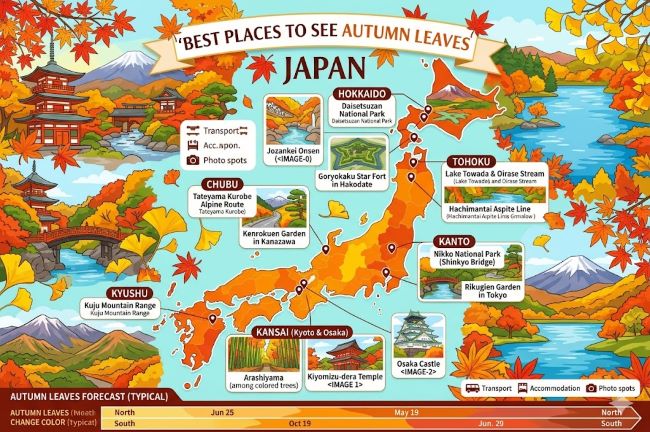
Autumn leaves in Japan don’t all turn at the same time. The season progresses from north to south across the country. Hokkaido’s autumn peaks in September. Central Japan’s leaves peak in November. Southern regions like Kyushu see peak colors in December.
The timing depends on several factors. Temperature, daylight hours, and precipitation all influence when leaves turn. A cold night followed by warm days creates the most vibrant colors. Rain can cause leaves to fall prematurely, cutting the viewing season short.
Most visitors plan trips for October and November when multiple regions have peak colors simultaneously. Planning flexibility helps you catch peak colors wherever you visit.
Nikko: Mountain Temple Paradise
Nikko stands out as one of Japan’s premier autumn destinations. Located about two hours north of Tokyo, Nikko combines natural beauty with cultural significance.
The Nikko National Park surrounds sacred temples and shrines. The combination of maple, ginkgo, and cedar trees creates diverse color palettes. The Kegon Falls waterfall provides a dramatic backdrop for red foliage.
Lake Chuzenji, nestled in the mountains, reflects brilliant autumn colors. Boat rides on the lake let you experience the colors from the water. Hiking trails around the lake offer intimate views of the foliage.
Peak viewing typically occurs from mid-October to early November. The town becomes crowded during peak season. Visiting on weekdays rather than weekends helps you avoid the largest crowds.
Kyoto: Traditional Garden Colors
Kyoto preserves Japan’s cultural heritage through temples and gardens. The city’s abundant gardens showcase autumn leaves in carefully curated settings.
The philosopher’s Path walks alongside a canal lined with maple trees. The path stretches for about two kilometers through residential areas and garden spaces. Fall colors create a tunnel effect as trees arch over the path.
Arashiyama’s bamboo grove attracts massive crowds, but the surrounding temple grounds offer quieter alternatives. Okochi Villa provides elevated views of the valley filled with autumn colors. The experience combines cultural appreciation with natural beauty.
Ryoanji and Kinkakuji temples feature gardens where fall colors complement architectural elements. These iconic locations draw visitors year-round, but autumn visits offer particular resonance.
Peak season in Kyoto runs from mid-November to early December. Book accommodations early since autumn draws enormous numbers of visitors.
Hiroshima: River Valley Views
The Ota River valley near Hiroshima creates dramatic autumn scenery. The river cuts through mountains surrounded by deciduous trees.
Miyajima Island sits in the river valley. The famous red torii gate framed by autumn foliage creates iconic photographic opportunities. The island’s many maple trees create a stunning display that peaks in late November.
Hiking trails around Miyajima offer varied perspectives on the foliage. You can experience colors from the water, from elevated viewpoints, and from up close on forest paths.
The town of Hiroshima itself has beautiful parks and gardens. Peace Memorial Park features trees that survived the atomic bomb. Visiting during autumn connects natural renewal with historical significance.
Takayama and the Japanese Alps
The mountain region around Takayama offers dramatic autumn scenery. The Japanese Alps provide elevation that creates distinct vegetation zones.
Kamikochi Valley in the Japanese Alps showcases high-altitude autumn colors. The valley is accessible from September through October before winter weather closes access. The limited season makes early planning important.
Takayama itself preserves traditional Japanese architecture. Exploring the old town between mountain viewing creates a complete cultural experience. The combination of mountains and historic preservation appeals to many visitors.
Peak season in the mountains occurs in September and early October. Higher elevations turn first, so timing depends on which elevation you want to experience.
Mount Fuji Surroundings
Japan’s iconic peak provides a stunning backdrop for autumn foliage. The lakes around Mount Fuji reflect the mountain alongside brilliant fall colors.
The Fuji Five Lakes offer different perspectives on the mountain and surrounding scenery. Each lake has trails and viewpoints where you can appreciate the combination. Clear autumn days provide the best visibility of Mount Fuji through the seasonal haze.
The foothills around Mount Fuji have forests that turn brilliant colors. Hakone and Kawaguchiko areas combine mountain views with accessible autumn leaf viewing.
Late October and early November provide peak colors in this region. The area is relatively accessible from Tokyo, making it convenient for short trips.
Nara: Deer Among the Colors
Nara offers a unique autumn experience combining cultural sites with natural scenery. The parks allow free-roaming deer that create unusual photo opportunities.
Nara Park surrounds historic temples and contains extensive forest areas. Walking through the park during autumn, you encounter both ancient architecture and spectacular foliage. The deer add an element of wild nature to the experience.
Todaiji Temple houses a massive bronze Buddha statue. The surrounding grounds and gardens display autumn colors throughout the temple complex. Temple grounds often have carefully maintained gardens designed to showcase seasonal changes.
Nara Peak offers elevated views of the city and surrounding colored foliage. Hiking to the peak takes about an hour but rewards you with panoramic autumn scenery.
Okunoin and the Kumano Kodo Trails
The Kumano Kodo pilgrimage trails wind through mountainous terrain in the Kii Peninsula. These ancient trails connect sacred sites and pass through old-growth forest.
Walking the trails during autumn means experiencing colors from within the forest. The canopy creates a tunnel of colored leaves. Some trails are less crowded than famous tourist destinations.
The pilgrimage experience appeals to those seeking spiritual or reflective experiences alongside nature appreciation. Multiple trail options exist with varying difficulty levels.
Late October and early November provide good conditions. The trails are accessible year-round, but autumn adds emotional resonance to the pilgrimage experience.
Kanazawa and the Kaga Region
Kanazawa preserves traditional Japanese culture through gardens and historic sites. The city’s famous Kenrokuen Garden showcases autumn colors magnificently.
Kenrokuen is one of Japan’s three great gardens. The carefully designed landscape includes water features, stone lanterns, and diverse plantings. During autumn, the garden becomes a study in color composition.
The city contains numerous temples with gardens that display autumn foliage. Kasuga Gate provides an entry point to mountain forests surrounding the city.
Kanazawa is less crowded than Kyoto during autumn season. The quality of the experience rivals more famous destinations with fewer crowds.
Planning Your Autumn Leaf Trip
Visiting for autumn foliage requires planning but rewards you with unforgettable experiences.
Timing: Research peak season for your chosen destination. Peak colors typically last only two to three weeks. Flexibility helps you catch peak colors even if exact dates shift.
Transportation: Japan’s train system efficiently connects major autumn destinations. JR Passes work well for extensive travel. Direct reservations let you plan multi-city tours.
Accommodation: Book early, especially for peak season visits. Hotels in popular areas fill quickly. Alternative accommodations like ryokans provide cultural experiences alongside convenient locations.
Crowds: Popular destinations attract enormous crowds during peak season. Visiting during less popular times or exploring less famous locations helps you avoid massive crowds.
Weather: Bring layers since temperatures vary by location and elevation. Rain is possible, so carrying an umbrella helps. Comfortable walking shoes matter since you’ll spend time outdoors.
The Cultural Significance of Kouyou
Appreciating autumn leaves carries cultural meaning in Japan. The tradition dates back to the Heian period. People gather to view colors and appreciate nature’s transience.
The aesthetic appreciation of impermanence connects to Buddhist philosophy. The changing leaves remind viewers that all things change. This philosophical foundation gives the season emotional depth beyond mere scenic beauty.
Poetry, art, and literature reference autumn leaves throughout Japanese culture. Understanding this context deepens your appreciation of the season.
Photography Tips for Autumn Leaves
If you want to capture the colors, some practical tips help.
Golden hour light at sunrise and sunset creates particularly warm colors. Planning to visit locations at these times rewards you with better photography.
Composition matters beyond just showing colors. Framing the foliage against architectural elements or water features creates more interesting images.
Reflections in water double the visual impact. Visiting areas with lakes or rivers provides opportunities for reflected colors.
Close-ups of individual leaves show detail and texture. Macro photography captures the intricate beauty of individual leaves.
Vary perspectives between wide shots of expansive colors and close-up details. Different scales show different aspects of the season.
Key Takeaways
- Best places to see autumn leaves Japan include Nikko, Kyoto, Hiroshima, and the Japanese Alps, each offering unique perspectives.
- Peak autumn leaf season in Japan runs from September through December depending on location, with northern regions peaking first.
- Plan trips during October and November to catch peak colors in multiple regions simultaneously.
- Nikko combines natural mountain scenery with cultural temples for comprehensive autumn experiences.
- Kyoto’s gardens showcase autumn colors in carefully curated landscape designs with centuries of history.
- Hiroshima’s river valleys and island settings create dramatic autumn scenery combined with historical significance.
- The Japanese Alps provide high-elevation autumn colors with access limited to September and early October.
- Mount Fuji’s surroundings offer iconic mountain backdrop combined with accessible autumn leaf viewing.
- Nara’s unique combination of cultural sites and free-roaming deer creates memorable autumn experiences.
- Less famous destinations like Kanazawa offer excellent autumn scenery with fewer crowds than popular sites.
- Book accommodations early since autumn draws enormous visitor numbers throughout Japan.
- Flexibility with timing helps you catch peak colors in your chosen destinations.
- The cultural tradition of kouyou viewing adds philosophical and historical depth to the autumn experience.
- Photography opportunities abound with proper planning and attention to lighting and composition.
- Comfortable footwear and appropriate clothing matter since you’ll spend significant time outdoors.
- Japan’s efficient train system makes visiting multiple autumn destinations feasible within a single trip.