Hard Gel vs Builder Gel
Walk into a nail salon today and you’ll hear plenty of gel terms: BIAB, builder gel, hard gel, soft gel, structured manicure. They all sound similar, and they all promise strong, glossy nails. But they aren’t the same, and picking the wrong one can mean nails that break too easily or removal that damages your natural nails.
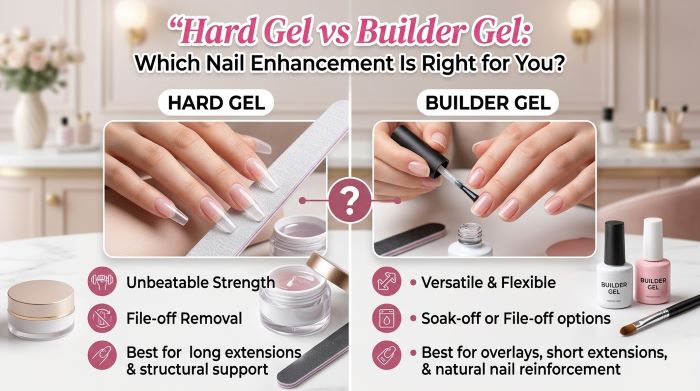
The biggest difference in hard gel vs builder gel comes down to strength and removal. Hard gel is the toughest gel. It’s non soakable, so it must be filed off, and it’s great for long extensions. Most builder gels sold for salon overlays are soak off, flexible, and best for strengthening natural nails or adding short length.
This guide explains how each gel works, how they compare, how long they last, what they cost, and which one fits your nails.
Quick Comparison
| Hard Gel | Builder Gel (Soak Off) | |
|---|---|---|
| Strength | Very strong and rigid | Strong but flexible |
| Removal | Must be filed off | Can be soaked off with acetone |
| Best for | Long extensions, sculpted nails | Overlays on natural nails, short extensions |
| Flexibility | Low | Medium |
| Durability | About 3 to 4 weeks before a fill | About 3 to 4 weeks before a fill |
| Application | Thick consistency, usually from a pot | Thick to medium, often from a pot or bottle |
| Skill level | Advanced | Beginner friendly to intermediate |
| Odor | Little to none | Little to none |
What Is Hard Gel?
Hard gel is a thick gel that cures under a UV or LED lamp into a very hard, durable layer. Its chemistry creates a tightly linked structure that solvents like acetone can’t break down easily. That’s why hard gel is called “non soakable.” It has to be filed off.
Nail techs use hard gel to build and sculpt extensions on tips or forms. Because it’s so strong, it can hold long nail shapes like coffin, stiletto, and almond without bending. It’s often compared to acrylic for strength but has little to no smell.
What Is Builder Gel?
“Builder gel” is a broad name for any thick gel used to build structure on the nail. In everyday salon language, though, it usually means soak off builder gel, including the popular BIAB, short for “builder in a bottle.”
Soak off builder gel is thicker than regular gel polish. It adds strength and a smooth shape, called an apex, to natural nails. It’s slightly flexible, which helps it move with your natural nail instead of cracking. It can be removed by soaking in acetone after the top layer is filed.
Some brands also call their hard gels “builder gels,” which adds to the confusion. Always check whether a product is labeled soak off or non soak off.
Hard Gel vs Builder Gel: Key Differences
1. Strength
Hard gel is the stronger of the two. It holds long extensions without snapping. Soak off builder gel is strong enough for natural nails and short extensions but isn’t designed for very long lengths.
2. Flexibility
Builder gel flexes slightly with your nail. That makes it comfortable and less likely to crack on thin, bendy natural nails. Hard gel is rigid, which is great for extensions but can feel stiff on very soft nails.
3. Removal
This is the biggest practical difference in hard gel vs builder gel. Hard gel must be filed off, which takes skill to avoid damaging the natural nail. Soak off builder gel can be filed down and then soaked off in acetone. For step by step help, see our guide on How to Remove Gel Nail Polish.
4. Application
Hard gel is thicker and harder to control. It’s typically applied by trained nail techs. Soak off builder gel, especially BIAB style products in a bottle, is easier for beginners and popular for at home use.
5. Best Uses
Hard gel is best for long, sculpted extensions and clients who are hard on their nails. Builder gel is best for strengthening natural nails, growing them out, and adding short length.
Hard Gel vs Acrylic
Many people also compare hard gel with acrylic nails.
| Hard Gel | Acrylic | |
|---|---|---|
| Material | Gel cured under UV or LED light | Liquid monomer and powder that air dry |
| Odor | Little to none | Strong smell |
| Strength | Very strong | Very strong |
| Look | Glossy, natural looking | Can look thicker |
| Removal | Filed off | Soaked in acetone or filed |
If you’re switching from acrylics, our guide on How to Remove Acrylic Nails walks through every safe method.
How Long Do They Last?
Longevity is close to a tie in the hard gel vs builder gel matchup. Both hard gel and builder gel usually last about 3 to 4 weeks before needing a fill or “rebalance.” As your natural nail grows, a gap appears at the cuticle and the apex moves forward, which can make nails more likely to break. A fill fixes that.
One advantage of both gels is that you don’t have to remove them every time. A nail tech can file down the old product and add fresh gel on top, which lets you grow your natural nails longer over time.
Cost
Cost is another factor in hard gel vs builder gel. Prices vary by city and salon, but here’s a general guide:
| Service | Typical Salon Price Range |
|---|---|
| Builder gel or BIAB overlay | About $40 to $80 |
| Builder gel fill | About $35 to $65 |
| Hard gel full set with extensions | About $55 to $120 |
| Hard gel fill | About $40 to $75 |
At home kits are cheaper upfront. You can find builder gels, hard gels, and lamps at many beauty stores. Search for a Beauty Supply Near Me to compare products in person.
Which Is Better for Nail Health?
Many people ask which side wins hard gel vs builder gel for nail health. Neither gel is automatically harmful, but removal and technique matter most.
- Over filing during hard gel removal can thin the natural nail.
- Peeling or picking off any gel strips away layers of the natural nail.
- Soaking in acetone for builder gel can dry out nails and skin. Moisturize afterward.
Builder gel is often seen as gentler for natural nails because it’s soak off and flexible. Hard gel can be very safe when a skilled tech removes it carefully.
Allergy and Safety Tips
Some people develop allergies to ingredients in gels, especially HEMA (hydroxyethyl methacrylate). Signs include itching, redness, or swelling around the nails. To lower your risk:
- Keep uncured gel off your skin.
- Cure each layer fully under the right lamp.
- Choose HEMA free products if you’re sensitive.
- See a doctor if you notice a reaction.
UV and LED nail lamps expose your hands to small amounts of UV light. Many people use fingerless gloves or apply broad spectrum sunscreen to their hands before each session.
How to Choose
To settle the hard gel vs builder gel question for your own nails, think about length, lifestyle, and removal.
Choose hard gel if you:
- Want long extensions
- Are hard on your hands at work or home
- Have a skilled nail tech who can remove it safely
- Want a strong, acrylic like result without the smell
Choose builder gel if you:
- Want to strengthen and grow your natural nails
- Prefer a natural look or short length
- Want easier removal
- Plan to do your nails at home
At Home vs Salon
Builder gel is the easier choice for at home manicures. Many kits come with a brush in the bottle, which makes it simple to apply a thin base layer and then a thicker structure layer. Hard gel takes more practice to sculpt and file, so most people leave it to a professional. If you do try either at home, start with short nails and practice building a smooth apex.
Common Mistakes to Avoid
- Applying too thick a layer. Thick layers may not cure properly.
- Skipping prep. Clean, dehydrated nail plates help gel stick.
- Flooding the cuticles. Gel on skin can cause lifting and allergies.
- Picking at lifting gel. This damages your natural nail.
- Using the wrong lamp. Match your lamp to your gel’s curing needs.
Frequently Asked Questions
Is builder gel the same as hard gel? Not always. “Builder gel” is a broad term, but it usually means soak off builder gel. Hard gel is a specific non soakable gel.
Which lasts longer? Both last about 3 to 4 weeks before a fill.
Can you soak off hard gel? No. Hard gel must be filed off.
Is BIAB a builder gel? Yes. BIAB stands for “builder in a bottle,” a soak off builder gel.
Final Thoughts
The hard gel vs builder gel choice depends on your goals. If you want long, strong, sculpted extensions, hard gel is the better pick. If you want to strengthen your natural nails with a flexible, easier to remove product, builder gel is the way to go. Whichever you choose, good prep, careful curing, and gentle removal are the keys to healthy, beautiful nails.
Key Takeaways
- Hard gel vs builder gel comes down to strength and removal: hard gel is rigid and must be filed off, while most builder gels soak off.
- Hard gel is best for long extensions and sculpted shapes.
- Builder gel, including BIAB, is best for strengthening natural nails and adding short length.
- Both last about 3 to 4 weeks before a fill.
- Careful removal is the biggest factor in protecting your natural nails.
- Watch for HEMA allergies and protect your hands from UV light during curing.