How to Remove Gel Nail Polish: Safe Methods That Protect Your Nails
Gel nail polish is specifically formulated to be significantly more durable and long-lasting than regular polish, which is exactly what makes it more challenging to remove without proper technique. Rushing the process or using the wrong method risks genuine damage to your natural nail, making it worth understanding the correct, nail-safe removal approach even if it takes somewhat longer than you might initially expect.
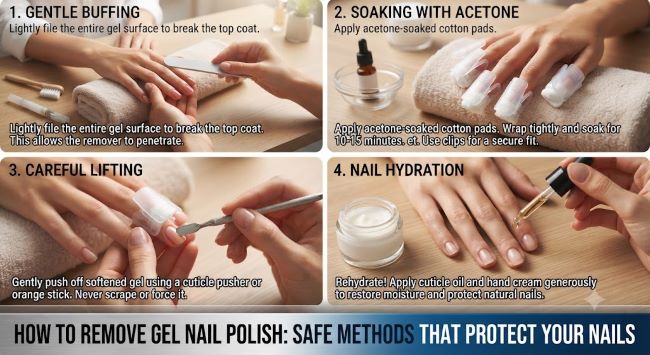
The Standard Soak-Off Method
What you’ll need: 100% pure acetone (not regular nail polish remover, which generally contains a lower acetone concentration insufficient for effectively breaking down gel polish), cotton balls or pads, aluminum foil cut into small squares, a cuticle pusher or orange wood stick, a nail file or buffer, and cuticle oil for aftercare.
Step 1: Gently file the top shiny layer of the gel polish, using a nail file to lightly rough up the glossy top coat seal without filing down into your natural nail underneath. This step genuinely helps the acetone penetrate more effectively and significantly speeds up the overall soaking process.
Step 2: Soak a cotton ball or pad in pure acetone and place it directly on top of each nail.
Step 3: Wrap each fingertip in a small square of aluminum foil, securing the acetone-soaked cotton in place against the nail and helping retain heat, which speeds the acetone’s breakdown of the gel polish.
Step 4: Let your nails soak for 10-15 minutes, though some thicker or more durable gel applications may require slightly longer soaking time before the polish is sufficiently softened to remove easily.
Step 5: Remove the foil and cotton from one finger at a time, gently checking whether the gel polish has softened enough to begin lifting away. If it hasn’t, rewrap and allow additional soaking time rather than forcing removal before the polish is genuinely ready.
Step 6: Gently push and scrape away the softened polish using a cuticle pusher or orange wood stick, working gently rather than aggressively scraping or picking at any polish that hasn’t fully softened and released from the nail surface.
Step 7: Repeat for any remaining polish residue, soaking again briefly if needed for any stubborn remaining patches, rather than attempting to force off polish that’s still firmly adhered.
Step 8: Buff the nail surface gently once all gel polish has been removed, smoothing out the nail surface, though avoid aggressive buffing that thins your natural nail unnecessarily.
Step 9: Apply cuticle oil and moisturizer, since the acetone soaking process is genuinely drying to both your nails and the surrounding skin, making aftercare hydration an important final step rather than an optional extra.
Important Mistakes to Avoid
Never pick, peel, or forcibly scrape off gel polish that hasn’t been properly softened first. This is the single most damaging mistake people make when removing gel polish at home, since forcibly peeling gel polish typically takes layers of your natural nail off along with it, since the gel adheres very strongly to the nail surface, resulting in genuinely damaged, thin, and weakened nails that can take months to fully grow out and recover.
Don’t skip the filing step, since attempting to soak off gel polish with its glossy, sealed top coat fully intact significantly extends the necessary soaking time and can tempt you toward the picking and forcing mistakes described above out of impatience.
Don’t use regular nail polish remover instead of pure acetone, since the lower acetone concentration in standard remover products is generally insufficient to properly break down gel polish’s more durable formulation, leading to a frustrating, ineffective process that can again tempt impatient picking or forcing.
Don’t skip aftercare moisturizing. Acetone is genuinely drying to both nails and surrounding skin, and skipping post-removal moisturizing leaves nails more brittle and prone to peeling or breaking in the immediate period following removal.
Alternative Methods Worth Knowing
Professional removal at a nail salon remains a genuinely reliable option if you’re uncertain about doing this yourself, particularly for your first few times removing gel polish, since a trained technician can demonstrate proper technique and ensure your nails aren’t damaged during the process.
Pre-made acetone-soaked remover clips or wraps, sold commercially as a convenience alternative to the cotton-and-foil method, work on the same basic soaking principle but in a more pre-packaged, convenient format, generally producing similar results to the traditional method with somewhat less individual preparation required.
Gel polish removal machines or specialized removal tools, while available, generally aren’t necessary for most home users and represent a more specialized investment better suited to people removing gel polish very frequently rather than occasional home users.
Caring for Your Nails After Gel Polish Removal
Give your nails a break between gel manicures when possible, since repeated, back-to-back gel applications without any recovery period can contribute to progressively weaker, more damaged nails over time, particularly if removal technique hasn’t always been ideal in the past.
Apply cuticle oil regularly, not just immediately after removal but as an ongoing practice, since consistent moisturizing genuinely helps maintain nail and surrounding skin health between manicures regardless of whether you’re currently wearing gel polish or giving your nails a break.
Consider a strengthening base coat or nail treatment during any break period between gel manicures, since dedicated nail strengthening products can help support recovery and rebuild some resilience in nails that have experienced some thinning or weakening from repeated gel application and removal cycles.
For finding quality acetone, nail care tools, and strengthening treatments locally, beauty supply near me covers how to find stores carrying these products in your area. For other quick beauty fixes worth knowing alongside proper nail care, how to make your hair not look greasy in 5 minutes covers another fast, practical beauty routine solution worth having in your toolkit.
Key Takeaways
- Remove gel nail polish safely using pure 100% acetone (not regular remover), lightly filing the top seal first, then soaking with foil-wrapped acetone cotton for 10-15 minutes before gently scraping away softened polish
- Never pick, peel, or forcibly scrape gel polish that hasn’t been properly softened first, since this is the most common cause of genuine nail damage during at-home removal
- Filing the glossy top coat before soaking significantly speeds the process and reduces the temptation to force removal out of impatience
- Always apply cuticle oil and moisturizer after removal, since the acetone soaking process is genuinely drying to both nails and surrounding skin
- Professional salon removal remains a reliable option, particularly for your first few attempts, if you’re uncertain about doing this safely yourself at home
- Give your nails recovery breaks between gel manicures when possible, and apply cuticle oil consistently to help maintain nail health over repeated gel polish cycles