Polarized vs Non Polarized Sunglasses
You’re shopping for sunglasses, and two pairs look almost identical. One costs more and says “polarized” on the tag. The other doesn’t. Is that extra money worth it? And does polarized mean better protection for your eyes?
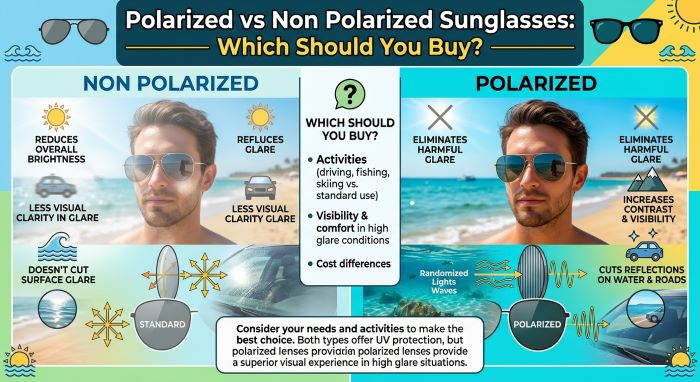
The truth about polarized vs non polarized sunglasses surprises a lot of people. Polarized lenses cut glare, the bright reflected light that bounces off water, roads, and snow. Non polarized lenses simply darken everything evenly. But polarization has nothing to do with UV protection. A pair of non polarized sunglasses with UV400 protection can protect your eyes from harmful rays just as well as a polarized pair.
This guide explains how polarized lenses work, the pros and cons of each type, when polarization helps, when it doesn’t, and how to choose the right pair.
Quick Comparison
| Polarized Sunglasses | Non Polarized Sunglasses | |
|---|---|---|
| Reduces glare | Yes, significantly | No, only dims overall brightness |
| UV protection | Depends on the lens, not polarization | Depends on the lens, not polarization |
| Contrast and clarity | Better in bright, reflective conditions | Standard |
| Screen visibility | Can make phone and dashboard screens look dark or rainbow colored | Screens look normal |
| Best for | Driving, fishing, boating, beach days | Skiing on icy slopes, flying, everyday fashion |
| Price | Usually higher | Usually lower |
What Is Glare?
Sunlight travels in waves that vibrate in many directions. When light hits a flat, shiny surface like water, a wet road, a car hood, or snow, much of it reflects in a horizontal direction. That concentrated, reflected light is glare. It can make you squint, wash out colors, and make it harder to see clearly.
How Polarized Lenses Work
Polarized lenses contain a special chemical filter with tiny vertical lines. These lines act like a microscopic fence. They let vertical light waves pass through but block much of the horizontal light that causes glare.
The result is a clearer, more comfortable view with richer colors and better contrast, especially near water and on bright roads.
How Non Polarized Lenses Work
Non polarized lenses are tinted to reduce the overall amount of light reaching your eyes. They make everything look darker but don’t target glare specifically. So bright reflections still come through, just a little dimmer.
Polarized vs Non Polarized Sunglasses: Key Differences
1. Glare Reduction
This is the main difference in polarized vs non polarized sunglasses. Polarized lenses block most reflected glare. Non polarized lenses don’t.
2. Visual Comfort
Because they cut glare, polarized lenses reduce squinting and eye strain on bright days. Many people find them more comfortable for long periods outdoors.
3. Contrast and Color
Polarized lenses often make colors look richer and details sharper. Anglers love them because they can see beneath the water’s surface.
4. Screen Visibility
Polarized lenses can make LCD and LED screens hard to read. Phones, GPS units, car dashboards, and ATM screens may look dark, patchy, or rainbow colored at certain angles. Non polarized lenses don’t have this problem.
5. Price
Polarized sunglasses usually cost more, though affordable polarized options are widely available.
UV Protection: The Most Important Feature
Here’s the key point many shoppers miss. Polarization and UV protection are two different things.
- Polarization reduces glare.
- UV protection blocks harmful ultraviolet rays that can damage your eyes over time.
Long term UV exposure is linked to eye problems such as cataracts and growths on the eye’s surface. That’s why the most important label to look for is “100% UV protection” or “UV400,” which means the lenses block UVA and UVB rays.
A dark tint alone doesn’t guarantee UV protection. In fact, dark lenses without UV protection can be worse than no sunglasses, because your pupils open wider behind them and let in more UV light.
Pros and Cons of Polarized Sunglasses
Pros:
- Greatly reduce glare from water, snow, roads, and glass
- Improve contrast and clarity
- Reduce eye strain and squinting
- Make it easier to see into water
Cons:
- Can make screens hard to read
- May hide icy patches on roads or ski slopes that reflect light
- Usually cost more
- Not recommended for pilots in many situations because they can make instrument screens hard to read
Pros and Cons of Non Polarized Sunglasses
Pros:
- Screens look normal
- Lower cost
- Let you see reflections from ice, which can be useful on slopes
- Wide range of fashion styles and tints
Cons:
- Don’t reduce glare
- Can feel less comfortable on very bright days near water or snow
Which Is Better for Your Activity?
The best answer to polarized vs non polarized sunglasses often depends on what you’re doing.
| Activity | Better Choice | Why |
|---|---|---|
| Driving | Polarized | Cuts glare from roads and other cars, though check dashboard screens |
| Fishing | Polarized | Lets you see below the water’s surface |
| Boating and beach | Polarized | Reduces water glare |
| Running and cycling | Polarized | Reduces road glare |
| Skiing and snowboarding | Non polarized or a mix | Helps you spot icy patches |
| Flying a plane | Non polarized | Keeps cockpit screens readable |
| Golf | Either | Some golfers prefer non polarized to read greens |
| Everyday wear | Either | Depends on comfort and style |
How to Tell if Sunglasses Are Polarized
Not sure if your sunglasses are polarized? Try these simple tests:
- Screen test. Look at a phone or computer screen while wearing the sunglasses. Slowly tilt your head. If the screen darkens or changes color, the lenses are polarized.
- Two pair test. Hold two pairs of sunglasses in front of each other and rotate one 90 degrees. If the overlap turns very dark, both are polarized.
- Glare test. Look at a shiny surface like a car hood or water. If glare drops sharply when you put on the glasses, they’re likely polarized.
Choosing Lens Colors
Beyond polarized vs non polarized sunglasses, lens color matters too. It affects how you see, whether lenses are polarized or not:
- Gray: Reduces brightness evenly and keeps colors natural.
- Brown or amber: Boosts contrast and depth, great for driving and golf.
- Green: Balances contrast and color.
- Yellow: Improves contrast in low light, but isn’t ideal for very bright sun.
- Mirrored: Reflects extra light, helpful in very bright conditions.
Cost Comparison
Price is another factor in polarized vs non polarized sunglasses.
| Type | Typical Price Range |
|---|---|
| Basic non polarized with UV400 | About $10 to $50 |
| Basic polarized with UV400 | About $20 to $80 |
| Designer non polarized | About $100 to $300 |
| Designer polarized | About $150 to $400 or more |
| Prescription polarized | Often adds about $50 to $150 to lens cost |
Prices vary by brand and store, so compare options before you buy.
Caring for Your Sunglasses
- Clean lenses with a microfiber cloth and lens cleaner.
- Avoid paper towels, which can scratch lenses.
- Store sunglasses in a case.
- Don’t leave them on a hot car dashboard, which can damage coatings.
Smart Sunglasses
Sunglasses aren’t just about lenses anymore. Smart glasses can now play music, take photos, and answer calls, and some come with polarized or transition lens options. If you’re curious about combining tech with eye protection, read our review of the Ray-Ban Meta Smart Glasses (Gen 2).
Shopping Tips
Use this checklist when comparing polarized vs non polarized sunglasses in a store or online.
- Check the UV label first. Look for UV400 or 100% UV protection.
- Decide if you need polarization. Choose it for water, roads, and bright reflective settings.
- Consider fit and coverage. Larger or wraparound frames block more light from the sides.
- Look for impact resistance. Polycarbonate lenses are tough and good for sports.
- Try them with your phone. Make sure you can still read screens you use often.
Frequently Asked Questions
Are polarized sunglasses better for your eyes? They’re more comfortable in bright, glary conditions, but they don’t protect your eyes from UV light unless they also have UV protection.
Do polarized sunglasses block UV rays? Only if they’re labeled with UV protection. Polarization alone doesn’t block UV.
Are polarized sunglasses good for driving? Yes, for most drivers, because they reduce glare from roads and other cars. Just make sure you can read your dashboard screens.
Why can’t I see my phone with polarized sunglasses? Many screens use polarizing filters. When your lenses and the screen line up at certain angles, the light gets blocked.
Final Thoughts
When choosing between polarized vs non polarized sunglasses, start with UV protection, since that’s what protects your eyes. Then decide if you need glare reduction. If you spend time near water, drive a lot, or love bright outdoor activities, polarized lenses are worth it. If you ski, fly, or read screens often, non polarized lenses may be the better fit.
Key Takeaways
- Polarized vs non polarized sunglasses comes down to glare: polarized lenses cut reflected glare, while non polarized lenses only dim light evenly.
- Polarization and UV protection are different features, so always look for UV400 or 100% UV protection.
- Polarized lenses are great for driving, fishing, boating, and beach days.
- Non polarized lenses can be better for skiing on icy slopes, flying, and reading screens.
- You can test polarization by tilting your head while looking at a phone screen.
- Lens color, fit, and impact resistance also matter when choosing sunglasses.