
Swedish Massage vs Deep Tissue
You’ve finally decided to book a massage. Then the spa menu asks you to choose: Swedish or deep tissue? Both are among the most popular massages in the world, and both can leave you feeling much better. But they’re designed for different goals, and picking the right one can make a big difference in how you feel afterward.
The short answer to Swedish massage vs deep tissue is this. Swedish massage uses light to medium pressure and long, flowing strokes to help you relax. Deep tissue massage uses slow, firm pressure to reach deeper layers of muscle and connective tissue, which can help with chronic tightness and knots. Swedish is about relaxation. Deep tissue is about working out tension.
This guide explains how each massage works, its benefits, what it feels like, how much it costs, and who should choose which.
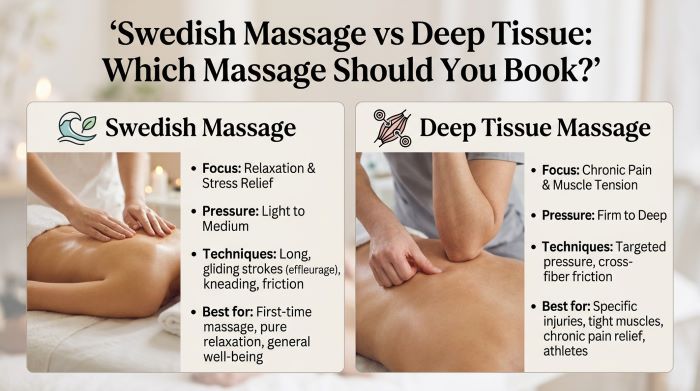
Quick Comparison
| Swedish Massage | Deep Tissue Massage | |
|---|---|---|
| Main goal | Relaxation and stress relief | Easing chronic muscle tension and knots |
| Pressure | Light to medium | Firm to deep |
| Pace | Flowing and rhythmic | Slow and focused |
| Techniques | Long gliding strokes, kneading, tapping | Slow strokes, sustained pressure, friction |
| Feels like | Soothing and calming | Intense, sometimes uncomfortable |
| Soreness afterward | Rare | Common for 1 to 2 days |
| Best for | First timers, stress, general wellness | Athletes, chronic tightness, desk workers with knots |
| Typical cost | Usually lower | Often $10 to $30 more |
What Is Swedish Massage?
Swedish massage is the most common type of massage in Western spas. It’s often what people mean when they say “a classic massage.” It’s commonly linked to Per Henrik Ling, a 19th century Swedish fitness pioneer, though the techniques were organized and named by others over time.
A Swedish massage uses five main strokes:
- Effleurage: Long, gliding strokes that warm the muscles.
- Petrissage: Kneading, rolling, and lifting the muscles.
- Tapotement: Light, rhythmic tapping or cupping.
- Friction: Small circular movements to warm tissue.
- Vibration: Gentle shaking or rocking movements.
The therapist uses oil or lotion and works in a smooth, rhythmic flow, usually over the whole body.
What Is Deep Tissue Massage?
Deep tissue massage targets the deeper layers of muscle and the connective tissue around them, called fascia. The therapist uses slow strokes and firm, sustained pressure, often with the forearms, elbows, or knuckles, to work on stubborn knots and tight spots.
Instead of covering the whole body evenly, a deep tissue session often focuses on problem areas such as the neck, shoulders, lower back, or legs.
Swedish Massage vs Deep Tissue: Key Differences
1. Pressure
The main difference in Swedish massage vs deep tissue is pressure. Swedish uses light to medium pressure that most people find relaxing. Deep tissue uses firm pressure that can feel intense.
2. Purpose
Swedish massage is designed to calm your nervous system and help you relax. Deep tissue massage aims to ease chronic tension, tight muscles, and knots.
3. Technique
Swedish strokes are long and flowing. Deep tissue strokes are slower and more focused, often working across the grain of a muscle.
4. How It Feels
Swedish massage usually feels soothing from start to finish. Deep tissue can feel uncomfortable at times, though it shouldn’t be truly painful. Good therapists check in and adjust pressure.
5. After Effects
You’ll usually leave a Swedish massage feeling relaxed and maybe a little sleepy. After a deep tissue massage, you may feel sore for a day or two, similar to the feeling after a hard workout.
Benefits of Swedish Massage
Both sides of the Swedish massage vs deep tissue comparison offer real benefits, just different ones.
People often book Swedish massage to:
- Reduce stress. The rhythm and gentle touch help many people relax.
- Improve sleep. Many people say they sleep better after a relaxing massage.
- Ease mild muscle tension. Light kneading helps loosen tight muscles.
- Boost mood. Massage is linked to feeling calmer and more positive.
- Support general wellness. It’s a great regular self care habit.
Benefits of Deep Tissue Massage
People often book deep tissue massage to:
- Release chronic tension. It targets long held tightness in the back, neck, and shoulders.
- Work out knots. Focused pressure can help loosen tight spots.
- Support recovery. Many athletes use it after training.
- Improve range of motion. Looser muscles may move more freely.
- Ease posture related tightness. It’s popular with people who sit at desks all day.
Research on massage is still growing. Many studies show it can help with stress and short term pain relief, but results vary from person to person.
Who Should Choose Swedish Massage?
Still undecided on Swedish massage vs deep tissue? Use these simple guidelines.
Choose Swedish massage if you:
- Are getting your first massage
- Want to relax and de stress
- Prefer gentle pressure
- Have sensitive skin or bruise easily
- Want a full body, soothing experience
Who Should Choose Deep Tissue?
Choose deep tissue massage if you:
- Have chronic tightness or knots
- Are an athlete or very active
- Like firm pressure
- Want to focus on specific problem areas
- Have had regular massages before and want more intensity
Cost
Prices for Swedish massage vs deep tissue vary by city and spa, but here’s a general guide in the US:
| Session Length | Swedish Massage | Deep Tissue Massage |
|---|---|---|
| 60 minutes | About $60 to $120 | About $70 to $150 |
| 90 minutes | About $90 to $170 | About $100 to $200 |
Tipping 15% to 20% is common at many US spas. Massage memberships and packages can lower the cost per visit.
What to Expect During Your Session
The basic routine is the same on either side of Swedish massage vs deep tissue.
- Intake. You’ll fill out a health form and talk about your goals.
- Undressing. You undress to your comfort level and lie under a sheet. Only the area being worked on is uncovered.
- The massage. The therapist begins, checking in on pressure.
- Speaking up. Tell your therapist if anything feels too strong, too light, or uncomfortable.
- Afterward. Drink water, take your time getting up, and rest if you can.
Safety and When to Avoid Deep Pressure
Massage is generally safe for most people, but deep tissue massage isn’t right for everyone. Talk to your doctor first and tell your therapist if you:
- Have a history of blood clots or deep vein thrombosis
- Take blood thinners or bruise easily
- Recently had surgery or an injury
- Have osteoporosis or fragile bones
- Are pregnant (choose a prenatal massage with a trained therapist)
- Have a fever, infection, or skin condition in the area
If something hurts sharply during a massage, tell the therapist right away. Pain is not the goal.
Other Massage Types to Know
| Massage Type | What It Is |
|---|---|
| Sports massage | Focuses on athletes, often before or after events |
| Hot stone massage | Uses warm stones to relax muscles |
| Prenatal massage | Designed for pregnancy, with special positioning |
| Trigger point therapy | Targets specific tight spots that cause referred pain |
| Aromatherapy massage | Adds scented essential oils to a relaxing massage |
Tips for Getting the Most From Your Massage
- Hydrate. Drink water before and after.
- Arrive early. Give yourself time to relax.
- Communicate. Share problem areas and pressure preferences.
- Stretch afterward. Gentle stretching can help maintain looser muscles.
- Stay active. Regular movement helps keep tension from building up.
Pairing Massage With Exercise
Massage works best alongside regular movement. Strength training, stretching, and cardio help keep muscles healthy between sessions. Many gyms also offer recovery tools like foam rollers and massage chairs. If you’re looking for a place to train at any hour, check our guide to 24 Hour Fitness Near Me.
Frequently Asked Questions
Is deep tissue massage better than Swedish massage? Not better, just different. Deep tissue targets chronic tension, while Swedish focuses on relaxation.
Does deep tissue massage hurt? It can feel intense or uncomfortable, but it shouldn’t be truly painful. Tell your therapist if it is.
How often should I get a massage? Many people go once a month for wellness. Some athletes or people with chronic tension go every one to two weeks.
Can I ask for a mix of both? Yes. Many therapists blend Swedish strokes with deeper work on problem spots.
Final Thoughts
The Swedish massage vs deep tissue decision comes down to your goal. If you want to relax and unwind, book a Swedish massage. If you have stubborn knots or chronic tightness, try deep tissue. And if you’re not sure, ask your therapist for a blend. Either way, clear communication is the key to a great session.
Key Takeaways
- Swedish massage vs deep tissue comes down to pressure and purpose: Swedish relaxes, while deep tissue works on chronic tension.
- Swedish massage uses light to medium pressure and long, flowing strokes.
- Deep tissue massage uses slow, firm pressure on deeper muscles and connective tissue.
- Soreness for a day or two is common after deep tissue but rare after Swedish.
- Deep tissue usually costs about $10 to $30 more per session.
- Check with a doctor before deep tissue massage if you have blood clots, take blood thinners, are pregnant, or recently had surgery.