Best Pillow for Neck Pain: How to Sleep Without Waking Up Sore
Waking up with a stiff, aching neck sets a rough tone for the whole day. You turn your head and feel that sharp pull, and you know the pillow is to blame. The truth is that the wrong pillow forces your neck into a bent position for hours, and no amount of sleep fixes that strain. The right one supports the natural curve of your neck and lets those muscles rest. This guide walks through how to find the best pillow for neck pain and finally sleep without paying for it in the morning.
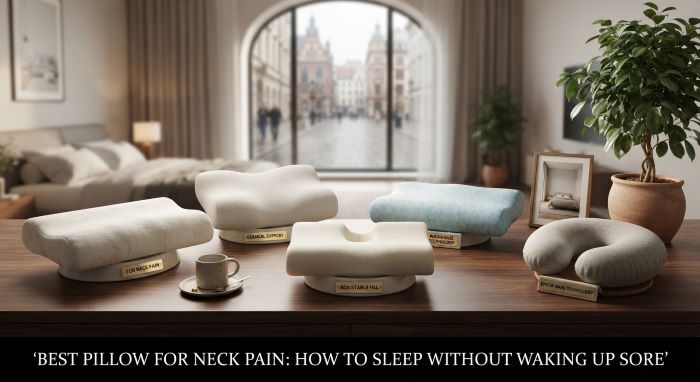
How your pillow causes or cures neck pain
Your neck has a gentle natural curve, and it needs support to keep that curve while you sleep. When a pillow is too high, too low, or too soft, your head tilts out of line and your neck muscles stay tense all night trying to compensate. Hours of that leads to the stiffness and soreness you feel at dawn.
The best pillow for neck pain does the opposite. It holds your head in a neutral position, aligned with your spine, so your neck muscles can fully relax. Alignment is the whole game. Get your head, neck, and spine in one straight line and the pain usually eases.
Match the pillow to your sleep position
There is no single answer here, because the best pillow for neck pain depends on how you sleep. Each position needs a different height to keep your neck neutral.
- Side sleepers need a higher, firmer pillow to fill the gap between the head and shoulder.
- Back sleepers need a medium loft that supports the neck’s curve without pushing the head forward.
- Stomach sleepers need a very thin, soft pillow, or none at all, since a high pillow cranks the neck up and back.
Stomach sleeping is the hardest on your neck, so if that is you and pain is a problem, it is worth trying to shift to your back or side. Whatever your position, the right pillow keeps your head level, not tilted up or down.
The best fill types for neck support
The material inside determines how well a pillow supports your neck and holds that support over time. Here is how the main options compare for the best pillow for neck pain.
| Fill type | Why it helps |
|---|---|
| Memory foam | Molds to your neck and holds a steady shape |
| Contour memory foam | Shaped with a curve to cradle the neck specifically |
| Latex | Firm, responsive, and durable support |
| Shredded memory foam | Adjustable so you can fine-tune the height |
| Buckwheat | Very firm and moldable for precise support |
Memory foam is a top choice because it conforms to your neck and does not flatten out. Contour pillows, with a dip for your head and a raised edge for your neck, are made specifically to tackle pain. And shredded foam earns a spot among the top options because you can add or remove fill until the height is exactly right.
Cervical and contour pillows
You may have seen cervical pillows, which have that distinctive wave shape with a lower center and a raised lip. These are designed for neck support, cradling your head in the dip while the raised edge supports the curve of your neck. For many people dealing with chronic stiffness, a cervical contour design is the best pillow for neck pain because it is built for exactly this problem.
They take some getting used to, and not everyone loves the fixed shape. If you like to move around at night, an adjustable shredded-foam pillow may suit you better while still targeting the pain.
Loft and firmness matter
Just like with any pillow, height and firmness are central. The best pillow for neck pain keeps its loft through the night, which means it should be firm enough not to collapse. A pillow that sinks flat under your head stops supporting your neck the moment you lie down.
Aim for a loft that matches your sleep position, and choose a medium-firm to firm feel so the support lasts until morning. Softer is not gentler here. A too-soft pillow is often the very thing causing the pain.
Support the rest of your routine
A pillow is a big piece of the puzzle, but neck pain often responds to a few habits working together. Alongside the best pillow for neck pain, gentle stretching, good posture during the day, and a supportive mattress all help. For a fuller set of ideas on easing stiffness and tension, this guide to Neck Pain Relief is a useful companion to pillow shopping.
If your neck pain is severe, lasts more than a week or two, or comes with numbness, tingling, or pain down your arm, see a doctor. A pillow helps with everyday stiffness, but persistent or worsening pain deserves professional care. This is general information, not medical advice.
Caring for your pillow
Even the best pillow for neck pain wears out. Over time the fill breaks down and loses the support your neck relies on. To keep yours working:
- Replace it when it no longer springs back or holds its shape, usually every 1 to 3 years
- Use a supportive pillowcase and protector to keep it clean
- Fluff or reshape adjustable pillows as needed
- Follow the care instructions, since some foams should not be machine washed
A worn pillow quietly brings the pain back, so do not wait too long to swap it out.
The bottom line
Neck pain at night usually comes down to alignment, and the right pillow fixes it by keeping your head, neck, and spine in a straight line. Match the loft to your sleep position, choose a supportive fill like memory foam or an adjustable shredded design, and consider a cervical contour shape if stiffness is chronic. Keep it firm enough to hold its support, replace it when it sags, and pair it with good daytime habits. Choose the best pillow for neck pain with these points in mind, and mornings can finally feel a whole lot better.
Key Takeaways
- Neck pain at night usually comes from poor alignment, and the right pillow keeps the head, neck, and spine in a straight line.
- The best pillow for neck pain depends on your sleep position: higher and firmer for side sleepers, medium for back sleepers, very thin for stomach sleepers.
- Memory foam, latex, and adjustable shredded foam all offer the steady, shape-holding support that eases neck strain.
- Cervical or contour pillows, with a dip for the head and a raised neck edge, are designed specifically for neck pain relief.
- Keep the pillow firm enough to hold its loft all night, since a too-soft pillow often causes the pain in the first place.
- Pair your pillow with good daytime posture, gentle stretching, and a supportive mattress for the best results.
- Replace your pillow every 1 to 3 years, and see a doctor for severe, lasting pain or any numbness or tingling down the arm.