How to Unclog a Toilet
A clogged toilet never picks a good moment. The water rises, your pulse rises with it, and you need a fix right now. The good news is that most clogs sit only a few inches past the bowl and clear in minutes with the right method. Knowing how to unclog a toilet saves you a plumber’s fee and a lot of stress.
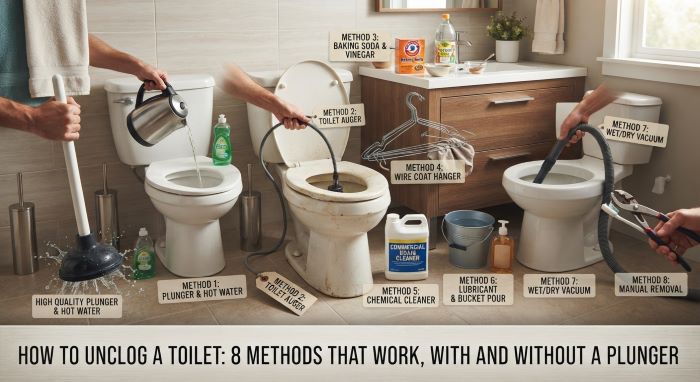
This guide starts with how to stop an overflow. Then it covers eight proven methods, from proper plunging to a toilet auger, plus ways to clear a clog when you have no plunger at all. A comparison table, a list of things not to do, and prevention tips round it out.
First: Stop the Overflow
Before you think about how to unclog a toilet, deal with the rising water. If the bowl is filling toward the rim, act before you do anything else.
- Do not flush again. A second flush adds another tank of water.
- Take the lid off the tank. Set it down flat.
- Push the flapper down. The flapper is the rubber valve at the bottom of the tank. Pressing it shut stops water from entering the bowl.
- Lift the float. Raising the float ball or float cup stops the tank from refilling.
- Turn off the water. Find the shutoff valve on the wall or floor behind the toilet. Turn it clockwise until it stops.
Tank water is clean, so you can reach in without worry. Once the water is off, you have time to work.
While the lid is off, look at the flapper and the fill valve. If your toilet keeps running after a flush or refills at random, those parts are the usual cause. This guide on how to fix a running toilet walks through the repair.
What You Need
- A flange plunger, the kind with a narrow rubber sleeve at the bottom
- A toilet auger, also called a closet auger
- Rubber gloves
- Old towels or newspaper for the floor
- A bucket
- A small cup or container for bailing
- Dish soap
- Hot tap water
- Baking soda and white vinegar
- Eye protection, if any cleaner is in the bowl
Methods at a Glance
| Method | Best For | Time | How Well It Works on Soft Clogs |
|---|---|---|---|
| Flange plunger | Most clogs | 1 to 5 minutes | High |
| Dish soap and hot water | Soft clogs, no plunger | 15 to 30 minutes | Moderate |
| Baking soda and vinegar | Minor, slow clogs | 30 minutes or more | Low to moderate |
| Toilet auger | Stubborn clogs and objects | 5 to 10 minutes | High |
| Toilet brush | Emergencies with no plunger | 2 to 5 minutes | Low to moderate |
| Wire hanger | Clogs near the opening | 5 to 10 minutes | Low to moderate |
| Wet and dry shop vacuum | Hard objects | 10 to 15 minutes | Moderate to high |
| Enzyme cleaner | Slow drains, overnight | 8 to 24 hours | Low to moderate |
Method 1: Use a Plunger the Right Way
For most people, how to unclog a toilet begins and ends with a plunger. It clears the large majority of clogs, and technique matters more than force.
Choose the right plunger. A flat cup plunger is made for sinks. A toilet needs a flange plunger. Its extra rubber sleeve fits into the drain hole and makes a tight seal.
- Check the water level. The plunger cup must be under water. If the bowl is nearly empty, add water from a bucket. If it is close to the rim, bail some out.
- Soften the rubber. Run the plunger under hot water for a minute. Soft rubber seals better.
- Seat the plunger. Place it in the bowl at an angle so it fills with water, then set the flange into the drain hole.
- Start gently. The first push should be slow. It forces air out of the cup. A hard first push sprays water.
- Plunge with force. Push down and pull up sharply, 15 to 20 times, without breaking the seal. The pull matters as much as the push.
- Break the seal. Pull the plunger away quickly on the last stroke.
- Watch the bowl. If the water drains away, the clog has moved.
- Test. Turn the water back on and flush. Keep a hand near the shutoff valve in case the water rises again.
Repeat the cycle two or three times before you move to another method.
Method 2: Dish Soap and Hot Water
This is the best answer to how to unclog toilet without plunger. Soap coats the clog and the pipe, and hot water softens waste and paper.
- Squirt about half a cup of dish soap into the bowl.
- Wait 10 to 15 minutes while the soap sinks.
- Heat about a gallon of water until it is hot, like a hot bath or tea that has cooled a little. Do not use boiling water.
- Pour the water into the bowl from about waist height. The force helps push the clog.
- Wait another 10 to 15 minutes.
- If the water level drops, flush once to test.
Boiling water can crack a porcelain bowl and soften the wax ring that seals the toilet to the floor. Hot tap water is safe.
Shampoo or a bar of soap cut into small pieces can stand in for dish soap.
Method 3: Baking Soda and Vinegar
This gentle method suits slow, partial clogs.
- Lower the water in the bowl to about half full.
- Pour in one cup of baking soda.
- Slowly pour in one to two cups of white vinegar. The mix will fizz, so add it a little at a time.
- Let it sit for 30 minutes. For tough clogs, leave it overnight.
- Add a gallon of hot water.
- Flush to test.
The fizzing loosens soft material. It will not move a toy or a solid object.
Method 4: Use a Toilet Auger
A toilet auger is a short, hand-cranked cable in a tube with a rubber sleeve that protects the porcelain. It reaches about three to six feet, far enough for clogs in the toilet’s built-in trap and just beyond. It is the tool plumbers reach for after a plunger.
- Pull the handle up so the cable tip sits at the end of the tube.
- Place the curved end in the bowl with the tip aimed into the drain hole.
- Hold the tube steady with one hand and crank the handle clockwise with the other while you push down gently.
- When you feel resistance, keep cranking. The tip will either break up the clog or hook it.
- Crank and pull back to bring the cable out. Remove anything caught on the tip.
- Repeat once or twice.
- Flush to test.
Do not use a standard drain snake made for sinks. Its bare metal cable can scratch the bowl.
Method 5: The Toilet Brush
When you have no plunger, a toilet brush can stand in. Push the brush head into the drain hole and pump it up and down with short, firm strokes. It moves less water than a plunger, but it can shift a soft clog. Wrap the brush in a plastic bag first if you want to keep it clean.
Method 6: A Wire Coat Hanger
Among the options for how to unclog toilet without plunger, this one works only on clogs near the opening.
- Untwist a wire hanger and straighten it.
- Wrap the end in a rag and secure it with tape. This protects the porcelain.
- Push the wrapped end into the drain and twist gently.
- Work it back and forth to break up or hook the clog.
- Flush to test.
Go slowly. Bare wire leaves gray scratch marks that are hard to remove.
Method 7: A Wet and Dry Shop Vacuum
Use only a vacuum rated for liquids. A regular household vacuum is dangerous around water.
- Put on gloves.
- Vacuum the water out of the bowl.
- Wrap an old towel around the hose to make a seal, and press the hose a few inches into the drain.
- Turn the vacuum on. It may pull the clog out.
- Empty and disinfect the vacuum when you finish.
This is the best home method for a hard object such as a toy.
Method 8: An Enzyme Cleaner
Enzyme-based products use bacteria and enzymes to break down organic waste. They are safe for pipes and septic systems. Pour in the amount on the label and leave it overnight. They work slowly, and they do nothing for plastic, cloth, or other solid items.
What Not to Do
Some common advice on how to unclog a toilet does more harm than good.
- Do not keep flushing. It is the fastest route to a flooded floor.
- Do not pour in chemical drain cleaner. Most are not made for toilets. They can give off heat that cracks porcelain, damage pipes, and harm septic systems. If the clog stays, you are left with a bowl of caustic water.
- Never plunge after adding chemicals. Splashes can burn skin and eyes.
- Never mix cleaning products. Bleach combined with ammonia or acids makes toxic gas.
- Do not use boiling water.
- Do not use a bare metal snake.
- Do not ignore a clog that keeps coming back.
What Causes Toilet Clogs?
Knowing how to unclog a toilet is useful. Knowing why it clogged helps you avoid a repeat.
- Too much toilet paper in a single flush
- “Flushable” wipes, which do not break down like paper
- Paper towels, tissues, and cotton swabs
- Feminine hygiene products
- Dental floss and hair, which tangle and catch other debris
- Diapers
- Toys and other small objects, common in homes with young children
- Cat litter
- Older low-flow toilets with weak flushing power
- Mineral buildup in the rim jets from hard water
- A blocked vent pipe on the roof
- Tree roots or a blockage in the main sewer line
Signs the Problem Is Bigger Than the Toilet
Sometimes the clog is not in the toilet at all. Watch for these signs of a main line or vent problem.
- More than one toilet or drain is slow or backed up.
- Water rises in the tub or shower when you flush.
- Drains gurgle when the washing machine empties.
- Sewage smell comes from drains.
- Water backs up at the lowest drain in the house.
- The toilet clogs again and again, even with careful use.
Stop using water and call a plumber if you see these. A plunger will not fix a blocked sewer line.
When to Call a Plumber
- An auger does not clear the clog.
- You know a hard object went down and you cannot retrieve it.
- Several fixtures are affected.
- Sewage is backing up.
- The toilet overflows repeatedly.
- Water leaks at the base of the toilet.
- You are not comfortable with any of the steps.
Clearing a simple toilet clog is one of the less costly plumbing calls. Main line work costs more, so ask for a quote first. Renters should contact the landlord or building manager.
Cleaning Up After
- Soak up water on the floor with old towels.
- Wash the floor and the outside of the toilet with a disinfectant.
- Rinse the plunger or auger in the clean flush water, then disinfect it.
- Let tools dry before you store them.
- Wash the towels on a hot cycle.
- Wash your hands well with soap.
Dry the floor fully. Standing water around a toilet can seep under flooring and lead to damage and mold.
How to Prevent Clogs
- Flush only human waste and toilet paper.
- Use less paper, and flush twice during heavy use.
- Keep a trash can with a lid beside the toilet.
- Do not flush wipes, even the ones labeled flushable.
- Keep the lid down in homes with toddlers.
- Teach children what belongs in the toilet.
- Clean the jets under the rim with a brush or a bit of wire to keep the flush strong.
- Keep a flange plunger in every bathroom.
- Replace an old, weak toilet with a modern, efficient model.
- If you have a septic system, pump it on schedule.
If You Are a Guest
A clog in someone else’s bathroom is awkward. Stay calm. Stop the overflow with the shutoff valve. Look for a plunger beside the toilet or under the sink. If there is none, the soap and hot water method works quietly with items found in most bathrooms. If nothing works, tell your host in private. It has happened to everyone.
Frequently Asked Questions
What is the fastest way to unclog a toilet? A flange plunger used with a good seal and 15 to 20 firm strokes.
Will a toilet unclog itself? Sometimes. Paper and waste can soften and pass after an hour or more. Objects will not.
Can I use bleach or drain cleaner? It is best to avoid both. They rarely clear a toilet clog and can cause harm.
Is hot water safe for the toilet? Hot tap water is safe. Boiling water is not.
What is the best way to learn how to unclog toilet without plunger tools on hand? Use dish soap and hot water first. A toilet brush or a wrapped wire hanger can help with clogs near the opening.
Why does my toilet keep clogging? Common causes are too much paper, wipes, a weak flush, a partial blockage deeper in the drain, or a vent problem.
How long should I plunge? Three rounds of 15 to 20 strokes. If that fails, switch to an auger.
Can a clogged toilet damage my home? An overflow can damage floors and ceilings below. Stop the water at the shutoff valve as soon as the bowl begins to rise.
Is an auger worth buying? Yes. A basic toilet auger costs little and handles clogs a plunger cannot.
Final Thoughts
Learning how to unclog a toilet comes down to a few steps. Stop the water first. Reach for a flange plunger and use it with a tight seal. If that fails, move on to a toilet auger. With no plunger in the house, dish soap and hot water will clear many soft clogs.
Avoid chemical drain cleaners, boiling water, and repeated flushing. Watch for signs that the trouble lies in the main line, and call a plumber when it does. Keep a plunger in each bathroom and flush only waste and paper. With those habits, you will rarely need to think about how to unclog a toilet again.
Key Takeaways
- Stop an overflow by closing the flapper in the tank and turning off the shutoff valve behind the toilet.
- The core of how to unclog a toilet is a flange plunger, a tight seal, and 15 to 20 firm strokes.
- With no plunger, pour in dish soap and a gallon of hot tap water, and wait 15 to 30 minutes.
- A toilet auger clears stubborn clogs and stuck objects without scratching the bowl.
- Never use boiling water, and avoid chemical drain cleaners in toilets.
- Backups in several drains at once point to a main line problem that needs a plumber.
- Prevent clogs by flushing only waste and toilet paper, and keep wipes out of the toilet.