How to Start a Small Clothing Business from Home: A Complete Step-by-Step Guide
Learn how to start a small clothing business from home with this practical guide. Covers business models, branding, sourcing, selling platforms, and marketing for your own clothing line.
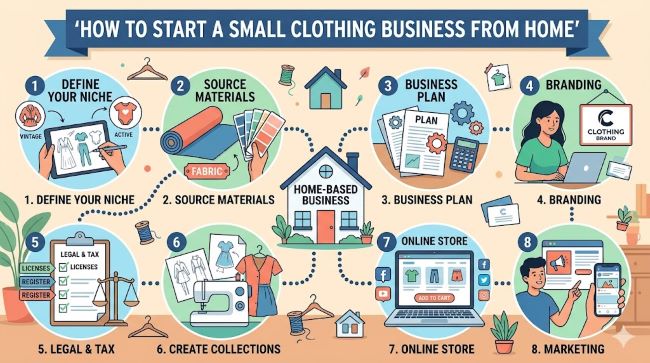
The idea of running your own clothing brand from your spare bedroom or kitchen table is not as far-fetched as it sounds. Thousands of people have figured out how to start a small clothing business from home and turned it into a real, profitable operation, sometimes without a single piece of sewing equipment. The clothing industry is one of the most accessible industries to enter today, thanks to platforms that handle production, storage, and shipping on your behalf. This guide walks through every step in the right order, from finding your niche to making your first sale, so you have a clear path rather than a scattered list of things to do.
Understand the Business Models Available to You
Before you buy anything or design anything, you need to choose how you will actually run this business. The model you pick shapes everything: your startup costs, your workload, and how fast you can scale.
Print-on-Demand (POD) This is the lowest-risk way to start. You design graphics or patterns, upload them to a platform like Printify or Printful, and those platforms print and ship each order as it comes in. You hold no inventory. You pay nothing upfront. When a customer orders a hoodie with your design on it, the supplier makes it and ships it. Your profit is the difference between the retail price you set and what the supplier charges.
Dropshipping Similar to POD but applied to wholesale clothing. You list items from a supplier in your store, and when someone buys, the supplier ships directly to the customer. You never handle the product. The challenge is differentiation since many other sellers may carry the same items from the same supplier.
Private Label You source blank garments from a manufacturer, add your own branding (custom tags, packaging, labels), and sell them as your own brand. This gives you a more polished, professional product, but requires a larger upfront investment and minimum order quantities.
Small-Batch or Handmade You design and produce clothing yourself or with a small local team. This suits people with sewing skills who want full creative control and the appeal of a handcrafted product. The scalability is limited, but the margins and brand authenticity can be strong.
Thrift Flipping You source secondhand items, alter or style them, and resell at a higher price. This works well for people with an eye for vintage or unique pieces and a knack for spotting undervalued clothing.
For most people starting out, print-on-demand or small-batch production is the right entry point. Low financial risk means you can test ideas without betting your savings on them.
Find Your Niche Before You Think About Products
A small clothing business that tries to sell everything to everyone will struggle. The brands that cut through are the ones built around a specific idea for a specific audience.
Your niche does not have to be complicated. It could be:
- Oversized streetwear for women in their 30s
- Sustainable basics with a minimalist aesthetic
- Graphic tees built around a specific subculture (gaming, music, motorsport)
- Athleisure for petite women
- Workwear-adjacent casual pieces for remote professionals
The clearer your niche, the easier everything downstream becomes: what products to make, how to describe them, where to find your customers, and which influencers to approach. Spend real time here before moving forward.
Write a Simple Business Plan
You do not need a 40-page document, but you do need a written plan that covers:
- What you are selling and to whom
- Which business model you are using
- Where you will sell (Etsy, Shopify, Instagram, local markets)
- Your startup costs and pricing
- How you plan to market
- Your short-term financial goal (first sale, first $1,000 in revenue, break-even point)
The act of writing this out forces you to think through questions you might otherwise skip. It also gives you something to refer back to when you lose direction.
Register Your Business and Handle the Basics
This step is easy to put off, but dealing with it early saves problems later.
Most home-based clothing businesses start as a sole proprietorship, which requires minimal paperwork. As you grow, forming an LLC gives you liability protection, separating your personal finances from the business.
You will also need:
- A business bank account (separating personal and business money from day one)
- An EIN (Employer Identification Number) from the IRS, which is free to obtain
- To check local regulations about running a business from your home address
- Sales tax registration if your state requires it for online sellers
If any of this feels overwhelming, a quick consultation with an accountant or business lawyer can clear it up in an hour.
Set Up Your Workspace
A dedicated workspace matters more than it might seem. You do not need a large space, but you do need one that is organized and separate from the rest of your living area.
At minimum, depending on your business model, you may need:
- A desk and computer for managing your store, orders, and communications
- Storage for packaging materials (boxes, tissue paper, labels, tape)
- A clear area for photographing products
- If making your own garments: a sewing machine, cutting table, and storage for fabric and materials
Good lighting for product photography is worth investing in early. The quality of your product photos will have a direct impact on your conversion rate, especially on visual platforms like Instagram and Etsy.
How to Start Your Own Clothing Line: Building the Brand
When you think about how to start your own clothing line, branding is not optional. It is the thing that makes people choose you over the dozens of other options they find when they search.
Your brand needs:
A name. Choose something memorable, easy to spell, and that does not lock you into a product category you might grow out of. Check that the domain and social media handles are available before committing.
A visual identity. A clean logo, a consistent color palette, and a recognizable font combination. You do not need to spend thousands on this. Tools like Canva can get you to a professional-looking brand without a designer.
A brand voice. How does your brand talk? Warm and conversational? Minimal and editorial? Cheeky? Whatever you choose, it should be consistent across your website, product descriptions, email, and social content.
A brand story. People connect with why you started, not just what you sell. Even a short, honest origin story on your About page creates trust. Storytelling shapes how customers remember your brand and it is one of the highest-leverage things you can get right early.
Choose Where to Sell
You have more options than you might think, and the right choice depends on your target customer.
Etsy works well for handmade, vintage, and unique pieces. The built-in audience of people already shopping for independent brands is valuable.
Shopify gives you full control over your storefront with no marketplace fees. It is the most professional home for a brand, and it integrates with most print-on-demand suppliers.
Instagram and TikTok Shops allow you to sell directly through social posts and live videos. If you are building an audience on these platforms, this removes friction from the purchase process.
Local markets and pop-ups are underrated for building early word-of-mouth and getting real feedback from real people.
Start with one platform. Get comfortable with it and generate your first sales before adding more channels.
Source Your Products or Materials
If you are using print-on-demand, your supplier is essentially your production partner. Research the print quality, turnaround times, and shipping costs for the platforms you are considering. Order samples of your own products before listing them. Selling something you have never held in your hands is a risk.
If you are going the private label or wholesale route, find manufacturers through platforms like Alibaba, Faire, or local wholesale markets. Request samples, ask about minimum order quantities, and get everything in writing before committing to a large order.
For handmade production, build relationships with local fabric suppliers and understand your material costs per unit so you can price your work correctly.
Market Your Small Clothing Business Consistently
Getting your first sale requires getting in front of people, and the clothing space is competitive. The businesses that grow are the ones that show up consistently, not the ones that post ten times in one week and then disappear for a month.
Practical starting points:
- Instagram Reels and TikTok: Show the product in action, show behind-the-scenes content, show the making-of process. Visual content performs well for clothing because people need to see it worn and styled.
- Email list: Start building this from day one. An email list is an asset you own. Social platforms change their algorithms.
- User-generated content: When early customers receive their orders, ask them to share photos. Reshare with credit.
- SEO on your product pages: Write product descriptions that include how and when someone would wear the item, not just a list of specs.
- Micro-influencers: People with 5,000 to 50,000 followers in your niche often have more engaged audiences than large accounts and are willing to work with small brands for product in exchange for posts.
Tracking your business expenses from the start, including marketing spend, supplier costs, and packaging, keeps your finances clean and makes tax season manageable. Tools that help you monitor and manage business expenses are worth setting up early, not as an afterthought.
Plan for Growth From the Beginning
The setup phase of a small clothing business is exciting, but the brands that succeed long-term are the ones that think about operations from the start. As orders grow, fulfillment gets harder. Build systems and processes before they become urgent.
Consider how you will handle:
- Shipping and packaging consistently at volume
- Customer service responses when inquiries multiply
- Inventory or supplier management as you add more products
- Automating repetitive tasks like email follow-ups and cart abandonment reminders
Many founders find that as their brand grows, the operational side starts to take more time than the creative side. Understanding how modern business operations and workflow tools work helps you make smarter decisions about when to automate, delegate, or bring in support.
Key Takeaways
- How to start a small clothing business from home comes down to five things: choosing your business model, finding your niche, building your brand, setting up your store, and marketing consistently.
- Print-on-demand and small-batch production are the best entry points for most first-time founders because the financial risk is low.
- Your niche is the most important strategic decision you will make. A focused niche makes everything easier.
- Register your business, open a separate bank account, and track your finances from day one.
- Branding matters as much as the product. People buy stories and identities, not just garments.
- Start with one selling platform and one or two marketing channels before expanding.
- Consistency in marketing beats intensity. Show up regularly over time.
- Plan your operations early so growth does not break your business.
The hardest part of starting a small clothing business from home is usually starting. Everything else is a problem you solve as you go.