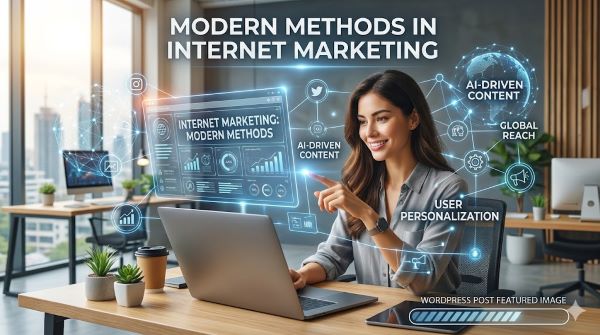
Modern Methods in Internet Marketing
The digital landscape has transformed the way businesses reach their audiences. Over the past decade, the growth of website advertising has reshaped entire industries, pushing companies to adopt data-driven strategies and innovative tools. Today, brands that fail to adapt risk falling behind competitors who embrace the latest trends in online promotion and customer engagement.
This guide explores the most effective techniques used by marketing professionals in 2024–2025, from search engine optimization and content-driven campaigns to automation platforms and performance analytics.
Search Engine Optimization as a Growth Driver
Organic search remains one of the highest-converting traffic sources for most businesses. A well-structured SEO strategy combines technical improvements, high-quality content, and authoritative backlinks to build long-term visibility. Recent algorithm updates have placed even greater emphasis on user experience signals, including page speed, mobile responsiveness, and content depth.
Key components of a modern SEO approach include the following elements.
- Comprehensive keyword research using AI-powered tools
- On-page optimization of meta tags, headings, and internal links
- Technical audits to eliminate crawl errors and improve site architecture
- Link-building campaigns focused on relevance and domain authority
Content Marketing and Audience Engagement
Publishing valuable, relevant content is the backbone of any sustainable marketing strategy. Articles, videos, podcasts, and interactive media all serve the same purpose — building trust with potential customers. The most successful brands treat content as a long-term investment rather than a short-term tactic.
Effective content marketing follows a clear process.
- Identify target audience segments and their pain points
- Develop an editorial calendar aligned with business objectives
- Create original material that answers real questions
- Distribute across social media, email newsletters, and partner channels
- Measure performance through engagement metrics and conversion data
Paid Advertising Channels and Their Efficiency
Paid channels offer immediate visibility, but their true value lies in precise targeting and measurable ROI. Platforms like Google Ads and social media networks allow marketers to segment audiences by demographics, interests, behavior, and even purchase intent. The table below summarizes the primary paid channels available today.
| Channel | Best Used For | Typical ROI Range |
| Search Ads (PPC) | Capturing high-intent traffic | 200–400% |
| Display Networks | Brand awareness and retargeting | 100–250% |
| Social Media Ads | Audience engagement and lead generation | 150–350% |
| Video Advertising | Storytelling and product demonstrations | 120–300% |
| Native Advertising | Seamless content promotion within editorial feeds | 130–280% |
Marketing Automation and AI-Powered Tools
Automation platforms have become indispensable for scaling marketing operations. From email drip campaigns to chatbot-powered customer support, these tools handle repetitive tasks while freeing up teams to focus on strategy and creativity. Artificial intelligence now plays a central role in predictive analytics, audience segmentation, and personalized content delivery.
The most commonly adopted solutions include email marketing platforms that manage subscriber lists and trigger personalized sequences, CRM systems that centralize data from multiple touchpoints, and AI-driven dashboards that surface actionable insights in real time.
Social Media Strategies for Brand Growth
Social platforms continue to evolve, and the strategies that worked two years ago may no longer deliver results. Short-form video content has surged in popularity, while community-building features such as groups, live streams, and collaborative posts are gaining traction. Successful social media marketing requires consistency, authenticity, and a willingness to experiment with new formats.
| Platform | Primary Audience | Content Format |
| 18–34 age group | Reels, Stories, carousel posts | |
| Professionals and B2B decision-makers | Articles, thought leadership, company updates | |
| TikTok | Gen Z and younger millennials | Short-form video, trends, challenges |
| YouTube | Broad demographic | Long-form video, tutorials, product reviews |
Performance Analytics and Data-Driven Decisions
No marketing strategy is complete without a robust measurement framework. Analytics tools provide visibility into every stage of the customer journey, from the first ad impression to the final purchase. Marketers who regularly review their data can identify underperforming campaigns, reallocate budgets efficiently, and optimize conversion funnels.
Essential metrics to track include cost per acquisition (CPA), customer lifetime value (CLV), return on ad spend (ROAS), and click-through rates. Setting up proper attribution models is equally important, as it helps determine which channels contribute most to revenue.
Adapting to a Rapidly Changing Environment
The internet marketing landscape never stays still. New platforms emerge, algorithms shift, and consumer expectations grow more sophisticated every year. Businesses that invest in continuous learning, test new approaches regularly, and rely on data rather than assumptions will be best positioned for sustained growth.
By combining organic and paid strategies, leveraging automation, and focusing on analytics, any organization can build a marketing framework that delivers measurable results.