Fish Knife vs Butter Knife
Sit down at a formal dinner and you might see more knives than you know what to do with. Two of the most confusing are the fish knife and the butter knife. Both are small, dull, and a little unusual looking. But they have very different jobs.
This guide explains fish knife vs butter knife in simple terms, from shape and purpose to where each sits on the table.
The Short Answer
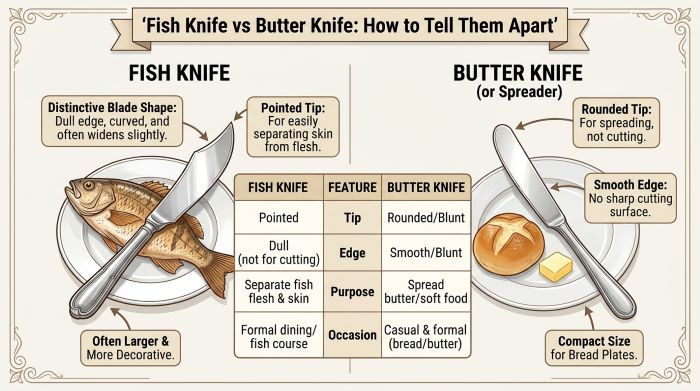
- A fish knife has a wide, flat blade with a pointed or notched tip. It’s used to lift and separate tender fish and gently remove bones and skin.
- A butter knife (or butter spreader) has a short, rounded, dull blade. It’s used to spread butter on bread.
Neither is made for cutting through tough food.
Fish Knife vs Butter Knife at a Glance
| Feature | Fish Knife | Butter Knife |
|---|---|---|
| Blade shape | Wide, flat, often asymmetrical | Short, rounded, paddle like |
| Tip | Pointed or notched | Round |
| Edge | Dull, not serrated | Dull |
| Length | About 8 to 9 inches | About 6 to 7 inches |
| Main job | Lifting fish off bones, separating flakes | Spreading butter, soft cheese, or jam |
| Table placement | Right of the dinner plate, in course order | On the bread plate, upper left |
| Used with | Fish fork | Bread roll |
| Formality | Formal dining | Casual and formal |
What Is a Fish Knife?
A fish knife is a table knife designed for eating cooked fish. Its blade is broad and flat, often with a curved spine and a small notch or point near the tip. That shape helps you:
- Lift tender flakes of fish without crushing them
- Slide under the skin to remove it
- Push small bones aside
- Guide food onto your fork
The edge is dull because cooked fish is soft and doesn’t need cutting. A sharp blade would actually break the delicate flesh into mush.
These knives became popular in Victorian England in the 1800s, when silverware sets grew more elaborate. Before stainless steel, some people believed steel blades gave fish a metallic taste, so many were made of silver.
What Is a Butter Knife?
A butter knife has a short blade with a rounded tip and a dull edge. Some have a slightly wider, paddle shaped blade, called a butter spreader. Its only real job is to spread butter, soft cheese, pâté, or jam on bread.
There are two main types:
- Butter spreader: A small personal knife placed on your bread plate.
- Master butter knife: A serving knife with a slightly hooked or curved blade, placed with the butter dish. It’s used to cut a portion of butter and move it to your own plate.
In everyday speech, many people call any dull dinner knife a “butter knife,” but in table settings, it means the small spreader.
How to Tell Them Apart
If you see two unusual knives at a formal setting, look for these clues:
- Size: The butter knife is shorter.
- Shape: The fish knife has a wide blade with a notch or point; the butter knife is small and rounded.
- Location: The butter knife sits on the small bread plate at the upper left. Fish knives sit to the right of your dinner plate with the other knives.
Where They Go on the Table
In a formal place setting, silverware is arranged from the outside in, in the order you’ll use it.
| Position | Item |
|---|---|
| Upper left | Bread plate with butter knife resting across it |
| Left of plate | Forks (fish fork, dinner fork, salad fork) |
| Right of plate | Knives (fish knife, dinner knife), then spoons |
| Above plate | Dessert spoon and fork |
If fish is served before the main course, the fish knife will sit farthest from your plate on the right, since you’ll use it first.
How to Use a Fish Knife
Using this knife correctly is easier than it looks:
- Hold the fish knife in your right hand like a pen or pencil, not gripped like a steak knife.
- Hold the fish fork in your left hand, tines down.
- Use the knife’s tip to slide along the spine and lift the top fillet away.
- Gently pull away any skin.
- Use the flat blade to push small bites onto your fork.
- When finished, place both utensils side by side on the plate, at about the 4 o’clock position.
Don’t use a fish knife to saw or cut. Its job is to guide and separate.
How to Use a Butter Knife
- Use the master butter knife to take a pat of butter from the shared dish.
- Place it on the edge of your bread plate.
- Tear off a small, bite sized piece of your roll.
- Use your butter knife to spread butter on that one piece.
- Eat it, then repeat.
Tearing small pieces instead of buttering the whole roll at once is a classic etiquette rule.
Other Knives You Might See
| Knife | Use |
|---|---|
| Dinner knife | Main course; slightly sharp or serrated |
| Steak knife | Cutting meat; sharp and often serrated |
| Luncheon knife | A shorter version of the dinner knife |
| Fruit knife | Small, sharp knife for peeling fruit |
| Cheese knife | Cutting and serving cheese |
Kitchen Knives vs Table Knives
Fish knives and butter knives are table knives, meant for eating. In the kitchen, you need very different tools. Preparing raw fish for sushi, for example, calls for long, razor sharp blades like the yanagiba. See our guide to the best sushi knives for top picks.
Outdoors, a tough, sharp blade matters even more. If you clean fish at a campsite, a sturdy knife makes the job safer. Check out our guide to the Best Fixed Blade Knife for Camping.
Do You Need Fish Knives at Home?
For most families, no. A regular dinner knife and fork work fine for fish. But if you love entertaining or serve fish often, a matching set adds an elegant touch. They also make lovely wedding or housewarming gifts.
Care Tips
- Wash by hand if they’re silver or silver plated.
- Dry right away to prevent spots.
- Polish silver occasionally to remove tarnish.
- Stainless steel versions are usually dishwasher safe.
Fish Knife vs Butter Knife: Materials and Design
Both knives come in many materials:
| Material | Fish Knife | Butter Knife |
|---|---|---|
| Sterling silver | Traditional, elegant | Traditional |
| Silver plate | Common in vintage sets | Common in vintage sets |
| Stainless steel | Most common today | Most common today |
| Wood or bone handles | Found in antique sets | Popular in rustic and modern styles |
| Ceramic or acrylic handles | Rare | Common in casual and decorative sets |
Vintage silver sets often feature engraved blades with fish or wave patterns, which makes them popular with collectors.
Fish Knife vs Butter Knife in Etiquette History
Formal dining in the 1800s introduced many specialized utensils. The fish knife and fork became a symbol of fine Victorian dining, while butter spreaders grew common as individual bread plates became standard. Over time, many of these specialty tools disappeared from everyday homes, but they remain part of formal and banquet settings.
Common Mistakes at the Table
- Using the butter knife on the main course. It’s only for bread.
- Gripping the fish knife like a steak knife. Hold it lightly, like a pen.
- Buttering a whole roll at once. Tear and butter one bite at a time.
- Leaving used utensils on the table. Always rest them on your plate.
Knowing the fish knife vs butter knife difference helps you avoid these slips and feel relaxed at any formal meal. Once you’ve used each one a few times, the fish knife vs butter knife puzzle won’t seem confusing at all.
Buying Tips
If you’re building a formal flatware collection, look for sets sold in matching patterns. Many brands sell fish knives in sets of six or eight, and butter spreaders in sets of four to twelve. Antique stores and online auctions are great places to find unique vintage pieces at good prices.
Frequently Asked Questions
Can I use a butter knife to eat fish? You can at home, but it’s too small to work well. A regular dinner knife is a better substitute.
Why is a fish knife not sharp? Cooked fish is soft. A dull, wide blade separates it gently without crushing it.
Where does the butter knife go on a table? Across the top of the bread plate, at the upper left of your setting.
Is the fish knife still used today? Yes, mostly at formal dinners, fine restaurants, and in traditional silverware sets.
Final Thoughts
The fish knife vs butter knife difference is all about shape and purpose. A fish knife is wide and flat for lifting delicate fish. A butter knife is short and rounded for spreading. Once you know where each one sits and how to hold it, formal dinners become much less confusing.
Key Takeaways
- Fish knife vs butter knife: a fish knife lifts and separates fish, while a butter knife spreads butter.
- A fish knife has a wide, flat blade with a notch or pointed tip.
- A butter knife is short and rounded, and sits on the bread plate at the upper left.
- Fish knives sit to the right of the plate, used with a fish fork.
- Hold a fish knife like a pen and use it to guide food, not cut.
- Neither knife is sharp, since both handle soft foods.