Best Sushi Knives for Precision Cuts at Home
The difference between sushi that looks like a restaurant made it and sushi that looks homemade often comes down to one thing: the knife. Raw fish is delicate, and a dull or wrong-shaped blade tears and crushes it, ruining both the appearance and the texture. A proper sushi knife, by contrast, glides through fish in a single clean stroke, leaving a mirror-smooth surface that makes the fish shine. Whether you are getting serious about sushi at home or just want to cut clean sashimi, the best sushi knives make an enormous difference. Here is the guide to the types, what to look for, and how to choose.
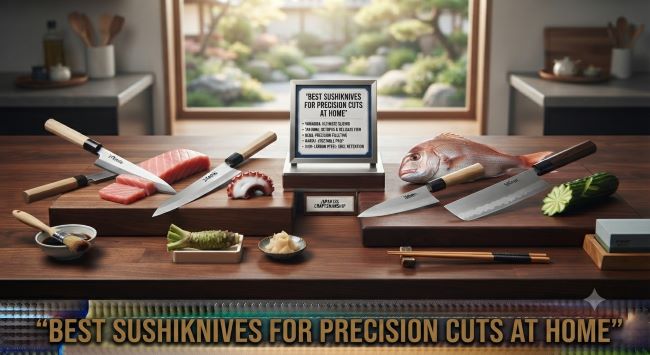
Why Sushi Needs Special Knives
Understanding why regular knives fall short explains what makes a sushi knife special. Cutting raw fish with the best sushi knives is about slicing cleanly without tearing, crushing, or dragging, which damages the delicate flesh and ruins the texture. The best sushi knives are designed specifically for this:
- Long blades let you slice through fish in a single smooth pull rather than sawing back and forth, which is what creates a clean surface.
- Extreme sharpness cuts cleanly without crushing delicate fish cells.
- Thin blades reduce drag through the fish.
- Single-bevel edges (on traditional Japanese knives) allow incredibly precise, clean cuts.
The result is the clean, glossy cut surface that defines good sushi and sashimi, impossible to achieve with a dull or thick Western knife.
The Main Types of Sushi Knives
Traditional Japanese cuisine uses several of the best sushi knives, and knowing them helps you choose:
Yanagiba. The classic sushi and sashimi knife: a long, thin, single-bevel blade designed for slicing fish in one clean stroke. The single most important knife for sushi, and the one most home enthusiasts want. Its length (often 240-300mm) lets you draw the whole blade through the fish in one motion.
Deba. A heavier, thicker single-bevel knife used for breaking down whole fish, cutting through small bones, and filleting. The butchering knife of the sushi kitchen, paired with the yanagiba for slicing.
Usuba. A thin single-bevel vegetable knife for the precise vegetable work in Japanese cuisine, including delicate garnishes.
Santoku and gyuto. Versatile Japanese all-purpose knives (double-bevel), useful for general prep and a good entry point before investing in specialized single-bevel knives.
For most home sushi makers, a yanagiba is the essential purchase, with a deba useful if you break down whole fish.
Single-Bevel vs. Double-Bevel
This best sushi knives distinction matters and confuses many buyers:
Single-bevel knives (traditional yanagiba and deba) are sharpened on one side only, which allows extremely sharp, precise cuts and the cleanest slices, but requires more skill to use and sharpen, and traditional versions are made for right-handed users (left-handed versions exist but cost more).
Double-bevel knives are sharpened on both sides like Western knives, more forgiving and versatile, easier to learn and maintain, and available in sushi-oriented designs. A good compromise for beginners who want clean cuts without the learning curve of a single-bevel.
The honest guidance: single-bevel yanagiba deliver the most authentic, cleanest cuts but demand skill and maintenance, while a quality double-bevel knife serves beginners well and is more versatile.
What to Look For
The features that separate the best sushi knives from ordinary blades:
- Steel quality. High-carbon steel holds a sharper edge (favored by traditionalists) but requires more care to prevent rust, while stainless is easier to maintain but may not get quite as sharp. Many quality knives use a blend.
- Blade length, with 240-270mm a versatile yanagiba length for home use, longer for larger fish.
- Sharpness and edge retention, the whole point of the knife.
- Handle comfort, whether traditional Japanese (wa-handle) or Western style, based on preference.
- Build quality, since a well-made knife lasts a lifetime with care.
- Your skill level, matching the knife to whether you are a beginner or experienced.
Matching the Knife to You
| Your Situation | Recommended |
|---|---|
| Serious about authentic sushi | Single-bevel yanagiba |
| Beginner wanting clean cuts | Double-bevel sushi/sashimi knife |
| Breaking down whole fish | Add a deba |
| General Japanese cooking | Santoku or gyuto |
| Occasional sashimi | Quality double-bevel long slicer |
Caring for Your Sushi Knife
The best sushi knives are an investment that rewards proper care, and neglect ruins them fast:
- Hand wash only, never the dishwasher, which damages the edge and handle.
- Dry immediately, especially high-carbon steel, which rusts quickly if left wet.
- Hone and sharpen with whetstones, the traditional and best method for these knives; single-bevel knives especially require proper whetstone sharpening.
- Store safely, in a knife guard, on a magnetic strip, or in a block, never loose in a drawer where the edge gets damaged.
- Use the right cutting surface, a wooden or soft cutting board, never glass or stone, which dull the edge.
- Use it only for its purpose, since slicing fish, not cutting through bones or frozen food, preserves the delicate edge.
Putting a Good Knife to Use
A great knife is only worth it if you appreciate the sushi it helps you make, and part of the joy is understanding the craft you are recreating. Studying how the best sushi is made and served deepens the payoff, whether you are slicing fish for delicate nigiri like the tender preparation behind Sushi Nigiri Octopus Near Me or the rich, glazed style of Best Sushi Nigiri Eel Near Me, since seeing how professionals handle different fish shows exactly why a clean, precise cut from a proper knife matters so much to the final result.
The bottom line on the best sushi knives is that a proper knife transforms home sushi and sashimi, turning torn, crushed fish into clean, glossy, restaurant-quality slices. Start with a good yanagiba or a quality double-bevel slicer, learn to care for it with hand washing and whetstone sharpening, and use it only for its purpose, and it will reward you with beautiful cuts for a lifetime.
Key Takeaways
- Sushi knives use long, thin, extremely sharp blades to slice delicate fish cleanly in one stroke without tearing or crushing.
- The yanagiba is the essential sushi and sashimi knife; the deba breaks down whole fish, and the usuba handles vegetables.
- Single-bevel knives (yanagiba, deba) give the cleanest, most precise cuts but require skill and whetstone sharpening.
- Double-bevel knives are more forgiving and versatile, a good choice for beginners wanting clean cuts.
- Look for quality steel (high-carbon for sharpness, stainless for easy care), a 240-270mm length, and good build.
- Care is essential: hand wash only, dry immediately, sharpen with whetstones, and store safely.
- Use a wooden cutting board and reserve the knife for slicing fish, never bones or frozen food.
- A quality sushi knife is a lifetime investment that transforms home sushi into clean, restaurant-quality slices.