
Carbon Steel vs Cast Iron
Cast iron has been a kitchen favorite for generations. But carbon steel pans, long loved by restaurant chefs, are now showing up in home kitchens too. Both are tough, affordable, and can last a lifetime. So which one belongs on your stove?
This guide compares carbon steel vs cast iron, so you can choose the best pan for the way you cook.
The Short Answer
- Cast iron is heavy, thick, and holds heat for a long time. It’s great for searing steak, baking cornbread, and slow cooking.
- Carbon steel is lighter, thinner, and heats up faster. It’s great for stir fries, eggs, crepes, and quick searing.
Both need seasoning, both work on induction, and both get better with use.
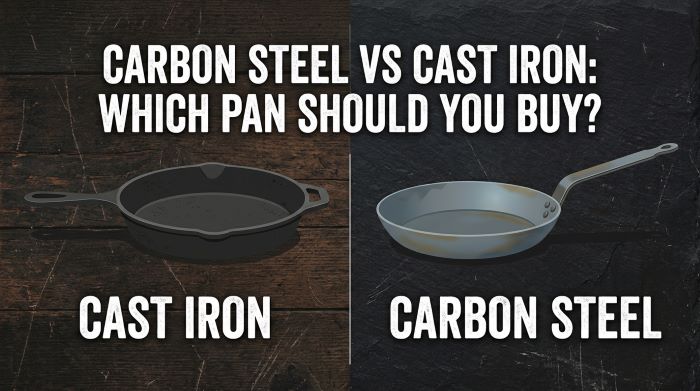
Carbon Steel vs Cast Iron at a Glance
| Feature | Carbon Steel | Cast Iron |
|---|---|---|
| Carbon content | About 1% or less | About 2% to 4% |
| Weight | Lighter | Heavy |
| Thickness | Thin | Thick |
| Heats up | Fast | Slow |
| Holds heat | Moderate | Excellent |
| Surface | Smooth | Slightly rough (unless polished) |
| Responsiveness | Quick to change temp | Slow to change temp |
| Seasoning | Needed | Needed |
| Induction safe | Yes | Yes |
| Oven safe | Yes | Yes |
| Price | About $30 to $100 | About $20 to $80 |
| Best for | Eggs, stir fry, crepes, quick sears | Steak, cornbread, frying, baking |
What Is Carbon Steel?
What is carbon steel? It’s an alloy made mostly of iron with a small amount of carbon, usually about 1% or less. Carbon steel pans are made by stamping or spinning a sheet of steel into shape, so they’re thinner and lighter than cast iron.
Woks, French omelet pans, crepe pans, and paella pans are often made of carbon steel. Restaurant kitchens love it because it’s tough, light enough to toss food, and heats up quickly.
If you’re wondering what is carbon steel like to cook on, think of it as cast iron’s lighter, faster cousin.
What Is Cast Iron?
Cast iron has more carbon, about 2% to 4%. It’s made by pouring molten iron into a sand mold, which creates its thick, heavy body and slightly bumpy surface.
That thickness is cast iron’s superpower. Once hot, it stays hot, which makes it perfect for searing steaks, frying chicken, and baking.
Weight and Handling
Weight is one of the biggest differences in carbon steel vs cast iron. A 12 inch cast iron skillet often weighs 7 to 8 pounds. A 12 inch carbon steel pan usually weighs about 4 to 5 pounds.
Carbon steel pans also have longer, thinner handles that are easier to grip and toss with. If you have wrist pain or want to flip food like a chef, carbon steel is easier to manage.
Heat Performance
Cast iron:
- Heats slowly and unevenly at first
- Holds heat very well once hot
- Great for searing, deep frying, and oven baking
- Stays warm on the table for serving
Carbon steel:
- Heats up quickly
- Responds fast when you adjust the burner
- Better for high heat stir frying and delicate foods like eggs
- Loses heat faster when you add cold food
Seasoning and Nonstick Ability
Both pans need seasoning, a thin layer of polymerized oil that creates a natural nonstick surface and protects against rust.
Carbon steel has a smoother surface, so once seasoned, it can become very slick. Many cooks say a well seasoned carbon steel pan makes the perfect fried egg.
Cast iron’s rougher texture takes longer to become slick, but it builds a durable seasoning over time.
How to season either pan:
- Wash and dry the pan completely.
- Rub a very thin layer of high smoke point oil all over.
- Wipe off as much oil as you can.
- Bake upside down at 450°F to 500°F for one hour.
- Repeat three to four times for a strong base layer.
Care and Cleaning
Both pans follow similar care rules:
- Wash with hot water and a little soap if needed.
- Dry right away, then heat on the stove to remove moisture.
- Rub a thin layer of oil on the surface.
- Avoid soaking in water.
- Never put them in the dishwasher.
- Limit long simmering of acidic foods like tomato sauce, especially in a new pan.
Both can rust if left wet. If your cast iron develops orange spots, don’t worry; it’s fixable. Our guide on How to Clean a Cast Iron Pan Rust shows you how to bring it back to life, and the same steps work for carbon steel.
Durability
Both pans can last for generations. Cast iron is very hard but brittle; it can crack if dropped on a hard floor or shocked with cold water while hot. Carbon steel is more flexible and less likely to crack, though thin pans may warp under extreme temperature changes.
Cast Iron vs Stainless Steel
Many shoppers also compare cast iron vs stainless steel. Here’s how they differ:
| Feature | Cast Iron | Stainless Steel |
|---|---|---|
| Seasoning | Needed | Not needed |
| Nonstick ability | Good when seasoned | Food can stick |
| Heat retention | Excellent | Good (with aluminum or copper core) |
| Weight | Heavy | Medium |
| Acidic foods | Limit | Great |
| Dishwasher safe | No | Usually yes |
| Rust | Can rust | Rust resistant |
| Best for | Searing, frying, baking | Sauces, browning, pan sauces |
Stainless steel contains at least 10.5% chromium, which helps it resist rust. It doesn’t need seasoning and handles tomato sauce and wine reductions with ease. In the cast iron vs stainless steel choice, cast iron wins for searing and nonstick ability, while stainless steel wins for easy care and acidic dishes.
Many cooks own all three: cast iron for searing and baking, carbon steel for eggs and stir fries, and stainless steel for sauces.
Which Pan Should You Buy?
| You Cook… | Best Pan |
|---|---|
| Steaks and burgers | Cast iron |
| Eggs and omelets | Carbon steel |
| Stir fries | Carbon steel wok |
| Cornbread and skillet cookies | Cast iron |
| Fried chicken | Cast iron |
| Tomato sauces and wine sauces | Stainless steel |
| Crepes and pancakes | Carbon steel |
| Camping meals | Cast iron |
In the carbon steel vs cast iron debate, there’s no single winner. Choose cast iron for heat retention and baking. Choose carbon steel for speed, lighter weight, and delicate foods.
Carbon Steel vs Cast Iron on Different Stovetops
| Stovetop | Carbon Steel | Cast Iron |
|---|---|---|
| Gas | Excellent | Excellent |
| Electric coil | Good | Good |
| Glass ceramic | Good; lift, don’t slide | Good; lift, don’t slide, can scratch |
| Induction | Excellent | Excellent |
| Campfire or grill | Good | Excellent |
On glass tops, both pans can scratch the surface if dragged. Thin carbon steel pans may also warp slightly on small, high powered burners, so heat them gradually.
Common Mistakes to Avoid
- Using too much oil when seasoning. It turns sticky. Wipe it almost dry.
- Letting it air dry. Always dry with heat to prevent rust.
- Cooking acidic food in a new pan. Wait until the seasoning is strong.
- Heating too fast. Sudden heat can warp carbon steel or crack cast iron.
- Giving up early. Both pans get better with every use.
Carbon Steel vs Cast Iron for Beginners
If you’re new to both, the carbon steel vs cast iron decision often comes down to comfort. Cast iron is a little more forgiving because its thick body evens out hot spots. Carbon steel takes a few uses to learn, but its light weight makes daily cooking easier. Many home cooks start with a cast iron skillet, then add a carbon steel pan once they’re comfortable with seasoning. Either way, learning carbon steel vs cast iron care is a skill that pays off for decades.
Enameled Cast Iron: A Third Option
Enameled cast iron, like a classic Dutch oven, has a glass coating over the iron. It doesn’t need seasoning, won’t rust, and handles acidic foods like tomato sauce and wine with no problem. The tradeoff is that it isn’t as nonstick, it’s even heavier, and the enamel can chip if you drop it or heat it empty. It’s ideal for braises, soups, stews, and bread baking.
Frequently Asked Questions
Is carbon steel healthier than cast iron? Both are safe and free of synthetic nonstick coatings. Both can add small amounts of iron to food.
Does carbon steel need seasoning? Yes. Like cast iron, it needs seasoning to prevent rust and build a nonstick surface.
Can I use metal utensils? Yes. Both pans can handle metal spatulas.
Which lasts longer? Both can last a lifetime with proper care.
Final Thoughts
The carbon steel vs cast iron choice depends on your cooking style. Cast iron is the heavy duty champion for searing and baking. Carbon steel is lighter, faster, and great for everyday cooking. Take care of either one, and it will serve you for decades.
Key Takeaways
- Carbon steel vs cast iron: carbon steel is lighter and faster, while cast iron is heavier and holds heat longer.
- What is carbon steel? An iron alloy with about 1% carbon, shaped into thin, smooth pans.
- Cast iron contains about 2% to 4% carbon and is cast in a mold.
- Both need seasoning, work on induction, and should never go in the dishwasher.
- Cast iron vs stainless steel: cast iron sears better, while stainless steel handles acidic foods and needs no seasoning.
- Choose carbon steel for eggs and stir fries, and cast iron for steaks and baking.