Low Taper Fade with Textured Fringe: The Complete Guide
This is the cut barbers get asked for more than almost any other, and the reason is balance. The sides stay conservative enough for an office while the front carries the personality. It photographs well, grows out reasonably, and works on more head shapes than most trend cuts manage.
What the Cut Actually Is
The low taper fade with textured fringe combines two separate elements, and understanding them individually makes the whole thing easier to request.
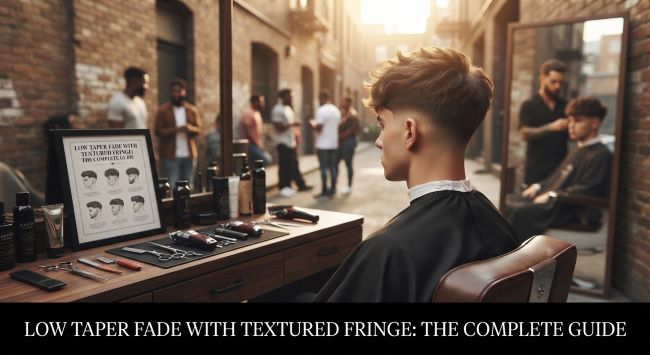
The low taper fade is the sides and back. A taper means the hair gradually shortens toward the neckline and ears, and low means that gradient starts just above the ear and around the nape rather than climbing up the sides. Because it starts low, it removes less bulk than a mid or high fade, keeping noticeable weight on the sides, which is why it reads as subtle.
The textured fringe is the front. Hair is left longer at the forehead and cut with point cutting or thinning to remove weight and create visible separation between pieces, then styled forward.
Together, the low taper fade with textured fringe gives a clean, tight perimeter with a soft, deliberately messy front.
Why the Combination Works
The appeal is contrast. A tapered perimeter sharpens the outline of the head while the fringe softens the face and creates movement where the eye lands.
It is also versatile. The low taper is the most conservative fade variation, so it stays appropriate professionally while looking current. The low taper fade with textured fringe also grows out more gracefully than higher fades, since there is less contrast between the shortest and longest points.
Who It Suits
Face shape is worth considering:
| Face shape | How it works |
|---|---|
| Oval | Suits almost any version |
| Long or oblong | Fringe shortens the face visually |
| Square | Softens a strong jaw and hairline |
| Round | Better with height and a shorter fringe |
| Heart | Fringe balances a wider forehead |
A forward fringe reduces visible forehead, flattering longer face shapes. For rounder faces, more height on top prevents the cut adding width.
Hair type matters too. Straight to wavy takes the low taper fade with textured fringe most easily, since the texture comes from the cutting. Thick hair holds separation well and may need weight removed, while fine hair needs matte product and a lighter hand. Very curly hair is a different conversation entirely.
How to Ask Your Barber
Being specific prevents disappointment, so bring photographs and use precise language.
For the sides, ask for a low taper fade and specify where it should start. Guard numbers help if you know what has worked, and clarify whether it goes to skin at the bottom.
For the top, ask for a textured fringe with length kept at the front. Useful phrases include point cut for texture, remove weight rather than length, and keep it long enough to fall toward the brows.
Say how you actually style your hair, since a barber cutting for a daily blow-dry works differently from one cutting for hands and product. Fringe length is the most common source of regret, and barbers cut conservatively when uncertain, so if you want it hitting the eyebrows, say so.
Styling It
The cut does most of the work, but styling a low taper fade with textured fringe determines whether the texture shows.
- Start with towel-dried hair, damp rather than wet.
- Blow dry the fringe forward with fingers or a brush. This matters more than product.
- Apply matte product to dry hair, warming a small amount between your palms.
- Push the fringe forward and break it up with your fingertips, separating rather than smoothing.
- Adjust rather than perfect, since the look depends on being undone.
Matte clay, texture powder, sea salt spray, and matte paste all work. Avoid shiny gels and pomades, which clump the fringe into a solid mass and destroy the separation that defines the style. Use less than you think, especially with fine hair.
Maintenance
A low taper fade with textured fringe needs regular attention. The fade holds shape for two to four weeks before the gradient blurs, which sets a sensible booking rhythm.
The fringe grows into your eyes faster, and most people want the front tidied more often than the sides. Asking your barber to trim just the fringe between full cuts is a reasonable request. Between appointments, wash less often than you might assume, since natural oils help texture and this cut looks better on day two hair.
Variations Worth Knowing
Several adjustments change the character of a low taper fade with textured fringe considerably:
- Longer fringe falling to or past the brows, for a heavier, more dramatic look.
- Shorter, choppier fringe sitting higher on the forehead.
- Fringe with a slight side sweep, which reads tidier and more formal.
- Added height at the front, lifting the fringe rather than laying it flat.
- Combined with a middle part, splitting the fringe rather than pushing it straight forward.
Discussing which direction you want before the cut saves trouble afterward.
Understanding the Fade Itself
Getting the most from this cut means understanding the fade itself, since it determines how the whole thing sits and how often you return. Where the taper begins, how gradual the blend is, and whether it finishes at skin all change the result. The detailed guide at Low Taper Fade covers those choices properly, which is genuinely useful before your appointment since the fringe is only half the cut and the taper is the half most people struggle to describe accurately to a barber.
The bottom line on the low taper fade with textured fringe is that it pairs a subtle, low-starting taper on the sides with a deliberately separated fringe styled forward, giving you a conservative outline and an expressive front. Bring photographs, specify where the taper should start and how long you want the fringe, style it with matte product on dry hair after directing it forward with a blow dryer, and book back in every two to four weeks for the fade with occasional fringe trims in between.
Key Takeaways
- The cut combines a low taper fade on the sides and back with a longer, textured fringe styled forward.
- Low taper means the gradient starts just above the ears and at the nape, keeping more weight on the sides.
- Textured refers to point cutting or thinning that removes weight and creates visible separation between pieces.
- It suits professional settings because the low taper is the most conservative fade variation.
- It grows out more gracefully than higher fades, since there is less contrast between lengths.
- A forward fringe visually shortens the face, flattering longer face shapes particularly well.
- Straight to wavy hair takes it most easily, while fine hair needs matte product and a lighter hand.
- Ask specifically for a low taper fade, state where it should start, and say how long you want the fringe.
- Use matte clay, paste, powder, or sea salt spray, and avoid shiny gels that clump the fringe together.
- Book every two to four weeks for the fade, with separate fringe trims in between as it grows into your eyes.