How to Fix a Stripped Screw Hole in Wood: Easy Methods That Work
It is one of the most common annoyances in any home: you go to tighten a screw and it just spins uselessly. The hole has stripped out, the wood worn away so the threads have nothing to bite into, leaving a cabinet hinge loose or a handle wobbly. The good news is that this is one of the easiest DIY fixes there is. Here is how to fix a stripped screw hole in wood, with several simple methods that genuinely work.
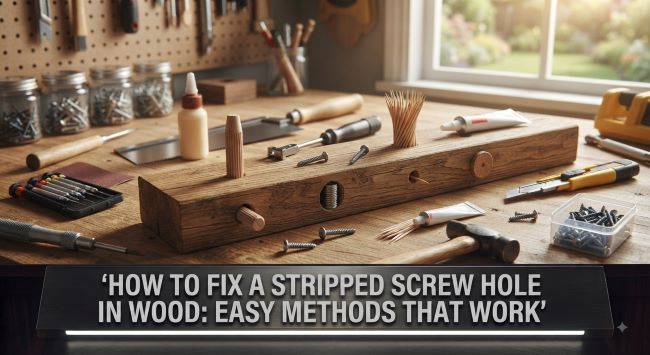
Why Screw Holes Strip Out
Understanding the problem is the first step in how to fix a stripped screw hole in wood well. A screw holds because its threads bite into the surrounding wood. Over time or with too much force, that wood wears away or compresses, leaving a hole too wide and smooth for the threads to grip. Common causes include over-tightening, repeated removal and reinsertion of the screw, wear from movement, wood that is too soft, or a hole that was always slightly too big.
Whatever the cause, the fix is the same in principle: give the screw threads something solid to bite into again by filling or narrowing the hole. Here are the methods, from simplest to most robust.
Method 1: The Toothpick Trick
The classic, simplest fix uses ordinary wooden toothpicks, and it works remarkably well for small to medium screws:
- Insert toothpicks into the stripped hole, adding as many as fit snugly. Dab them with wood glue first for a stronger result.
- Break or trim them off flush with the surface.
- Let the glue dry if you used it.
- Drive the screw back in. The screw threads now bite into the toothpicks and glue, gripping tightly again.
This method is fast, cheap, and effective for most household stripped screw holes, making it the go-to first fix. Wooden matchsticks (with the heads cut off) work the same way for slightly larger holes.
Method 2: Wooden Dowel or Golf Tee
For larger stripped holes, a more robust version of how to fix a stripped screw hole in wood uses a wooden dowel or golf tee:
- Drill out the hole slightly to clean and straighten it, sizing it to your dowel.
- Apply wood glue to a wooden dowel (or a golf tee for a quick fix) and insert it into the hole.
- Trim it flush and let the glue dry fully.
- Drill a small pilot hole in the center of the dowel if needed.
- Drive the screw in, now gripping solid new wood.
This method essentially replaces the worn wood with fresh, solid wood, making it a strong, lasting fix for larger or more important holes. It is the most robust of the common methods.
Method 3: Wood Filler or Epoxy
Another approach uses wood filler or epoxy:
- Clean out the hole of any debris.
- Fill it with wood filler or a wood epoxy designed for the purpose.
- Let it cure fully, following the product instructions.
- Drill a pilot hole and drive the screw in.
This approach to how to fix a stripped screw hole in wood works well, though standard wood filler is sometimes less sturdy than the dowel methods for screws under load. Specialized wood epoxies and repair products are stronger and designed specifically for restoring screw holes.
Method 4: A Larger or Longer Screw
Sometimes the simplest fix is to change the screw:
- Use a slightly larger diameter screw, which can bite into fresh wood the stripped screw could not grip.
- Use a longer screw, which reaches deeper into solid wood beyond the stripped section.
- Combine with another method, using a larger screw after filling for extra hold.
This is the quickest fix when it works, though the larger screw must still look appropriate and fit the hardware. It is a good option when you do not want to fill and wait for glue to dry.
Method 5: Steel Wool
A quick trick in a pinch uses steel wool:
- Pack fine steel wool into the stripped hole.
- Drive the screw in, letting it bite into the steel wool.
This is a fast, temporary-to-moderate fix that gives the threads something to grip. It is less robust than the wood-based methods but works in a pinch when you need a quick hold.
Which Method Should You Use?
Choosing among the ways to fix a stripped screw hole in wood depends on your specific situation:
| Situation | Best Method |
|---|---|
| Small household screw | Toothpick trick |
| Larger or important hole | Wooden dowel |
| Load-bearing or lasting fix | Dowel or wood epoxy |
| Quick fix, no glue drying | Larger/longer screw |
| In a pinch | Steel wool |
For most everyday stripped screw holes, learning how to fix a stripped screw hole in wood starts with the toothpick trick, which is easiest and works great. When you know how to fix a stripped screw hole in wood for larger or load-bearing holes, the dowel method or a proper wood epoxy gives the strongest, most lasting result.
Tips for Lasting Results
A few tips make any stripped-hole repair last longer:
- Use wood glue with the toothpick or dowel methods for a much stronger bond.
- Let glue or filler cure fully before driving the screw, since rushing weakens the fix.
- Drill a pilot hole where appropriate, which helps the screw go in straight and prevents re-stripping.
- Do not over-tighten the screw once fixed, since over-tightening is what strips many holes in the first place.
- Choose the right screw size for the hardware and load.
The bottom line on how to fix a stripped screw hole in wood is that it is an easy, satisfying DIY fix using materials you probably already have. When learning how to fix a stripped screw hole in wood, remember: for small holes, pack in glue-dipped toothpicks; for larger ones, glue in a wooden dowel; for load-bearing repairs, use a dowel or wood epoxy; or simply switch to a larger or longer screw. Use wood glue, let it cure, drill a pilot hole, and avoid over-tightening, and your screws will hold tight again as if the hole were never stripped.
Key Takeaways
- A stripped screw hole happens when the wood around it wears away, leaving nothing for the screw threads to grip.
- The toothpick trick, packing glue-dipped toothpicks into the hole, is the simplest fix and works for most small holes.
- For larger holes, glue a wooden dowel or golf tee into the hole, then drive the screw into the fresh wood.
- Wood filler or, better, wood epoxy can fill the hole, though epoxy is sturdier for screws under load.
- Switching to a slightly larger or longer screw is the quickest fix when it works.
- Steel wool packed into the hole is a fast fix in a pinch, though less robust than wood-based methods.
- Use wood glue, let it cure fully, drill a pilot hole, and avoid over-tightening for a lasting repair.
- Match the method to the situation: toothpicks for small holes, dowels or epoxy for larger or load-bearing ones.