Is Sourdough Bread Gluten Free? What the Science Actually Says
Sourdough bread has developed a reputation as a gentler option for people with gluten sensitivities, and you’ll find plenty of anecdotal claims online that sourdough is “basically gluten free” because of its fermentation process. The reality is more nuanced and more important to get right, especially for anyone with celiac disease where the stakes of a wrong assumption are genuinely serious.
Is Sourdough Bread Gluten Free?
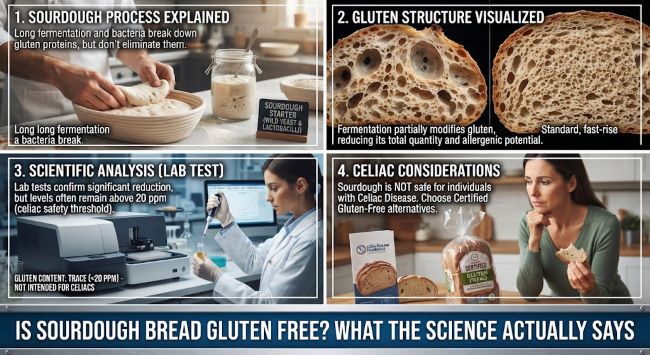
No, traditional sourdough bread is not gluten free. Sourdough is made with wheat flour (or sometimes rye or spelt), all of which contain gluten. The defining characteristic of sourdough isn’t the absence of gluten — it’s the fermentation method: a wild yeast and bacteria culture (the sourdough starter) ferments the dough slowly over many hours, rather than using commercial baker’s yeast for a quick rise.
This fermentation process does change the gluten structure to some degree, which is the basis for claims about sourdough being easier to digest. But changing gluten structure is not the same as removing gluten, and traditional sourdough bread still contains levels of gluten well above what’s considered safe for people with celiac disease.
What Fermentation Actually Does to Gluten
During the long fermentation process, the bacteria and wild yeast in a sourdough starter produce enzymes, including proteases, that partially break down some of the gluten proteins in the flour. Research has shown that extended sourdough fermentation (significantly longer than commercial bread production, often 12-24+ hours) can reduce gluten content to some degree and may make the remaining gluten somewhat easier for some people to digest.
However, the degree of gluten reduction varies enormously based on fermentation time, the specific starter culture, and the baking process used. Commercially produced “sourdough” bread, including much of what’s sold at grocery stores, often uses much shorter fermentation times than traditional methods to speed up production, meaning it retains close to the full gluten content of the flour used. A loaf labeled “sourdough” on a supermarket shelf is not a reliable indicator of meaningfully reduced gluten content.
Studies using extremely long fermentation (in some research, 24-48+ hours with specific strains of lactobacilli) have shown gluten degradation significant enough to be tested as a potential treatment approach for celiac disease in clinical research settings — but this is not standard commercial sourdough production, and these specialized, extensively fermented products are not what you’re buying at a bakery or grocery store.
Is Sourdough Safe for People with Celiac Disease?
No, standard sourdough bread is not safe for people with celiac disease. Celiac disease is an autoimmune condition where even small amounts of gluten trigger an immune response that damages the small intestine. The gluten reduction from standard sourdough fermentation, even when meaningful, does not reduce gluten to the level required to be considered safe for celiac patients (under 20 parts per million, the FDA’s threshold for “gluten-free” labeling).
People with celiac disease should not eat conventional sourdough bread based on assumptions about fermentation reducing gluten to a safe level. The only sourdough products safe for celiac patients are those specifically made with gluten-free flours (rice flour, buckwheat, sorghum) using a gluten-free starter culture, and explicitly labeled gluten-free with testing to confirm it meets the regulatory threshold.
Can Sourdough Help with Non-Celiac Gluten Sensitivity?
This is where the picture is more genuinely mixed and where much of the popular interest in sourdough comes from. Non-celiac gluten sensitivity (NCGS) is a less clearly defined condition than celiac disease, where people experience digestive discomfort or other symptoms after eating gluten-containing foods without the autoimmune intestinal damage seen in celiac disease.
Some research suggests that the fermentation process in traditional sourdough may also reduce FODMAPs (fermentable carbohydrates that can cause digestive symptoms independent of gluten) in addition to partially breaking down gluten proteins. Since FODMAP sensitivity and gluten sensitivity symptoms can overlap and be difficult for people to distinguish without formal testing, some people who feel they react to gluten may actually be reacting more to FODMAPs, which traditional sourdough fermentation reduces more substantially than it reduces gluten.
This means some people with self-reported gluten sensitivity (who don’t have celiac disease) report feeling better eating traditional, long-fermented sourdough than they do eating conventional commercial bread — but this is likely due to a combination of reduced FODMAPs and partially modified gluten structure, not because the bread is gluten free.
What to Look For If You Want to Try Sourdough
If you don’t have celiac disease and want to experiment with whether traditional sourdough sits better with you than commercial bread:
Seek out traditionally fermented sourdough from a bakery that uses long fermentation times (ideally 12+ hours, ask the baker directly about their process) rather than supermarket bread labeled “sourdough” that may use shortcuts.
Understand this is an experiment in personal tolerance, not a medical treatment. If you have diagnosed celiac disease, this entire approach is not appropriate for you regardless of fermentation time, and you should stick to certified gluten-free products.
Pay attention to your actual symptoms rather than assuming sourdough will automatically be better tolerated. Individual response varies significantly.
Gluten Free Sourdough: A Different Product Entirely
True gluten free sourdough bread exists and is made using a completely different process: gluten-free flours (most commonly rice flour, along with buckwheat, sorghum, or a gluten-free flour blend) fermented with a gluten-free sourdough starter culture. This produces bread with the characteristic sourdough tang and some textural similarities to traditional sourdough, while being genuinely safe for people with celiac disease when properly certified and tested.
These products are available at specialty bakeries, in the gluten-free sections of many grocery stores, and from gluten-free-focused online bakeries. Look specifically for “certified gluten free” labeling rather than assuming any product calling itself “sourdough” is automatically safe.
For more on building a reliably gluten-free dessert and baking repertoire, gluten free dessert recipes covers reliable options across cookies, cakes, and no-bake treats that don’t require navigating the same ambiguity that surrounds traditional sourdough’s gluten content.
Key Takeaways
- Traditional sourdough bread is not gluten free: it’s made with wheat (or rye/spelt) flour, all of which contain gluten regardless of fermentation method
- Long fermentation partially breaks down gluten proteins through enzymatic activity from the starter culture’s bacteria and yeast, but this reduces rather than eliminates gluten content
- Standard sourdough, including most commercially sold “sourdough” bread with shortened fermentation times, is not safe for people with celiac disease
- Some people with non-celiac gluten sensitivity report better tolerance of traditional long-fermented sourdough, likely due to a combination of partial gluten breakdown and reduced FODMAP content rather than the bread being gluten free
- True gluten free sourdough exists as a distinct product made with gluten-free flours and a gluten-free starter culture — look for certified gluten-free labeling, not just the word “sourdough”
- People with diagnosed celiac disease should never rely on fermentation time or sourdough’s reputation as a substitute for genuinely certified gluten-free products