Best Vaca Frita Near Me: How to Find This Cuban Crispy Beef Classic
Some dishes are easy to fake and hard to perfect. Vaca frita is one of them. On the surface it looks simple: shredded beef, cooked until the edges are crispy, finished with lime and onion. But the version that makes you stop mid-bite is a different thing entirely from the one that arrives as a soggy pile of grey meat. If you’ve been hunting for the best vaca frita near me, understanding what the dish is supposed to be will save you a lot of disappointing meals.
What Vaca Frita Is
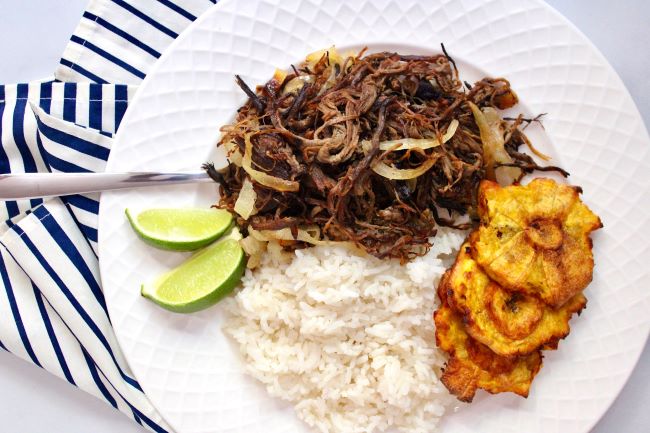
The name translates literally as “fried cow.” It’s a Cuban dish built on ropa vieja’s foundation: beef brisket or flank steak boiled until tender enough to shred by hand, then pressed flat and fried hard in a hot pan with garlic and lime juice. The edges caramelize and crisp. The interior stays moist from the braising liquid it absorbed during the initial cook.
What separates vaca frita from plain shredded beef is that second stage: the frying. The meat goes into the pan in flat, pressed portions, and the goal is to develop as much crust as possible on the outside without drying out the inside. Sliced white onions go in alongside the beef, softening in the fat while the meat gets its color.
The finishing touch is lime juice, added at the last moment. The acid hits the hot surface, steams briefly, and gets absorbed into the crisped beef. That combination of char, fat, acid, and onion is what vaca frita near me means when done right.
It’s served with white rice and black beans in most Cuban restaurants, sometimes with tostones (fried plantain) alongside. A simple plate, but one that depends almost entirely on execution.
Where to Find Vaca Frita Near You
Cuban restaurants are the obvious starting point when looking for the best vaca frita near me. The dish is a Cuban staple and appears on menus across the Miami Cuban restaurant scene, the Cuban communities in New Jersey and New York, and Cuban spots in Tampa, Orlando, and other Florida cities.
Outside Florida, the search gets harder but not impossible. Cuban-American communities exist in Chicago, Los Angeles, and parts of the Northeast, and the restaurants serving those communities often carry vaca frita as a standard entrée.
A few practical search approaches:
- Filter Google Maps for “Cuban restaurant” in your area and check menus for vaca frita specifically
- Yelp’s Cuban cuisine filter combined with “vaca frita” in the search bar often surfaces reviews where people mention it by name
- Latin American food boards and city-specific Reddit threads (r/Miami, r/NYCFood, etc.) are useful for finding spots where regulars have specifically called out the vaca frita
Latin American restaurants with broad menus sometimes carry it too, particularly if there’s a Cuban or Caribbean section. It’s worth scanning those menus even if the restaurant doesn’t identify as specifically Cuban.
What a Good Version Looks Like
The most reliable indicator of quality vaca frita near me is texture. The beef should have genuine crust on the edges. Not just browning, but actual crispy, almost lacy bits where the meat pressed against the hot pan. If the beef arrives without that texture, either the pan wasn’t hot enough, the meat was too wet going in, or the kitchen didn’t press it firmly enough.
The beef itself. Flank steak or brisket are traditional. Both have enough connective tissue and fat to stay moist through the double cooking process. Leaner cuts dry out. If the shredded beef is stringy and dry rather than moist and tender in the interior, the wrong cut was used or the braising step was skipped.
The onions. They should be soft and golden, cooked down in the same pan as the beef so they absorb the garlic and lime flavors. Raw onion served alongside is a shortcut.
The lime. You should be able to taste it. Vaca frita without lime acidity is flat. Some restaurants serve extra lime wedges on the side, which is ideal.
The accompaniments. White rice and black beans are non-negotiable at a serious Cuban spot. The black beans should be properly seasoned with cumin, garlic, and a splash of vinegar. Instant or under-seasoned beans next to an otherwise good vaca frita is a sign the kitchen prioritizes the protein but cuts corners on the sides.
Vaca Frita vs. Ropa Vieja
People sometimes confuse vaca frita with ropa vieja since both start with shredded beef. The difference is in the final preparation. Ropa vieja is braised in tomato sauce with peppers and olives: it’s saucy, soft, and served in its braising liquid. Vaca frita is dry-fried until crispy and finished with lime. One is a stew. The other is closer to a crispy hash.
Both are worth ordering if you’re at a Cuban restaurant that does them well. But if you want the dish with crunch and lime brightness, vaca frita is the one.
Cities With the Best Vaca Frita Options
Miami is the undisputed center of Cuban food in the United States, and the concentration of Cuban restaurants there means your odds of finding exceptional vaca frita near me are highest in that city. Little Havana along Calle Ocho has multiple spots where the dish is a daily staple cooked by people who grew up eating it.
Hialeah, also in Miami-Dade County, has an even higher concentration of Cuban residents and restaurants, many of which are family-run operations where vaca frita is prepared from scratch daily.
Outside Florida, Union City and North Bergen in New Jersey have strong Cuban communities and restaurants that serve traditional preparations. Jackson Heights in Queens, New York, is worth checking too.
For places to eat near me that go beyond Cuban cuisine, a broader neighborhood food guide can help you plan a full outing around wherever you find your vaca frita.
Making Vaca Frita at Home
If the best vaca frita near me search keeps coming up empty, this is a dish you can make at home with reasonable effort. Flank steak is the most accessible cut outside Miami. Simmer it in salted water with garlic, onion, and bay leaf for about ninety minutes until tender, then pull it apart into thick shreds by hand.
The critical step is pressing the shredded beef flat in the pan. Use a spatula or a smaller pan to press down firmly as it fries. This is what creates the crust. Add the garlic to the pan a minute or two after the beef starts to color, since garlic burns quickly in a dry pan. Squeeze lime over the whole pan just before pulling it off the heat. Let the acid steam and absorb for thirty seconds before plating.
The whole process takes about two hours, most of it unattended during the boil.
Key Takeaways
- Vaca frita is a Cuban dish of shredded beef (flank or brisket) that’s boiled until tender, then pressed flat and fried until crispy, finished with garlic, onion, and fresh lime juice
- The best vaca frita near me results will come from Cuban restaurants, with Miami and its suburbs offering the highest concentration of quality options in the US
- Crispy edges on the beef are the primary quality marker: if the meat arrives without genuine crust, the dish wasn’t executed properly
- Flank steak and brisket are the correct cuts: lean meat produces dry, stringy results
- Vaca frita differs from ropa vieja in that it’s dry-fried and lime-finished rather than braised in tomato sauce
- White rice, black beans, and tostones are the traditional accompaniments: well-seasoned black beans are a secondary indicator of kitchen quality
- Outside Florida, look for Cuban restaurants in New Jersey (Union City, North Bergen) and Queens, New York for reliable traditional preparations