How Long Is Rotisserie Chicken Good For?
Rotisserie chicken is one of the most practical things you can buy at a grocery store. It’s already cooked, reasonably priced for the amount of meat you get, and flexible enough to go into a dozen different meals. But most people buy one without a firm plan and end up eating from it over several days, which raises a real question: how long is rotisserie chicken good for before it stops being safe to eat? The answer depends on how you store it and when you start the clock.
The Core Answer
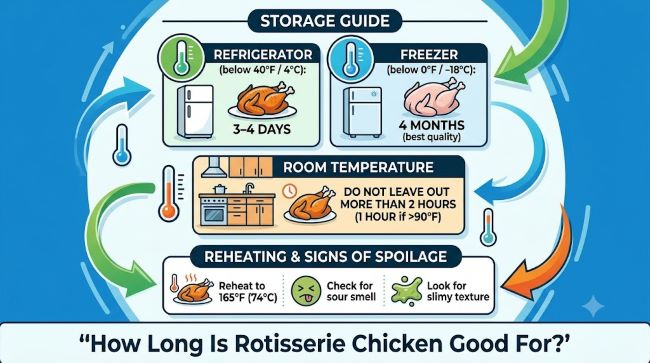
Rotisserie chicken is good for three to four days in the refrigerator, stored at or below 40°F. This is the same window as any other cooked chicken and follows USDA guidelines for cooked poultry. The clock starts from the time the chicken was cooked, not the time you bought it or brought it home.
That last detail matters more than it might seem. A rotisserie chicken purchased at 6 PM may have been cooked at 10 AM. If the store can tell you when it was cooked, that’s when the four-day window begins. If you’re buying one that’s been sitting in the warmer for an unknown amount of time, assume the window is shorter than four full days from your purchase.
For how long rotisserie chicken is good for beyond the fridge, the freezer extends storage to four months at best quality, with no safety limit as long as it’s kept at a consistent 0°F.
The Warmer Problem
One thing that makes rotisserie chicken different from chicken you cook at home is the time it spends in the store warmer before purchase. Food safety rules require hot foods to be kept at 140°F or above. When a rotisserie chicken drops below that temperature in the warmer, it enters the danger zone (40°F to 140°F) where bacteria multiply rapidly.
Most grocery stores are conscientious about this and pull birds from the warmers after a set time (often two hours). Some stores discount or discard older birds rather than keep them in the warmer indefinitely. But if you’re buying a bird late in the day, it’s worth noting that how long rotisserie chicken is good for from that point may be closer to three days than four, depending on how long it spent in the warmer before you bought it.
When you get home, get the chicken into the refrigerator within two hours of purchase if you’re not eating it immediately.
How to Store Rotisserie Chicken Correctly
The cardboard or plastic container the chicken comes in from the store is not ideal for refrigerator storage beyond the first day. These containers are designed for transport and display, not airtight storage. Moisture escapes, the chicken dries out faster than it should, and the lid seal isn’t reliable enough to prevent odor absorption from other refrigerator contents.
Better approach: transfer the chicken to an airtight container or wrap tightly in plastic wrap or aluminum foil. If you’re not going to use the whole bird within a day or two, breaking it down before refrigerating makes the remaining storage and use more practical:
- Remove the breasts, thighs, drumsticks, and wings and store them in separate portions based on how you plan to use them
- Pick any remaining meat from the carcass and store it separately as shredded chicken
- Keep the carcass to make stock: a rotisserie carcass makes excellent chicken stock and can be refrigerated for a day or frozen for months until you’re ready to use it
Label the container with the date the chicken was cooked (or purchased, if you don’t know the cook time) so you can track how long rotisserie chicken is good for without having to guess later.
Freezing Rotisserie Chicken
If you know you won’t finish the chicken within four days, freezing is the right move. Frozen cooked chicken stays safe indefinitely but quality degrades after about four months. Beyond that, it’s still safe to eat but the texture and flavor decline noticeably.
For best results when freezing:
- Remove the meat from the bones before freezing: boneless chicken pieces freeze and thaw more efficiently than whole pieces on the bone
- Store in freezer-safe bags with as much air pressed out as possible, or in vacuum-sealed bags if you have a sealer
- Freeze in meal-sized portions so you’re only thawing what you need
- Label with the freeze date
Thaw frozen rotisserie chicken in the refrigerator overnight rather than at room temperature. Once thawed, use within one to two days and do not refreeze.
Signs That Rotisserie Chicken Has Gone Bad
How long rotisserie chicken is good for in practice depends on storage conditions, and sometimes chicken goes off before the four-day window is up.
Smell. The most reliable signal. Fresh rotisserie chicken has a savory, herby smell from the seasoning. Spoiled chicken develops a sour, sulfurous, or ammonia-like odor. Any off smell is a discard signal.
Texture. A slimy surface on the chicken meat or skin indicates bacterial activity. Fresh refrigerated chicken should feel moist but not slick. Sliminess is a clear sign of spoilage regardless of how the chicken looks or smells otherwise.
Color. The meat should be white to light grey-brown. Greenish tints or darkening beyond normal roasted coloration signal spoilage.
Time. Beyond four days from the cook date, discard regardless of appearance. Trust the window, not just your senses: some bacteria don’t produce obvious odors or visual cues at dangerous levels.
Getting the Most Out of a Rotisserie Chicken
Part of getting value from a rotisserie chicken is planning how you’ll use it across several meals before it hits the four-day limit.
Day one: eat the easiest parts hot, straight from the bird. Thighs and drumsticks reheat well and are forgiving about overcooking.
Day two: use the breast meat in a dish where moisture is added: a soup, a salad with dressing, tacos with salsa, or a sandwich where the toppings provide moisture. Breast meat dries out faster than dark meat.
Day three: shredded chicken from whatever remains goes into fried rice, pasta, quesadillas, or any preparation where the chicken is mixed into other ingredients rather than the centerpiece.
Day four (if within window): finish in a soup or stew where any slight texture degradation doesn’t matter.
For inspiration on how rotisserie chicken fits into a broader food preparation approach, scallops covers the same principle of knowing your product before you cook or store it — understanding the ingredient is what separates a meal that works from one that disappoints.
Key Takeaways
- Rotisserie chicken is good for three to four days in the refrigerator at or below 40°F: the clock starts from when the chicken was cooked, not when you bought it
- Store-warmer time counts against the window: a bird that spent several hours in the warmer before purchase has fewer days remaining than one bought fresh off the rotisserie
- Transfer from the store container to an airtight container or tight wrap within the first day for better moisture retention and cross-contamination protection
- Break the chicken down into portions before refrigerating to make storage and use more practical across multiple meals
- Freeze what you won’t use within four days: frozen cooked chicken is safe indefinitely and best quality within four months
- Signs of spoilage include sour or ammonia smell, slimy surface texture, and greenish or unusual color change
- Plan meals across the four-day window by using easy pieces first and saving shredded applications for day three or four