Lactose Free Cheese: What It Is, How It’s Made, and the Best Options
Lactose intolerance affects a significant portion of the adult population, and cheese is one of the foods people assume they have to give up entirely once diagnosed. The reality is more nuanced: many cheeses are naturally very low in lactose due to how they’re made, and a growing market of dedicated lactose free cheese products fills the gap for the cheeses that aren’t. Understanding both categories means you don’t have to give up cheese just because you’re sensitive to lactose.
Why Some Cheeses Are Naturally Low in Lactose
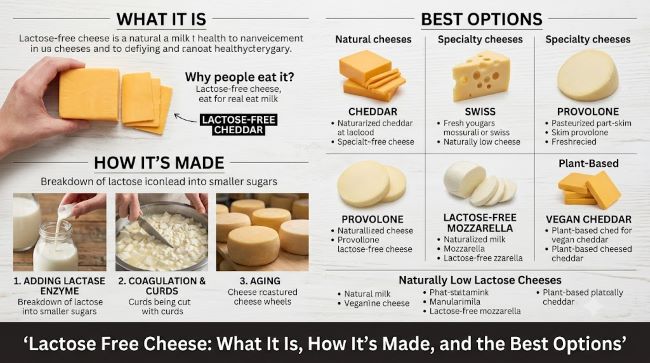
Lactose is the sugar found in milk. During cheesemaking, bacterial cultures consume much of the lactose during fermentation, converting it to lactic acid. The longer a cheese ages, the more lactose has been consumed by bacteria and the lower the remaining lactose content.
This means that aged, hard cheeses are naturally very low in lactose, often low enough that people with lactose intolerance can eat them without symptoms, even without buying a product specifically labeled “lactose free.”
Naturally low-lactose cheeses (aged 12+ months typically contain under 0.1g lactose per serving):
- Parmesan (Parmigiano-Reggiano)
- Aged cheddar
- Gruyère
- Aged Gouda
- Manchego (aged)
- Pecorino Romano
- Aged Asiago
Lower but still present lactose (moderate aging):
- Swiss cheese
- Provolone
- Colby
Higher lactose content (fresh, unaged cheeses):
- Ricotta
- Cottage cheese
- Cream cheese
- Fresh mozzarella
- Brie and other soft-ripened cheeses
- American cheese (processed)
This is why many people who think they react to “cheese” generally actually only react to fresh, soft cheeses, and can comfortably eat aged hard cheeses without symptoms. If you haven’t tested this distinction yet, it’s worth experimenting (assuming no allergy is involved) with small amounts of aged parmesan or sharp cheddar to see if your tolerance differs from soft cheese.
How Dedicated Lactose Free Cheese Is Made
For cheeses that naturally retain more lactose — particularly fresh and soft cheeses, and processed cheese products — manufacturers produce dedicated lactose free versions through a few methods:
Lactase enzyme treatment. The milk used to make the cheese is treated with lactase, the enzyme that breaks down lactose into glucose and galactose (simple sugars that don’t cause lactose intolerance symptoms). This pre-treatment allows the cheese to be made using standard methods while ensuring minimal residual lactose in the final product.
Using already low-lactose milk. Some products start with lactose-free milk (itself lactase-treated) as the base ingredient for cheese production.
Plant-based alternatives. Many “lactose free cheese” products on the market are actually dairy-free plant-based cheese alternatives made from nuts, soy, coconut oil, or other non-dairy bases. These contain no lactose because they contain no dairy at all. This is a different category from lactase-treated dairy cheese and is worth distinguishing if you specifically want a dairy product rather than a substitute.
Best Lactose Free Cheese Brands and Products
Green Valley Creamery. One of the most established lactose-free dairy brands, Green Valley produces lactose-free cream cheese, shredded cheese blends, and cottage cheese made from real, lactase-treated dairy milk (not plant-based). Widely praised for tasting like genuine dairy cheese because it is genuine dairy cheese, just lactase-treated.
Lactaid. Best known for lactase supplement pills, Lactaid also produces lactose-free dairy products including cottage cheese and other dairy items in some markets.
Cabot Lactose Free Cheddar. Cabot, a well-regarded dairy cooperative, produces a lactose-free sharp cheddar that’s lactase-treated dairy rather than a substitute, maintaining the taste profile cheddar fans expect.
Galaxy Nutritional Foods. Produces both lactose-free dairy cheese options and dairy-free alternatives, so check the specific product label to know which category you’re buying.
Violife, Daiya, and Follow Your Heart. These are plant-based, dairy-free cheese alternatives (not lactase-treated dairy). They contain zero lactose by virtue of having no dairy content at all. Quality and taste have improved significantly in recent years, particularly for melting applications like pizza and grilled cheese, though texture and flavor still differ noticeably from dairy cheese for cheese purists.
How to Choose Between Naturally Low-Lactose, Lactase-Treated, and Plant-Based Options
If you want real dairy cheese flavor and texture: prioritize naturally aged cheeses (parmesan, aged cheddar, gruyère) for everyday eating, and reach for lactase-treated dairy products like Green Valley or Cabot Lactose Free for fresh cheese applications (cream cheese, cottage cheese, fresh cheddar) where the naturally aged option isn’t suitable for your recipe.
If you have a dairy allergy in addition to lactose intolerance: plant-based alternatives are necessary since lactase-treated products still contain milk proteins (casein and whey) that trigger allergic reactions regardless of lactose content. Lactose intolerance and milk allergy are different conditions: intolerance is a digestive issue with the sugar; allergy is an immune response to milk proteins.
For cooking and baking: aged hard cheeses (parmesan, aged cheddar) work in virtually any recipe calling for cheese and are widely available without special sourcing. For recipes needing fresh cheese texture (lasagna with ricotta, cheesecake with cream cheese), lactase-treated dairy products are the closest match to traditional results.
Where to Buy Lactose Free Cheese
Most major grocery chains now carry dedicated lactose free cheese in the dairy or specialty/health food section. Whole Foods, Trader Joe’s, Kroger, Safeway, and Walmart all stock Green Valley, Cabot Lactose Free, and plant-based alternatives in most locations. Specialty cheese shops are more likely to carry a wide range of naturally aged low-lactose options (imported parmesan, aged gouda, manchego) alongside their regular cheese selection, since these don’t require any special “lactose free” labeling or separate sourcing.
Online grocery delivery services have expanded access significantly: if your local store has limited selection, ordering through Amazon Fresh, Instacart, or directly from brands like Green Valley’s website ensures consistent availability without depending on what a single store stocks.
Reading Labels Correctly
“Lactose free” on a label means the product contains less than 0.1g lactose per serving, generally considered safe even for people with significant intolerance. “Reduced lactose” or “low lactose” indicates partial reduction but not complete elimination, and may still cause symptoms for sensitive individuals.
Check whether a product is “lactose-free dairy” (real milk, lactase-treated) or “dairy-free” (plant-based, no milk at all). Both are lactose free by definition, but they are different products with different nutritional profiles, different uses in cooking, and different taste and texture characteristics.
For more cheese-forward inspiration if dairy isn’t a concern for you, best pretzel with cheese dip near me covers a completely different cheese application worth exploring when you’re not navigating lactose restrictions.
Key Takeaways
- Many aged, hard cheeses (parmesan, aged cheddar, gruyère, aged gouda) are naturally very low in lactose due to bacterial fermentation during aging, often tolerable even without a “lactose free” label
- Fresh, soft cheeses (ricotta, cottage cheese, cream cheese, fresh mozzarella, brie) retain significantly more lactose and are the category where dedicated lactose-free products matter most
- Dedicated lactose free cheese is made either by treating milk with lactase enzyme before cheesemaking, or as a plant-based dairy-free alternative with no milk content at all
- Green Valley Creamery and Cabot Lactose Free are well-regarded lactase-treated dairy options that taste like genuine cheese; Violife and Daiya are plant-based alternatives suited for milk allergy as well as lactose intolerance
- Lactose intolerance and milk allergy are different conditions: lactase-treated dairy products still contain milk proteins and aren’t appropriate for people with a true milk allergy
- “Lactose free” on a label means under 0.1g lactose per serving; “reduced lactose” means partial reduction only and may still cause symptoms
- For cooking, aged hard cheeses work in most recipes without special sourcing; lactase-treated fresh dairy products are the better match when a recipe specifically needs fresh cheese texture