
Bun Bo Hue Near Me: How to Find Vietnam’s Spiciest Noodle Soup
If you’ve been eating pho for years and feel like you’ve covered Vietnamese noodle soups, bun bo hue will rearrange that assumption. The two dishes come from different parts of Vietnam, use different noodles, different broths, and have completely different flavor profiles. Bun bo hue is spicier, more complex, and in many ways more demanding of the kitchen that makes it. If you’ve been searching for bun bo hue near me, this guide will help you find it and know what you’re eating when you do.
What Bun Bo Hue Is
The dish comes from Hue, the former imperial capital of Vietnam in the central part of the country. Hue cuisine is known for being more elaborate and more aggressively spiced than the food of the north or south, and bun bo hue reflects that character completely.
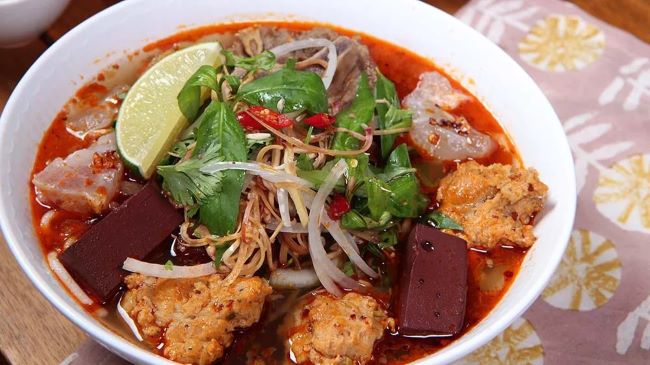
The broth is built on a base of pork and beef bones simmered for hours, but what sets it apart from pho is the flavoring: lemongrass, shrimp paste (mắm ruốc), and dried chili give the soup its signature color (deep reddish-orange) and its layered heat. The lemongrass adds a citrusy, slightly floral note. The shrimp paste provides fermented depth that pho doesn’t have. The chili oil floated on top adds heat that builds as you eat.
The noodles are thick, round rice noodles called bún, much thicker than the flat bánh phở noodles used in pho. The proteins typically include sliced beef (bò), pork hock (chân giò), Vietnamese sausage (chả lụa), and sometimes congealed pork blood cubes (tiết). The accompaniments are substantial: bean sprouts, shredded banana blossom, fresh herbs, lime, and sliced chili on the side.
Bun bo hue near me is not a light dish. It’s a full meal in a bowl, built for people who want depth of flavor and aren’t bothered by heat.
How It Differs From Pho
People often search for bun bo hue near me after having eaten pho for years and wanting to try something different. The comparison is useful:
Pho broth is clear, delicate, and flavored with star anise, cloves, and charred ginger. It’s subtle and aromatic. Bun bo hue broth is opaque, reddish, assertive, and savory-funky from the shrimp paste. One is a whisper. The other is a statement.
The noodles in pho are flat and silky. In bun bo hue they’re thick, round, and have a chewier bite that holds up to the heavier broth.
The proteins differ too. Pho tends toward thinly sliced rare beef and meatballs. Bun bo hue includes pork hock, which is fatty and gelatinous, and the sausage adds a cured-meat character that pho doesn’t have.
If you enjoy pho, bun bo hue near me is not a replacement. It’s a different dish that occupies a different part of the flavor spectrum.
Where to Find Bun Bo Hue Near You
Vietnamese restaurants are the obvious starting point, but not every Vietnamese restaurant serves bun bo hue. It requires specific ingredients (particularly mắm ruốc and lemongrass in volume) and takes more preparation than pho, so smaller Vietnamese restaurants sometimes skip it.
Search approaches that work:
- Google Maps filtered for “Vietnamese restaurant” combined with “bun bo hue” in the search bar surfaces restaurants that have been reviewed for this specific dish
- Yelp’s Vietnamese cuisine filter with “bun bo hue” as a keyword works similarly
- Vietnamese food communities on Reddit (r/pho, r/asianfood, city-specific subreddits) often have pinned threads about where to find specific dishes locally
- Ask at any Vietnamese restaurant you visit. Even if they don’t serve it, staff often know which nearby restaurant does
Cities with large Vietnamese communities give you the best odds. Houston’s Bellaire Boulevard (nicknamed the “Asean District”), San Jose’s Story Road area, Garden Grove and Westminster in Orange County (Little Saigon), and Eden Center in Falls Church, Virginia all have concentrations of Vietnamese restaurants where bun bo hue near me appears regularly.
What a Proper Bowl Looks Like
The broth color. A proper bowl of bun bo hue should be reddish-orange from the annatto seed oil and chili. Clear or pale broth is pho, not bun bo hue. The color signals the presence of the flavoring agents that define the dish.
The lemongrass. You should smell it as soon as the bowl arrives. Lemongrass fragrance is immediate and distinctive. If the soup smells only of generic beef stock, the lemongrass was either absent or used in too small a quantity to register.
The noodle thickness. Thick round rice noodles. If the bowl arrives with flat, thin noodles, the kitchen either ran out of the right noodles or substituted incorrectly.
The proteins. A complete bun bo hue near me should include at minimum beef slices and pork hock. The hock should be soft and gelatinous, having been cooked long enough for the collagen to break down. Tough, dry pork hock means it wasn’t cooked long enough.
The heat. There should be some baseline heat from the chili in the broth itself, plus additional chili oil offered on the side for those who want more. A bowl with no perceptible heat was made for an audience that doesn’t want the dish’s authentic character.
The garnish plate. Bean sprouts, banana blossom, fresh herbs (perilla, mint, Vietnamese coriander), lime wedges, and fresh chili. Squeeze the lime in, add the herbs directly to the bowl, and use the chili to adjust heat. The garnishes aren’t decorative: they’re part of the dish.
The Shrimp Paste Question
Mắm ruốc (fermented shrimp paste) is the ingredient that makes some people nervous about bun bo hue. It has a strong smell before cooking and an intense flavor that some describe as pungent. In the finished soup, however, it functions as a background note of umami depth rather than as a dominant flavor. Most people who taste bun bo hue and enjoy it don’t independently identify shrimp paste as a component: they just notice that the broth has an unusual savory complexity they can’t quite place.
If you have a shellfish allergy, it’s worth asking the restaurant about this ingredient specifically.
Ordering It Well
Ask for extra chili oil on the side and add it gradually. The soup’s heat from the broth is a starting point, and the chili oil lets you calibrate upward. Don’t add it all at once.
Mix the garnishes into the bowl rather than eating them alongside. The fresh herbs and bean sprouts are meant to wilt slightly in the hot broth and release their fragrance into the soup.
For those exploring Vietnamese food more broadly, places to eat near me can help you map out a full neighborhood eating plan around wherever you find your bun bo hue.
Key Takeaways
- Bun bo hue is a Vietnamese noodle soup from Hue in central Vietnam, made with a spiced pork-beef broth flavored with lemongrass, shrimp paste, and chili, served with thick round rice noodles and proteins including beef, pork hock, and Vietnamese sausage
- It differs from pho in broth color (reddish-orange vs. clear), flavor profile (spicy and funky vs. delicate and aromatic), noodle type (thick round vs. flat), and protein selection
- Finding bun bo hue near me requires targeting Vietnamese restaurants specifically and confirming they carry it, since not every Vietnamese spot makes it
- Cities with large Vietnamese communities (Houston, San Jose, Orange County CA, Northern Virginia) offer the most reliable options
- Quality markers include reddish-orange broth, immediate lemongrass fragrance, thick round noodles, soft gelatinous pork hock, and a full garnish plate
- The shrimp paste in the broth provides background umami depth rather than a dominant flavor: most people don’t identify it independently but would notice its absence
- Add garnishes directly into the bowl and calibrate chili oil gradually from the side rather than adding all at once