How to Fix a Running Toilet: A Simple DIY Guide
That endless trickle or hiss from the bathroom is more than annoying. A running toilet can waste hundreds of gallons of water a day and quietly add a small fortune to your water bill over a month. The good news is that learning how to fix a running toilet is one of the easiest home repairs there is. The parts cost a few dollars, the tools are minimal, and most fixes take fifteen minutes once you know what you are looking at.
This guide explains why the problem happens, how to diagnose the cause, and exactly how to fix a running toilet step by step. No plumbing experience required. By the end, you will be able to silence that trickle yourself and stop watching money swirl down the drain.
Why a Running Toilet Is Worth Fixing Fast
It is tempting to ignore a minor trickle, but the cost adds up faster than most people realize. The problem can waste anywhere from a couple hundred to several hundred gallons of water per day, depending on the severity, which translates into a noticeably higher bill.
Beyond the money, there is the simple annoyance of the constant sound, and the small environmental waste of clean water going straight down the drain. A toilet that runs nonstop also signals a worn part that will only get worse, sometimes leading to a more serious leak. None of that is worth tolerating when the fix is usually quick and cheap.
The encouraging part is that the repair almost never requires a plumber. Most causes come down to one of a few inexpensive parts inside the tank, all of which you can inspect and replace yourself. That is why learning how to fix a running toilet pays off so quickly, since one short repair can save real money every single month.
How a Toilet Works and Why It Runs
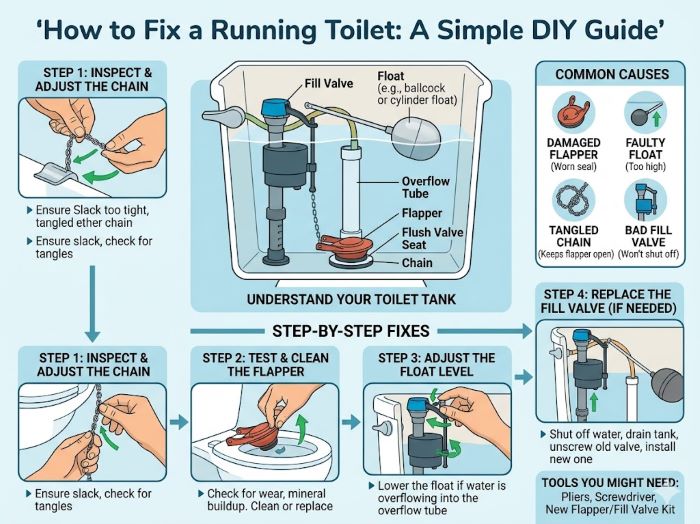
To fix the problem, it helps to understand the simple machinery inside the tank. When you flush, a flapper at the bottom lifts to let water rush into the bowl, then drops back to seal the tank so it can refill. A float rises with the water level and shuts off the fill valve once the tank is full. When any of these parts fails, water keeps moving when it should have stopped.
So why does my toilet keep running? In almost every case, water is escaping the tank somewhere it should not, which forces the fill valve to keep refilling endlessly. If you have wondered why does my toilet keep running despite looking fine, the answer is usually a worn flapper letting water leak into the bowl, or a float set too high so water spills into the overflow tube. Either way, the tank never reaches its shut-off point.
Many people also ask why is my toilet running when nothing was touched, and the reason is simply that these parts wear out over time. Rubber flappers stiffen and warp, valves get gunky, and floats drift out of adjustment. Understanding the basic cause, that water is leaving the tank somehow, makes diagnosing a toilet running problem far less mysterious. Once you see where the water is going, the fix becomes obvious.
Common Causes
Before you start, it helps to know the usual suspects. Most cases trace back to one of these culprits, listed roughly from most to least common:
- A worn or warped flapper, the rubber seal at the bottom of the tank, which is by far the most frequent cause
- A flapper chain that is too short, too long, or tangled, keeping the flapper from sealing
- A float set too high, so water rises above the overflow tube and drains away continuously
- A faulty fill valve that does not shut off properly
- A cracked or misaligned overflow tube letting water escape
- Mineral buildup on the flapper seat preventing a tight seal
The first step in any repair is figuring out which of these is to blame. A quick way to test the flapper is to add a few drops of food coloring to the tank water and wait fifteen minutes without flushing. If color appears in the bowl, the flapper is leaking. Knowing the cause turns the repair from guesswork into a targeted, five-minute fix.
How to Fix a Running Toilet Step by Step
With the basics understood, here is how to fix a running toilet from start to finish. Work through these steps in order, since they move from the most common cause to the less common ones.
1. Open the tank and observe. Lift off the tank lid and set it somewhere safe. Flush the toilet and watch what happens as the tank refills. Pay attention to whether water keeps trickling into the bowl, whether the float keeps rising too high, and whether water is spilling into the central overflow tube.
2. Check and adjust the flapper. Since the flapper is the most common culprit, inspect it first. Look for warping, cracks, or mineral deposits, and make sure it sits flat and seals fully. If it is worn, replace it. Flappers are universal, cheap, and snap on and off in minutes without tools. This single step resolves most cases.
3. Adjust the chain. The chain linking the flush lever to the flapper should have a little slack, about half an inch. Too tight and it holds the flapper open, too loose and it tangles under the flapper. Adjust the length by moving which link attaches to the lever.
4. Set the float correctly. If water is running into the overflow tube, the float is too high. Lower it so the water shuts off about an inch below the top of the overflow tube. On a ball float, bend or adjust the arm down; on a column float, pinch the clip and slide it lower.
5. Replace the fill valve if needed. If the flapper and float are fine but the tank still will not stop refilling, the fill valve is likely worn. A replacement fill valve is inexpensive and comes with instructions, and swapping it takes about twenty minutes after you shut off the water and drain the tank.
Following these steps in order is the reliable way to learn how to fix a running toilet, since you tackle the likeliest cause first and only move on if needed. Most people never get past step two.
How to Stop a Toilet From Running Right Now
Sometimes you need to silence it immediately, before you can buy a part or do the full repair. Knowing how to stop a toilet from running on the spot saves water while you wait.
The fastest method is to shut off the water supply valve, the small knob on the wall behind or beside the toilet. Turn it clockwise to cut the water, and the tank will stop refilling. This is the quickest way to stop the waste instantly, though you will need to turn it back on to flush. If you only need a short-term pause, you can also reach into the tank and reseat the flapper by hand, pressing it down to seal the opening.
For a slightly longer stopgap, learning how to stop toilet from running often comes down to a quick flapper or chain adjustment, which buys you time until you can do a proper fix. Lifting and resetting the flapper, or freeing a tangled chain, frequently stops the running on the spot. These quick tricks are not permanent solutions, but knowing how to stop a toilet from running buys time and stops gallons from draining away. Just remember that how to stop toilet from running for good still means addressing the worn part underneath.
When to Call a Plumber
Most running-toilet problems are firmly in do-it-yourself territory, but a few situations call for a professional. If you have replaced the flapper, fill valve, and adjusted the float, and the problem persists, something less common may be wrong, such as a cracked tank or a problem in the supply line.
Call a plumber if you see water leaking onto the floor rather than just inside the tank, if the tank or bowl is cracked, or if the shut-off valve is stuck or leaking. Persistent problems after replacing the obvious parts, or any sign of water damage around the base, also warrant a professional look. These cases are the exception, though. The vast majority of cases are solved with a cheap part and a few minutes of work, so it is worth trying the simple fixes first before paying for a service call.
Preventing Future Problems
A little maintenance keeps your toilet quiet for the long haul. Inspect the flapper once or twice a year, since it is the part most likely to wear out, and replace it at the first sign of stiffness or warping. Keeping the tank components clean of mineral buildup, especially in hard-water areas, helps every part last longer and seal better.
Avoid dropping cleaning tablets that contain harsh chemicals directly into the tank, since they can degrade the rubber flapper and other parts faster. When you do replace a part, choosing quality components over the cheapest option pays off in longer life. And if you notice the early signs of trouble, like a faint hiss or an occasional phantom refill when no one has flushed, address it early before it becomes a constant problem. A few minutes of attention now prevents the wasted water and annoyance later.
What You’ll Need Before You Start
The repair is refreshingly low-tech, which is part of why it is such a satisfying job to do yourself. You can handle almost every cause with a few cheap parts and basic tools you likely already own.
For parts, keep a replacement flapper on hand, since it is the most common fix, and pick up a replacement fill valve if the flapper turns out not to be the issue. Both are sold at any hardware store for a few dollars, and most are universal, so you do not need the exact brand that matches your toilet. When a toilet won’t stop running, those two inexpensive parts cover the vast majority of repairs.
For tools you will need very little: an adjustable wrench or pliers for the fill valve, a towel to catch drips, and an old container or sponge to bail out the last of the tank water. A pair of gloves keeps your hands clean, since the tank water, while clean, is not pleasant to reach into.
Before you begin, locate the water shut-off valve on the wall behind the toilet, since you will use it for any repair that involves removing a part. Having everything ready means the actual fix goes quickly, and the problem will not last long once you have the right flapper in hand and the water shut off.
Should You Repair or Replace the Whole Toilet?
In nearly every case, a repair is the right call, since the parts are cheap and the fix is fast. Replacing the entire fixture only makes sense when the toilet has bigger issues, such as a cracked tank or bowl, frequent clogs, or an age that makes parts hard to find.
An older toilet that uses far more water per flush than modern low-flow models can also be worth replacing for the long-term water savings, even if the running problem itself is fixable. For most homeowners, though, a worn flapper or fill valve is the whole story, and a few dollars in parts restores the toilet to perfect working order. Save the full replacement for genuine structural problems rather than a simple, solvable leak.
Frequently Asked Questions
Why won’t my toilet stop running? Usually because water is escaping the tank, most often through a worn flapper or a float set too high. When a toilet won’t stop running, start by checking the flapper, since that solves most cases.
My toilet keeps running after I flush. What is wrong? If your toilet keeps running after flushing, the flapper is probably not sealing or the chain is tangled. Check that the flapper sits flat and the chain has a little slack.
How do I know if it is the flapper? Add a few drops of food coloring to the tank and wait fifteen minutes without flushing. If color shows up in the bowl, the flapper is leaking and should be replaced.
Is fixing it expensive? No. The common parts, a flapper or fill valve, cost only a few dollars, and the repair is a quick DIY job, so figuring out how to fix a toilet that keeps running rarely requires spending much.
Can it really raise my water bill that much? Yes. The waste can reach hundreds of gallons a day, which adds up to a significantly higher bill, so fixing it quickly saves real money.
The tank fills but keeps trickling. Why? That trickle usually means water is leaking past the flapper into the bowl, which is why a toilet keeps running quietly even when the tank looks full.
Do I need to turn off the water to fix it? For simple flapper or float adjustments, no. For replacing the fill valve, yes, shut off the supply valve and drain the tank first.
Key Takeaways
- Learning how to fix a running toilet is a quick, cheap DIY repair that can save hundreds of gallons of water and a noticeable amount on your bill.
- A running toilet almost always means water is escaping the tank, forcing the fill valve to refill endlessly, so the answer to why does my toilet keep running is usually a leak inside the tank.
- If you wonder why is my toilet running, the most common cause is a worn flapper, followed by a float set too high letting water drain into the overflow tube.
- Diagnose a toilet running problem with the food-coloring test, which reveals a leaking flapper, the single most frequent reason a toilet runs.
- To fix it, open the tank, check and replace the flapper, adjust the chain and float, and replace the fill valve only if those do not solve it.
- To stop a toilet from running immediately, shut off the supply valve on the wall, which is the fastest way to halt the waste before a full repair.
- Knowing how to stop toilet from running quickly with a flapper or chain adjustment buys time, but a worn part still needs proper replacement.
- Call a plumber only if water leaks onto the floor, the tank is cracked, or the problem continues after replacing the obvious parts.
- Prevent future trouble by inspecting the flapper yearly, avoiding harsh in-tank tablets, and addressing early signs like a faint hiss before they worsen.
- Most cases, including a toilet that won’t stop running or my toilet keeps running after flushing, are solved by a simple flapper swap, so how to fix a toilet that keeps running is well within reach for any homeowner.