The AI Listening In at Your Doctor’s Appointment
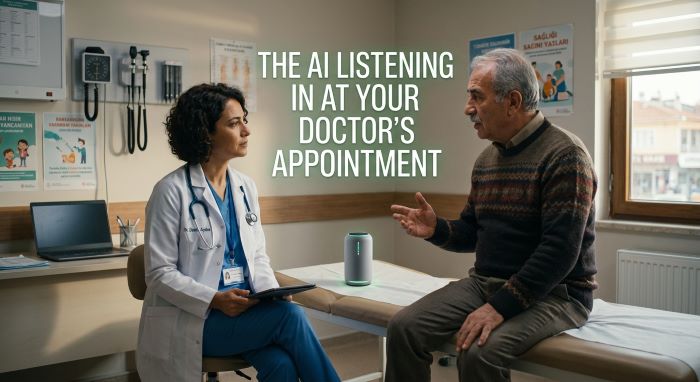
A primary-care doctor sets a phone on the exam table, taps an app, and asks the patient if it’s okay for an AI to listen in and draft the visit note. The patient nods. For the next fifteen minutes, the conversation moves the way conversations used to move before laptops crept into every exam room.
No typing. No back-turned clinician squinting at a keyboard. By the time the patient reaches the parking lot, a structured clinical note is already sitting in the electronic health record, waiting for the doctor to sign off.
That scene is playing out across health systems right now, and it’s changing more than a doctor’s typing load. It’s changing what ends up in the medical record, who has heard the conversation before it’s summarized, and what a patient or a family later has to work with when something goes wrong.
Below are a few situations where the ambient scribe in the room matters — each one worth understanding before you’re the patient at the table.
The Routine Visit Where Nobody Really Explained the Microphone
The most common scenario is also the most overlooked. A patient walks in, a clinician mentions an AI tool in a sentence or two, and the visit moves on. A KFF Health News feature that followed a real appointment described how the software filters the natural back-and-forth of the visit into a structured note after verbal consent from the patient.
Verbal consent, though, does a lot of work in that sentence. Patients rarely ask where the audio goes, how long it’s kept, whether a vendor’s employees might review it, or whether the raw recording becomes part of their chart. If you’re the patient, it’s fair — and quick — to ask what the tool captures, who stores it, and whether you can decline without changing your care.
The Note That Says Something the Patient Never Said
Ambient scribes are trained to produce clean, structured documentation. Sometimes they produce it a little too confidently. A model summarizing a fifteen-minute conversation can smooth over hesitations, invent a symptom the patient only half-mentioned, or attribute an assessment to the doctor that the doctor never voiced. The industry has a polite word for it: hallucination.
When a hallucinated note leads to real harm, families sometimes end up consulting a medical malpractice attorney to sort out what the record actually shows and what the clinician actually said.
- The signature still matters. A clinician who signs an AI-drafted note owns it, the same way they’d own a note they typed themselves. “The AI wrote it” is not a defense if the note is wrong and a patient is harmed.
- The raw audio may exist. Depending on the vendor and retention policy, the original recording might still be recoverable — which can matter if the written note and the patient’s memory of the visit don’t line up.
The Missed Diagnosis That Started as a Sentence in the Room
Missed-diagnosis claims often turn on what the patient told the doctor and what the doctor did with it. Ambient scribes complicate both halves. If a patient described chest tightness in passing and the AI summary reduced it to “denies acute symptoms,” the written record now says the opposite of what happened.
Anyone weighing a possible case should know the note is no longer the only artifact. The transcript, the audio, the vendor’s edit history, and the clinician’s own revisions to the AI draft can all become evidence. Those digital artifacts can be overwritten or purged on retention schedules that don’t wait for a lawsuit, so acting early tends to matter.
The Burned-Out Clinician Who Finally Looks Up
Not every effect of ambient documentation is a warning sign. A Mass General Brigham study of more than 1,400 providers found a 21.2% absolute reduction in burnout prevalence at 84 days at MGB, along with a meaningful jump in documentation-related wellbeing at Emory. Clinicians who aren’t typing are, on average, making more eye contact and catching more of what patients say. That’s a real gain for care quality, and it raises the stakes of getting the surrounding governance right.
Where This Is Headed
Ambient AI documentation is not a passing pilot. It’s on track to be the default way clinical notes get written in a lot of practices, and the version that arrives in five years will look nothing like the version in the room today. What patients and families can do right now is small but real: know that the microphone is often on, know that the note is a draft until a human signs it, and know that the audio behind the note may still exist if a question later comes up about what was said.