Basmati Rice vs Jasmine Rice
Basmati and jasmine are two of the world’s most loved long grain rices. Both smell wonderful as they cook, and both are staples in many kitchens. But they come from different regions, cook differently, and suit different dishes.
This guide covers basmati rice vs jasmine rice side by side, so you’ll know which bag to grab for your next meal.
The Short Answer
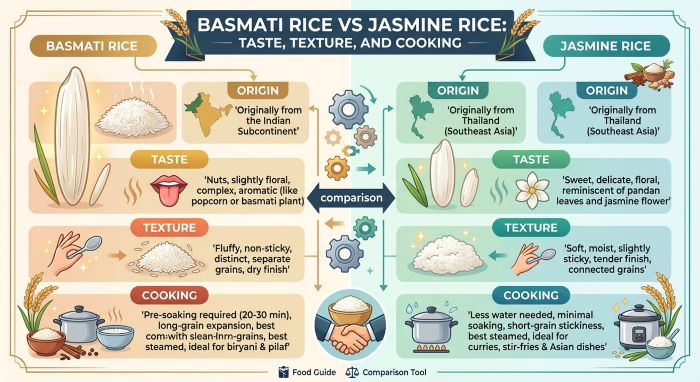
- Basmati rice has long, slender grains that cook up dry, fluffy, and separate, with a nutty, popcorn like aroma. It’s the classic rice for Indian and Middle Eastern dishes.
- Jasmine rice has slightly shorter, plumper grains that cook up soft, moist, and a little sticky, with a sweet, floral aroma. It’s the go to rice in Thai and Southeast Asian cooking.
Basmati vs Jasmine Rice at a Glance
| Feature | Basmati Rice | Jasmine Rice |
|---|---|---|
| Origin | India and Pakistan | Thailand, Cambodia, Vietnam |
| Grain shape | Very long and thin | Long but slightly plumper |
| Cooked texture | Dry, fluffy, separate grains | Soft, moist, slightly sticky |
| Aroma | Nutty, popcorn like | Floral, sweet, buttery |
| Grain growth when cooked | Gets much longer (up to about twice) | Gets plumper |
| Typical water ratio | About 1 to 1.5 | About 1 to 1.25 |
| Soaking | Recommended (20 to 30 min) | Not needed |
| Glycemic index | Lower to medium | Higher |
| Best for | Biryani, pilaf, curries | Stir fries, Thai curries, fried rice |
What Is Basmati Rice?
Basmati is a long grain aromatic rice grown mainly in the foothills of the Himalayas in India and Pakistan. The name comes from Hindi and roughly means “fragrant.” Traditional basmati is often aged for months or even years, which helps the grains stay separate and boosts their aroma.
When cooked, basmati grains stretch lengthwise rather than swelling, so they stay slender and fluffy. That makes it perfect for layered dishes like biryani, where each grain should stay distinct.
What Is Jasmine Rice?
What is jasmine rice? It’s a long grain fragrant rice, best known as Thai hom mali rice. It’s grown mainly in Thailand, plus Cambodia and Vietnam. The name comes from its pale white color, like a jasmine flower, and its sweet, floral scent.
Jasmine rice contains more amylopectin, a type of starch that makes grains softer and stickier. When cooked, the grains cling together lightly, making it easy to eat with chopsticks or scoop up with sauces.
Flavor and Aroma
Both rices are aromatic thanks to a natural compound called 2-acetyl-1-pyrroline, the same compound that gives pandan leaves and popcorn their scent.
- Basmati smells nutty and toasty, with a light, dry flavor.
- Jasmine smells floral and buttery, with a slightly sweet taste.
Texture
Texture is the biggest difference in the basmati rice vs jasmine rice comparison. Basmati cooks into separate, fluffy grains. Jasmine cooks into soft, moist, slightly clingy grains. Choose based on whether you want each grain distinct or a softer rice that holds together.
How to Cook Basmati Rice
- Rinse 1 cup of rice until the water runs mostly clear.
- Soak for 20 to 30 minutes, then drain.
- Bring 1 1/2 cups water and a pinch of salt to a boil.
- Add the rice, cover, and simmer on low for 12 to 15 minutes.
- Rest covered for 5 to 10 minutes, then fluff with a fork.
Some cooks boil basmati in lots of water like pasta, then drain it, for extra separate grains.
How to Cook Jasmine Rice
- Rinse 1 cup of rice two or three times.
- Add 1 1/4 cups water. No soaking needed.
- Bring to a boil, then cover and simmer on low for 12 to 15 minutes.
- Rest covered for 10 minutes, then fluff gently.
Jasmine rice also cooks beautifully in a rice cooker.
Nutrition Comparison
| Per 1 cup cooked white rice (approximate) | Basmati | Jasmine |
|---|---|---|
| Calories | About 190 to 210 | About 200 to 210 |
| Carbs | About 45g | About 45g |
| Protein | About 4g | About 4g |
| Fiber | Under 1g | Under 1g |
| Glycemic index | About 50 to 60 | About 70 to 90 |
Nutrition is similar, but basmati generally has a lower glycemic index, which means it raises blood sugar more slowly. People managing blood sugar often prefer basmati. Brown versions of both rices add more fiber and nutrients.
Best Dishes for Each
Basmati works best in:
- Biryani
- Pilaf and pulao
- Indian curries like jalfrezi and korma
- Persian rice dishes
- Middle Eastern rice with lamb or chicken
Pairing basmati with a spicy, tangy curry is a classic. Find great curry spots in our guide to the Best Jalfrezi Curry Near Me.
Jasmine works best in:
- Thai green and red curries
- Stir fries
- Fried rice
- Vietnamese and Cambodian dishes
- Rice bowls with sauce
Long grain rice is also the base of chaufa, the Peruvian Chinese fried rice. If you love seafood fried rice, check out our guide to the Best Chaufa de Mariscos Near Me.
Can You Substitute One for the Other?
Yes, in most dishes. Just expect a texture change. Using jasmine in biryani will make it softer and less fluffy. Using basmati in fried rice works well, since its dry grains don’t clump. For Thai curries, basmati will taste fine but won’t have the same soft, sticky feel.
Other Types of Rice
Basmati and jasmine are just two of many types of rice. Here are some other common types of rice you’ll find in stores:
| Rice | Grain | Texture | Common Uses |
|---|---|---|---|
| Long grain white | Long | Fluffy | Everyday side dish |
| Arborio | Short to medium | Creamy | Risotto |
| Sushi rice | Short | Sticky | Sushi, Japanese dishes |
| Glutinous (sticky) rice | Short | Very sticky | Thai sticky rice, desserts |
| Brown rice | Varies | Chewy | Healthy sides, bowls |
| Wild rice | Long (a grass seed) | Chewy, nutty | Salads, soups |
| Black (forbidden) rice | Medium | Chewy | Bowls, desserts |
| Bomba | Short | Absorbent | Paella |
Price Per Serving
In the basmati rice vs jasmine rice price comparison, both are affordable staples. One cup of uncooked rice makes about three cups cooked, enough for three to four side servings. Buying in large bags from Asian or Indian grocery stores usually lowers the cost per serving.
Storing Rice
Uncooked white rice keeps for a long time in an airtight container in a cool, dry place. Brown rice spoils faster because of its natural oils, so use it within about six months or store it in the fridge.
Cooked rice should be cooled quickly and refrigerated within an hour or two. Learn how long leftovers last in our guide: How Long Is Rice Good for in the Fridge?
Price and Buying Tips
Basmati is often a bit more expensive, especially aged or premium varieties. Look for:
- Basmati: “Aged” on the label, and rice grown in India or Pakistan.
- Jasmine: “Thai Hom Mali” for authentic Thai jasmine rice.
Both are widely available in supermarkets, Asian grocery stores, and Indian grocery stores, often in large bags for better value.
Brown Basmati vs Brown Jasmine
Both rices come in brown versions, which keep the bran layer. Brown rice has more fiber, magnesium, and B vitamins, with a nuttier flavor and chewier texture. Brown basmati and brown jasmine take longer to cook, usually 35 to 45 minutes, and need more water. In the basmati vs jasmine rice choice for health, brown versions of either beat white rice.
Basmati Rice vs Jasmine Rice in a Rice Cooker
Both cook well in a rice cooker:
| Setting | Basmati | Jasmine |
|---|---|---|
| Rinse | Yes | Yes |
| Soak | 20 to 30 minutes | Not needed |
| Water (per cup rice) | About 1 1/4 to 1 1/2 cups | About 1 to 1 1/4 cups |
| Rest after cooking | 10 minutes | 10 minutes |
Many rice cookers have a “white rice” setting that works for both, so the basmati rice vs jasmine rice difference here is mostly about soaking and water. Follow your cooker’s lines as a guide, then adjust to taste.
Common Mistakes
- Skipping the rinse. Extra starch makes rice gummy.
- Lifting the lid. Steam escapes and rice cooks unevenly.
- Stirring. It breaks grains and makes them sticky.
- Serving right away. Resting lets moisture spread evenly.
Basmati vs Jasmine Rice for Fried Rice
Day old rice is the secret to great fried rice, since cold, dry grains don’t clump. Both work, but many cooks prefer jasmine for Thai fried rice and basmati for Indian style fried rice. Understanding the basmati rice vs jasmine rice difference helps you match the rice to the recipe every time.
Frequently Asked Questions
Which is healthier, basmati or jasmine rice? Basmati usually has a lower glycemic index, so it may be a better choice for blood sugar control.
Should I rinse jasmine rice? Yes. Rinsing removes extra surface starch and helps prevent gumminess.
Is jasmine rice sticky rice? No. It’s slightly sticky, but true sticky rice is glutinous rice, which is much stickier.
Why is my basmati rice mushy? Too much water or stirring while cooking. Measure carefully and let it rest before fluffing.
Final Thoughts
The basmati rice vs jasmine rice choice depends on what you’re cooking. Basmati gives dry, fluffy, separate grains perfect for biryani and curries. Jasmine gives soft, fragrant rice ideal for Thai dishes and stir fries. Keep both in your pantry, and you’ll always have the right rice for the meal.
Key Takeaways
- Basmati rice vs jasmine rice: basmati is dry and fluffy, while jasmine is soft and slightly sticky.
- Basmati comes from India and Pakistan; jasmine comes mainly from Thailand.
- What is jasmine rice? A fragrant Thai long grain rice with a floral aroma.
- Basmati usually has a lower glycemic index than jasmine.
- Soak basmati before cooking; jasmine only needs rinsing.
- Use basmati for biryani and curries, and jasmine for Thai curries and stir fries.