27″ iiyama G-Master GB2760HSU-B1: Complete Gaming Monitor Review
You’re browsing gaming monitors and the 27″ iiyama G-Master GB2760HSU-B1 appears in search results. You haven’t heard much about iiyama. You wonder if this monitor is any good or just another overlooked brand.
The iiyama G-Master GB2760HSU-B1 is a serious gaming monitor that doesn’t get the marketing hype of bigger brands. Understanding what it delivers helps you decide if it’s worth your attention and money.
Let’s talk about what this monitor offers and whether it’s a solid gaming choice.
What iiyama Is
First, understanding the brand helps context. Iiyama is a Japanese monitor manufacturer with decades of history. The company focuses on quality displays without massive marketing budgets. They’re known in professional and gaming communities but less known in mainstream consumer culture.
The G-Master line is their gaming monitor series. These monitors are built for performance rather than flashy features. They focus on display quality, responsiveness, and reliability.
The GB2760HSU-B1 sits in the mid-range gaming market. It’s not budget. It’s not premium. It’s designed for gamers who know what they want and care about actual performance.
Physical Design and Build
The monitor has a distinctive look. The thin bezels are without being aggressive about it. The stand is functional and sturdy. The overall design is clean and professional.
The construction feels solid. The plastic chassis isn’t flimsy. The stand supports the display firmly without wobble. The monitor doesn’t feel cheap, though it doesn’t scream premium either.
The stand offers standard adjustments. Height adjustment gives you around 4 inches of vertical movement. Tilt adjustment works backward and forward. Swivel allows roughly 30 degrees rotation each direction. This ergonomic range is adequate for most people.
The monitor is designed for function over aesthetics. There are no RGB lights. No aggressive gaming styling. No unnecessary curves. This appeals to people who want performance without the gaming gamer aesthetic.
Key Specifications
Understanding the specs shows what the monitor delivers.
The resolution is 1920×1080 (Full HD). This is standard for 27-inch gaming monitors in this price range. The pixel density is moderate. For competitive gaming, this resolution is fine. For detail-oriented work, higher resolution would help.
The panel type is TN (Twisted Nematic). TN panels offer fast response times, which appeals to competitive gamers. The trade-off is less accurate colors and narrower viewing angles compared to IPS or VA panels.
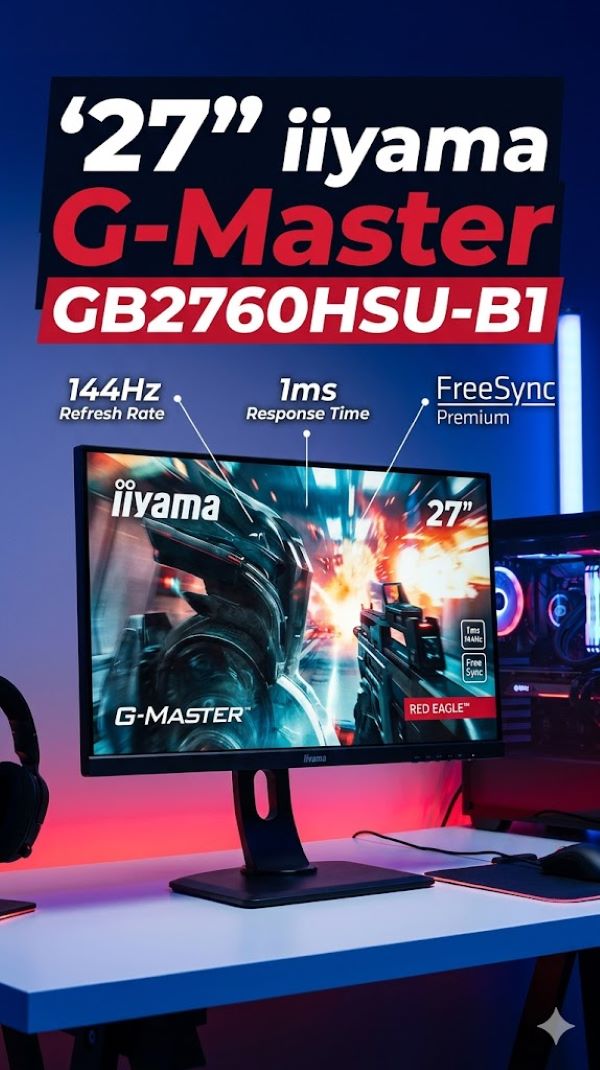
The refresh rate is 144Hz. This is solid for gaming. You get smooth motion in fast-paced games. The difference between 144Hz and 60Hz is dramatic. The difference between 144Hz and 240Hz is noticeable but less dramatic.
The response time is 1ms (gray-to-gray). This is fast. You won’t see ghosting or trailing in competitive games. The response time matches or beats most gaming monitors at this price point.
The brightness is around 250 nits. This is adequate for gaming in normal indoor lighting. Outdoor use or very bright rooms might require more brightness, but it’s sufficient for typical gaming.
The contrast ratio is 1000:1. This is normal for TN panels. Blacks aren’t as deep as VA panels, but the colors are clear and the contrast is acceptable for gaming.
The color gamut is 72% NTSC (roughly 99% sRGB equivalent). For gaming, color accuracy is less important than speed. The color quality is good enough for gaming without being professional-grade.
Gaming Performance
The monitor targets competitive gamers. How does it perform?
The 144Hz refresh rate is a genuine advantage. Playing competitive shooters at 144Hz feels significantly smoother than 60Hz. The responsiveness is noticeably better. Moving your mouse and tracking targets feels snappy.
The 1ms response time contributes to this responsiveness. Fast response times eliminate ghosting. You see crisp motion without trailing. This matters in competitive games where clarity is critical.
The TN panel technology supports fast response times. This is the main reason competitive monitors use TN panels despite the color and angle viewing limitations.
The 1920×1080 resolution is standard for competitive gaming. Professional esports tournaments use 1080p at high refresh rates. This monitor matches that standard.
For competitive gaming, this monitor performs exactly as intended. It delivers fast, responsive gameplay without distracting features. For casual single-player games, the performance is fine, though other monitors might offer more visual polish.
Display Quality
The monitor delivers solid display quality, though not top-tier.
The colors are accurate enough for gaming. The TN panel doesn’t produce the rich colors of IPS panels, but the colors are clear and vibrant. Gaming visuals look good.
The brightness is consistent across the screen. No obvious dead zones or uneven lighting. The uniformity is good for a gaming monitor.
Contrast is adequate. Blacks have some depth. Shadow details are visible. The image looks clean without excessive graininess.
The response time is the standout feature. Movement looks smooth. No ghosting. No blur. This responsiveness is what gamers care about.
Color accuracy isn’t perfect. Colors shift slightly at viewing angles due to the TN panel technology. For gaming where you’re centered in front of the screen, this isn’t a problem. For viewing from the side, the colors shift.
Connectivity
The monitor includes practical connections for gaming.
HDMI is available, providing basic connectivity. Most gaming devices support HDMI. The HDMI implementation is standard, supporting the refresh rate and resolution.
DisplayPort is included. For gaming at 144Hz, DisplayPort is preferable to HDMI. The higher bandwidth of DisplayPort better supports high refresh rates without potential issues.
A headphone jack is present. You can connect headphones directly to the monitor, reducing cable clutter. The audio pass-through from HDMI works when you’re using HDMI for both video and audio.
USB ports are built in. A USB hub lets you connect peripherals through the monitor, reducing cable mess on your desk.
Connectivity is comprehensive for gaming without unnecessary additions. Everything you need is present.
Audio Quality
The monitor includes built-in speakers. Gaming audio usually comes from headphones or external speakers, so the built-in speakers are supplementary.
The speakers are small and tinny, as expected from monitor speakers. They’re adequate for alerts and menu sounds. They’re not suitable for movies or music. For gaming where immersion matters, headphones or external speakers are necessary.
This is standard for gaming monitors. Built-in audio is a convenience feature, not a quality feature.
Practical Considerations
Understanding real-world usage helps evaluate the monitor.
For competitive gaming, the monitor excels. Shooters, fighting games, and fast-paced titles feel responsive. The 144Hz and 1ms response time shine here.
For single-player games, the monitor performs well. The visuals are good. The speed is excellent. The only limitation is the modest color palette compared to premium monitors, which doesn’t matter much for gaming.
For office work, the monitor works fine. The resolution and brightness are adequate. The colors are acceptable for document work. The fast response time is unnecessary but doesn’t hurt.
For content creation, the monitor is less ideal. Professional color accuracy isn’t a strength of TN panels. The resolution is moderate. Professional monitors would be better.
For movie watching, the monitor is acceptable. The colors are decent. The contrast is adequate. The fast response time is unnecessary. External speakers would be preferable to built-in audio.
Comparison to Competitors
Several monitors compete in the 27-inch 144Hz space.
The ASUS VP28UQG offers similar specs in a curved package. The curve adds immersion but also costs more. The performance is comparable.
The BenQ EW2780U provides 4K resolution and better colors. It’s more expensive and not specifically gaming-focused, but it offers more visual quality.
The Dell S2721DGF offers 165Hz instead of 144Hz and better color accuracy. It’s pricier but offers more refinement.
The iiyama focuses on pure gaming performance. It delivers responsiveness and clarity without premium pricing. Other monitors offer more features. The iiyama offers core performance.
Potential Drawbacks
Understanding limitations helps informed decisions.
The TN panel has narrower viewing angles. If you’re not centered directly in front, colors shift and contrast changes. For solo gaming, this isn’t a problem.
The color accuracy isn’t professional-grade. The color gamut is acceptable for gaming but limited for content creation or professional work.
The resolution is 1080p at 27 inches. Some people prefer sharper images. Higher resolution would reduce the pixel visibility, though gaming at higher resolution requires more GPU power.
The brightness could be higher for very bright environments. 250 nits is adequate for normal gaming, but brighter rooms might struggle.
No USB-C connectivity. Modern connectivity standards would be nice, though not critical for gaming.
The monitor doesn’t have aggressive gaming styling. If you want RGB lights and flashy design, this isn’t the monitor. If you want performance without aesthetics, it’s perfect.
Who Should Buy This
The monitor suits specific needs.
Competitive gamers benefit from the responsive performance. Esports enthusiasts appreciate the 144Hz and 1ms response time. The monitor delivers what competitive gaming needs.
Budget-conscious gamers wanting solid performance. The iiyama offers competitive specs at reasonable pricing.
People who prefer function over fashion. The clean design without RGB appeals to minimalists and professionals.
Gamers playing competitive titles like shooters and fighting games. The responsiveness matters for these genres.
People in smaller gaming spaces who want a 27-inch screen. The monitor provides ample screen real estate without excessive desk footprint.
Who Should Look Elsewhere
Some users should consider alternatives.
Professional content creators need better color accuracy. An IPS monitor or color-accurate display is necessary.
People wanting the latest gaming features. 240Hz+ monitors exist for higher refresh rates. Curved displays offer more immersion. This monitor is straightforward performance-focused.
Casual gamers who don’t need extreme responsiveness. A budget 60Hz monitor would suffice and save money.
People with very bright gaming spaces. Higher brightness monitors exist for those needs.
Individuals who value image quality over responsiveness. Curved monitors, 4K displays, and VA panels offer better visuals, though they sacrifice responsiveness.
Reliability and Support
Iiyama builds reliable monitors. The company has strong support networks, especially in Europe and Asia. In North America, support is less developed, which can be a consideration.
The monitor is built to last. Quality components and solid construction mean multi-year longevity. Warranty coverage varies by region but is typically solid.
User reviews consistently mention reliability. Few complaints about dead pixels or hardware failures appear in reviews. The monitor is reliable.
The Verdict
The 27″ iiyama G-Master GB2760HSU-B1 is a solid gaming monitor that delivers what it promises.
It’s not a household name. It won’t win awards for looks. It won’t impress with cutting-edge features.
But it offers 144Hz responsiveness, 1ms response time, solid build quality, and reasonable pricing. For competitive gaming, it delivers. For casual gaming, it works well. For office work, it’s adequate.
If you want a monitor that prioritizes gaming performance without flashy styling or premium pricing, the iiyama delivers.
Key Takeaways
- The 27″ iiyama G-Master GB2760HSU-B1 is a competitive gaming monitor built for responsiveness.
- The 144Hz refresh rate and 1ms response time are ideal for competitive gaming.
- The TN panel provides fast response but with narrower viewing angles.
- The 1920×1080 resolution is standard for competitive gaming.
- Build quality is solid and reliable without feeling premium.
- The monitor includes practical connectivity with HDMI, DisplayPort, and USB hub.
- Design is clean and functional without gaming aesthetics.
- The monitor excels for competitive shooters and fast-paced games.
- Color accuracy is adequate for gaming but not professional-grade.
- The price represents good value for the performance delivered.
- Iiyama is a reputable brand with strong reliability.
- Competitive gamers benefit most from this monitor’s responsiveness.
- Single-player gaming works well but other monitors might offer more visual polish.
- Content creators should look elsewhere for color accuracy.
- The monitor is straightforward performance-focused without unnecessary features.
- If you want pure gaming responsiveness at reasonable cost, the iiyama GB2760HSU-B1 is worth considering.