Overwatch Domina: Everything You Need to Know About Sombra’s Most Iconic Skin
If you’ve spent any time in Overwatch 2 recently, you already know the Overwatch Domina skin stops people mid-match. Sombra’s Domina skin is one of the most distinctive cosmetics in the game: dark, theatrical, and completely on-brand for a character whose whole identity is about control, information, and making your opponents feel helpless. But there’s more to the conversation than aesthetics. This post covers the Domina skin in full, Sombra’s role in the current meta, how she relates to the wider tank matchup discussion, and who actually counters the biggest threats on the roster right now.
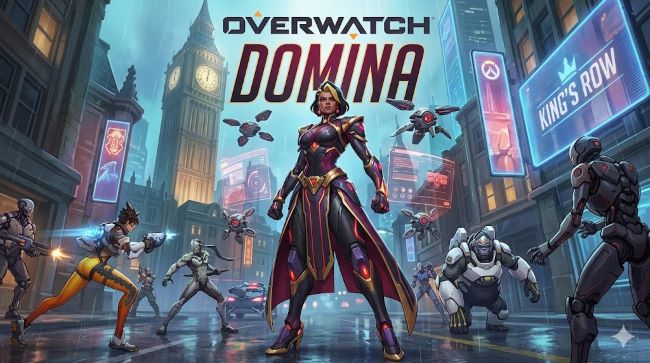
What Is the Overwatch Domina Skin?
The domina overwatch 2 skin is a legendary skin for Sombra. “Domina” is a Latin word meaning mistress or lady of the house, historically used to denote a woman of authority and command. The skin leans into that etymology hard: it features a dark, structured aesthetic with dominant colour blocking, metallic accents, and a visual language that reads as power and precision rather than Sombra’s default hacker-in-a-hoodie look.
It was released as part of a seasonal event and quickly became one of the most sought-after Sombra cosmetics in the game. Part of the appeal is how well it matches Sombra’s kit. She’s a hero built around information asymmetry: she sees enemies through walls, she hacks abilities away, and she vanishes when things go wrong. A skin called Domina fits that psychological profile better than almost anything else in her wardrobe.
Sombra Height and Character Profile
One detail that comes up in community discussions is Sombra height. According to Overwatch lore and official Blizzard reference sheets, Sombra stands at approximately 160 cm (around 5’3″). She’s one of the shorter heroes in the roster, which fits her visual design: agile, compact, built for infiltration rather than confrontation.
Her relatively small frame is part of why her hitbox is tighter than heroes like Reaper or Soldier: 76, which matters in high-level play. Smaller heroes are genuinely harder to track and hit, especially in close-quarters situations where Sombra spends most of her time. That’s not just flavour; it has practical implications for players going up against her and for Sombra players learning to use her evasive kit.
Her backstory positions her as one of the most dangerous information brokers in the Overwatch universe: a former street kid from Dorado who hacked her way into the world’s most sensitive networks. The Domina skin plays into a more aristocratic, commanding version of that character, someone who has moved from desperate survival to deliberate control.
Sombra’s Role in the Current Overwatch 2 Meta
Sombra sits in a niche that becomes more or less valuable depending on the tank meta. She’s a flanker and disruptor, not a raw damage dealer. Her hack removes abilities, which sounds simple until you realise what that means against certain heroes.
Against Zarya, hack removes her Particle Barrier and Projected Barrier temporarily. Zarya’s whole kit revolves around those bubbles building charge and feeding her damage output. A well-timed hack interrupts that cycle and strips her of the protection that lets her charge safely. This is one reason Sombra is consistently discussed as part of the answer to who counters Zarya: the hack doesn’t delete her, but it creates a window where she’s exposed without her main defensive tool.
Against dive compositions, Sombra’s translocator and invisibility let her shadow the enemy team’s most dangerous players and hit them at the worst possible moment. Hacking a Lucio off the wall removes his speed boost and healing aura simultaneously. Hacking a Tracer’s Recall or Blink locks down a hero that almost never gets locked down.
The skill ceiling is high. Sombra players who use hack reactively (when they feel threatened) get much less value than players who use it proactively (to set up kills or interrupt tank ults before they fire).
Who Counters Mauga in Overwatch 2?
Who counters Mauga is one of the most searched questions in the current Overwatch 2 meta, and for good reason. Mauga is a tank built around sustain: his twin miniguns generate healing when hitting critical targets, and his Overrun ability closes gaps fast. He punishes teams that try to fight him straight up.
The best counters work by either denying his healing loop or keeping distance:
- Sombra: Hack silences his Cardiac Overdrive, his defensive cooldown, for a critical window. Without it, he takes burst damage much more effectively.
- Ana: Sleep Dart and Anti-Nade are strong here. Anti-Nade cuts his self-healing from his kit temporarily and makes him much squishier than he looks.
- Bastion: Mauga wants to be in the thick of things generating healing. Bastion’s configuration damage from range bypasses that desire and makes his positioning work against him.
- Pharah: Vertical distance nullifies a lot of Mauga’s ground-based threat. He struggles to deal with airborne targets consistently.
- Sombra again, with coordinated follow-up: The hack window is useless if your team doesn’t immediately dump damage into him. Sombra enables the counter; she doesn’t execute it alone.
The theme across all Mauga counters is either burst him down during a window of vulnerability or deny his self-sustain loop entirely.
Who Counters Zarya?
Who counters Zarya is a perennial question because she’s one of the more oppressive tanks when played well. High-charge Zarya does enormous damage and is nearly unkillable when her bubbles are available. The counters target the bubble dependency:
- Sombra: As noted, hack removes both barriers. Teams that coordinate an immediate focus during the hack window can burn Zarya before her bubbles return.
- Reaper: His lifesteal and shotgun damage work at the range Zarya wants to fight. He’s durable enough to trade with her and generates his own sustain independently of whether she has bubbles up.
- Roadhog: Hook into point-blank damage can one-shot or near-kill Zarya if timed when a bubble isn’t available. The hook also repositions her out of the fight.
- Echo: Sustained beam damage from range keeps Zarya honest without giving her the point-blank engagement she wants. Sticky bombs also deal large burst damage on a short cooldown.
- Moira: Coalescence goes through barriers entirely. During Zarya’s ult (Graviton Surge), Moira’s ultimate is one of the few healing tools that functions while also dealing damage through the grouped targets.
The wrong counter is anything that feeds her charge. Heroes who deal small, frequent hits to Zarya while her bubbles are active just make her stronger.
Why Sombra and the Domina Skin Matter Beyond Aesthetics
The Domina skin isn’t just cosmetic in terms of player identity. In a game where character design and visual clarity intersect heavily with player experience, a skin that changes a hero’s visual silhouette can genuinely affect how opponents read and react to them in the heat of a match. Domina Sombra looks different enough from default Sombra that opponents who have learned to pattern-match the default look can briefly hesitate.
That’s a micro-advantage at best, but in a game decided by small margins, micro-advantages accumulate. Blizzard’s character artists understand this, which is why legendary skins go through design review to ensure they don’t create unfair silhouette distortions while still offering genuine visual distinction. The balance between how AI-assisted design tools are reshaping character art pipelines in games and traditional hand-crafted design work is something the whole games industry is actively navigating right now.
Sombra Domina in Competitive Play: Practical Notes
If you’re running Sombra with the Domina skin in ranked and wondering how to get more out of the kit, a few things consistently separate average Sombra players from good ones:
- Hack priority order: Tanks with defensive cooldowns (Mauga’s Cardiac Overdrive, Zarya’s bubbles, Orisa’s Fortify) before supports and flankers. Disrupting the tank changes the shape of the fight.
- Translocator discipline: Place it before you engage, not when you’re already dying. It’s an escape tool that requires foresight to use well.
- Virus timing: Sombra’s Virus ability followed by a hack creates a damage-over-time window that forces opponents to either disengage or die. It’s strongest against tanks who want to hold ground.
- EMP timing: Graviton Surge plus EMP remains one of the most decisive combo ultimates in the game. Coordinate with your Zarya if you have one.
Beyond mechanical tips, the way top players approach iterative improvement in competitive gaming maps directly onto how they learn heroes like Sombra: small adjustments, constant feedback, and deliberate practice rather than grinding volume without reflection.
Key Takeaways
- The Overwatch Domina skin is a legendary Sombra cosmetic that plays into her character identity as a controller and infiltrator.
- Sombra height is approximately 160 cm, giving her a tight hitbox that matters in practical gameplay.
- Domina Overwatch 2 remains one of the most popular Sombra skins due to its visual design and thematic coherence with her kit.
- Who counters Mauga: Sombra (hack), Ana (Anti-Nade), Bastion (range damage), and Pharah (vertical distance) are the most consistent answers.
- Who counters Zarya: Sombra (hack), Reaper (sustain trade), Roadhog (hook burst), and Echo (beam damage from range) all work well.
- Sombra rewards proactive play. Every tool in her kit is stronger when used to set up a kill than to escape one.