Pupusas: El Salvador’s National Dish Explained
Pupusas are thick, handmade corn cakes stuffed with cheese, beans, or meat, then cooked on a hot griddle until golden and crisp on the outside. They are the national dish of El Salvador and one of the most beloved foods across Central America, served everywhere from street carts to family kitchens.
This guide covers everything worth knowing: where the dish comes from, what goes into the dough and the fillings, how to make them at home, the difference between a pupusa and dishes like arepas or tortillas, and the classic curtido and salsa that always come alongside. The dish has also picked up international recognition in recent years, including a spot on a 2025 CNN Travel list of 50 of the world’s best breads, which described the smell of toasted corn rising from griddles in San Salvador.
What Are Pupusas?
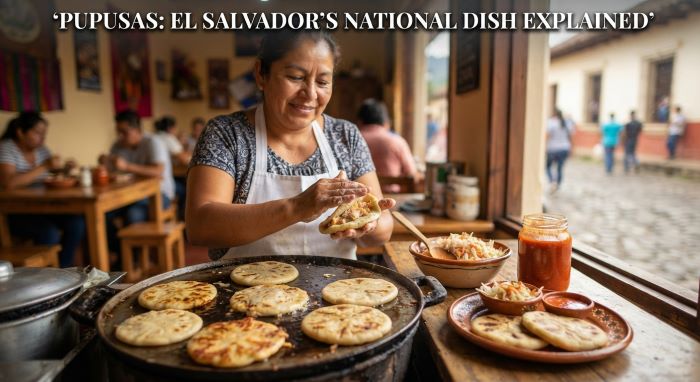
A pupusa is a thick, round cake made from corn masa or rice flour, stuffed with a filling, then flattened by hand and cooked on a comal, a flat griddle, until both sides are lightly charred. Unlike a folded taco or a rolled burrito, the filling sits inside the dough itself, sealed in before cooking, so every bite has cheese, beans, or meat mixed right into the masa.
They are typically about four to six inches across and less than an inch thick, with a slightly chewy, crisp exterior and a soft, warm interior. Street vendors and small restaurants called pupuserías sell them fresh off the griddle, usually two or three at a time per order, always topped with curtido and a light tomato sauce.
Where Do Pupusas Come From?
Pupusas trace their roots back to Pre-Columbian Mesoamerica, where early peoples made thick corn cakes stuffed with beans and other fillings long before European contact. A Spanish friar named Bernardino de Sahagún described a similar dish of dough, beans, and meat as early as 1570.
The word itself most likely comes from Nawat, an Indigenous language still spoken in parts of El Salvador, though its exact origin is debated among linguists. For much of their history, pupusas were considered humble, everyday food eaten by rural and working class families rather than a dish served in formal restaurants.
El Salvador is widely recognized as the country most closely associated with the dish, and it registered pupusas as a protected designation of origin with the World Trade Organization in 2018. Honduras and other neighboring countries also have long traditions of making and eating them, which occasionally sparks friendly debate over which country can claim the strongest claim to their invention.
Rice flour versions became common in the town of Olocuilta in the late 1930s, during a period when corn was scarce, and that style later spread widely during the Salvadoran Civil War in the 1980s. Salvadoran refugees who settled in the United States during and after the war brought the tradition with them, which is a major reason pupuserías are now common in cities like Los Angeles, Houston, and Washington, D.C.
Honduras also has a long tradition of making the dish, and it is not unusual to see friendly, good natured disagreement between Salvadorans and Hondurans over which country’s version came first or tastes better. Most food historians agree that similar stuffed corn cakes likely developed independently or spread between neighboring Indigenous communities well before modern national borders existed, which makes a single, definitive origin difficult to pin down with certainty.
What Are Pupusas Made Of?
The dough, called masa, is the foundation of every pupusa. Traditional versions use masa de maíz, a dough made from ground corn that has been treated with lime in a process called nixtamalization, the same process used for tortillas. This treatment softens the corn, makes it easier to grind, and improves its nutritional value.
A second style uses rice flour instead of corn, producing a slightly different texture that is smoother and a bit more delicate. Rice flour pupusas became popular in areas where corn was harder to come by and remain a well loved regional variation today, especially from the town of Olocuilta near San Salvador.
For home cooks, instant masa harina, a pre-treated corn flour sold in most grocery stores, is the easiest way to get an authentic texture without starting from dried corn. Mixing it with warm water until it forms a soft, pliable dough that does not stick to your hands is the key to a good result, whether you are using corn or rice flour as your base.
What Is the Best Masa for Making Pupusas?
Look specifically for masa harina labeled for tortillas or pupusas rather than a corn flour meant for cornbread or tamales, since the finer grind and nixtamalization process make a noticeable difference in texture. A general starting ratio is about two parts masa harina to one and a half parts warm water, adjusted gradually until the dough holds together smoothly without cracking at the edges when pressed flat. Letting the mixed dough rest, covered, for about 10 to 15 minutes before shaping also makes it easier to work with, since the flour has time to fully absorb the water.
Traditional Pupusa Fillings and Flavors
The filling is what gives each pupusa its character, and a good pupusería usually offers several options side by side.
Cheese and Loroco Pupusas
Queso con loroco is one of the most popular combinations, pairing a mild, melty cheese with loroco, an edible flower bud native to Central America with a flavor often compared to asparagus mixed with something slightly tangy. This pairing is considered one of the most traditional and widely loved fillings, and loroco buds are sometimes sold frozen or jarred outside Central America for cooks who cannot find the fresh version.
Chicharrón and Cheese Pupusas
Chicharrón pupusas use finely ground, seasoned pork, sometimes combined with cheese, for a richer, savorier bite. This filling has deep roots in the dish’s rural origins, when pork was a more affordable source of protein than other meats, and the pork is typically simmered and shredded fine before being mixed with onion, garlic, and a bit of tomato for extra flavor.
Bean and Cheese Pupusas
Frijoles con queso combines refried beans with cheese for a filling that is both filling and naturally vegetarian. It remains one of the most common choices for anyone trying pupusas for the first time, since the flavors are familiar and mild, and the creamy texture of well mashed refried beans blends easily with melted cheese inside the warm masa.
Revuelta Pupusas With Mixed Fillings
A pupusa revuelta mixes beans, cheese, and chicharrón all in one, giving a little bit of everything in a single bite. It is often considered the most traditional all-around order at a pupusería, since it lets a diner sample the classic flavors at once without ordering several different pupusas.
Modern pupuserías have also added nontraditional fillings over the years, including shrimp, chicken, spinach, jalapeño, and even pizza-style combinations with mozzarella and pepperoni, though purists tend to stick with the classic combinations above. What cheese is used matters too: most traditional recipes call for a mild, meltable cheese similar to a soft mozzarella or a Salvadoran queso duro blando, though many home cooks substitute mozzarella or a mild Oaxaca cheese when the traditional variety is not available locally.
How Are Pupusas Traditionally Made?
Making pupusas by hand is a skill passed down through generations in Salvadoran families, often taught by watching a grandmother or mother shape them quickly and confidently at the stove.
Corn Masa and Traditional Dough Preparation
The process begins with masa, either freshly ground from nixtamalized corn or mixed from masa harina and warm water until it reaches a soft, play dough like consistency. The dough should hold together without cracking at the edges but should not be so wet that it sticks heavily to the hands.
Preparing and Shaping the Pupusa Dough
A ball of dough, usually about the size of a golf ball, is flattened into a small bowl shape in the palm of the hand, leaving room in the center for the filling. This step takes some practice, since the walls of the dough bowl need to be thick enough to hold the filling without tearing.
Adding Fillings Without Breaking the Dough
A spoonful of filling goes into the center of the dough bowl, and the edges are then pulled up and pinched closed around it, fully sealing the filling inside. The sealed ball is then gently flattened and patted between both hands into a round disk, rotating it as you go to keep an even thickness throughout.
Cooking Pupusas on a Hot Griddle
The shaped pupusa is cooked on a comal or a heavy, well-seasoned griddle over medium heat, usually for two to four minutes per side, until golden brown spots appear and the dough is cooked through. A good pupusa should have a slightly crisp exterior while staying soft and warm inside.
How to Cook Pupusas at Home
Home cooks without a traditional comal can get excellent results with a cast iron skillet or a nonstick griddle on the stovetop. A basic recipe follows roughly the same steps every time, regardless of which filling you choose:
- Mix masa harina with warm water until a soft, crack-free dough forms, then let it rest for about 10 minutes.
- Divide the dough into golf ball sized portions and keep them covered with a damp cloth so they do not dry out while you work.
- Flatten each portion into a small bowl shape in your palm and spoon in about a tablespoon of filling.
- Pull the edges of the dough up and over the filling, pinching to seal it completely inside.
- Gently flatten the sealed ball between your palms, rotating it to form an even, round disk about half an inch thick.
- Cook on a preheated, lightly oiled skillet or griddle over medium heat for two to four minutes per side, until golden brown spots appear.
- Serve immediately, topped with curtido and warm tomato sauce.
How Do You Keep Pupusas From Falling Apart?
The most common reason a pupusa falls apart is dough that is too dry or too thin at the edges. Keeping the dough ball properly moistened, patting it with a little water if it starts to crack, and leaving enough thickness around the filling when sealing the edges will prevent leaks and tears during cooking. Avoid overfilling, since too much filling makes it harder to seal the dough completely.
Can You Make Pupusas Ahead of Time?
Yes. Shaped, uncooked pupusas can be made ahead and kept in the refrigerator for a day, layered between sheets of parchment or wax paper so they do not stick together. This makes pupusas a convenient option for feeding a crowd, since all the shaping work can be done earlier in the day before guests arrive.
How to Reheat Leftover Pupusas
Leftover cooked pupusas reheat best in a dry skillet over medium heat for a few minutes per side, which restores some of the crisp exterior that a microwave cannot replicate. A microwave works in a pinch but tends to leave the dough softer and slightly rubbery.
Can Pupusas Be Frozen?
Both raw, shaped pupusas and fully cooked ones freeze well. Raw pupusas should be frozen in a single layer until solid, then transferred to a freezer bag, and can be cooked directly from frozen with a few extra minutes on the griddle. Cooked pupusas freeze similarly and reheat well in a skillet or oven.
What Is the Difference Between Pupusas and Arepas?
Pupusas and arepas are often confused because both are round, corn-based cakes popular in Latin American cuisine, but they come from different countries and are prepared quite differently. Arepas, which originate in Venezuela and Colombia, are made from precooked corn flour and are typically split open after cooking, then stuffed with fillings like cheese, shredded meat, or avocado.
Pupusas, by contrast, have their filling sealed inside the dough before cooking rather than stuffed in afterward. Arepas also tend to be thicker and sometimes have a hollow, bread-like interior, while a pupusa is flatter and denser all the way through, with the filling distributed evenly inside the masa itself. A sweeter cousin of the savory arepa worth trying alongside pupusas is arepa de choclo, made from fresh corn kernels rather than precooked corn flour.
Pupusas vs. Tortillas: What Is the Difference?
A tortilla is thin, unfilled, and used mainly as a wrapper or base for other foods, such as tacos or enchiladas. A pupusa starts from a very similar corn dough but is thicker, stuffed with filling before cooking, and eaten entirely on its own rather than as a vehicle for other ingredients.
Think of a tortilla as a blank canvas and a pupusa as a complete, self-contained dish. Both rely on nixtamalized corn masa, which is why their flavor base is similar, but the thickness, preparation method, and way each is eaten set them clearly apart.
What Is Curtido and Why Is It Served With Pupusas?
Traditional Salvadoran Curtido
Curtido is a lightly fermented or quick-pickled cabbage slaw, usually made with shredded cabbage, carrots, onion, and sometimes oregano, mixed with vinegar, water, and a touch of chili for mild heat. It is almost always served on top of or alongside pupusas, and the tangy, slightly sour crunch is considered an essential part of the dish rather than an optional side.
The acidity in curtido cuts through the richness of the melted cheese and fried masa, balancing out each bite. Traditional versions are left to ferment briefly at room temperature for a day or two before serving, which deepens the tang, though quicker vinegar-based versions are common as well, especially outside El Salvador.
What Sauce Goes Best With Pupusas?
Homemade Tomato Salsa
Alongside curtido, pupusas are traditionally served with a thin, mild tomato sauce, sometimes called salsa roja, made from simmered tomatoes, onion, and garlic, occasionally with a bit of bell pepper for sweetness. Unlike a chunky salsa meant for dipping chips, this sauce is smooth and thin enough to drizzle over the top of the pupusa and curtido together.
The sauce is meant to add moisture and a gentle, savory tomato flavor rather than heat, so it is usually mild compared with other Latin American salsas. Some home cooks add a small amount of dried chili or hot sauce on the side for anyone who wants extra spice.
Are Pupusas Healthy?
Pupusas can fit into a balanced diet, though how healthy a particular pupusa is depends heavily on the filling and portion size.
Calories, Carbohydrates, Protein, and Fat
A single cheese pupusa typically contains somewhere around 200 to 250 calories, with the bulk of that coming from the corn masa as carbohydrates, along with moderate fat and protein from the cheese. A bean and cheese pupusa adds more fiber and plant protein, while a chicharrón pupusa increases the fat and protein content from the pork. Most people eat two or three pupusas in a sitting, so total calories for a typical meal often land somewhere between 500 and 800, depending on fillings and toppings.
| Filling | Approximate calories per pupusa | Notes |
|---|---|---|
| Cheese | 200 to 250 | Mostly carbohydrates and fat from cheese |
| Bean and cheese | 220 to 270 | Added fiber and plant protein from beans |
| Chicharrón | 250 to 300 | Higher in fat and protein from the pork |
| Revuelta (mixed) | 270 to 320 | Combines beans, cheese, and chicharrón |
These figures are estimates and will vary based on the size of the pupusa, how much cheese or filling is used, and how much oil is used on the griddle.
Vegetarian and Vegan Pupusa Options
Are pupusas vegetarian-friendly? Bean and cheese, cheese and loroco, and plain bean pupusas are all naturally vegetarian, making them one of the easier traditional dishes for vegetarians to enjoy at a Salvadoran restaurant. Vegan versions are also possible by skipping the cheese and using only beans, squash, or sautéed vegetables as the filling, along with a dairy-free dough if needed, since most masa itself contains no dairy or eggs to begin with.
Are pupusas gluten-free? Corn-based pupusas made purely from masa harina and water are naturally gluten-free, since corn contains no gluten. Rice flour versions are also gluten-free as long as no wheat flour has been added during preparation, though it is always worth confirming with a restaurant that no cross-contamination occurs during cooking if a true gluten-free order matters for health reasons.
When and How Are Pupusas Served in El Salvador?
Pupusas are eaten throughout the day in El Salvador, but they are especially popular in the evening, when families and friends gather at pupuserías or street stands that often only open after dark. Sunday evenings in particular are a common time for extended families to eat pupusas together, sometimes at home and sometimes at a favorite local stand.
The dish holds official recognition as well. In April 2005, El Salvador’s Legislative Assembly passed a decree declaring the second Sunday of November as National Pupusa Day, a date chosen because it falls during the peak of the annual corn harvest. The holiday is marked with festivals, cooking competitions, and family gatherings across the country and in Salvadoran communities abroad.
Serving Pupusas With Traditional Toppings
The traditional way to eat a pupusa is by hand, picking it up and topping each bite with a bit of curtido and tomato sauce as you go, rather than cutting it with a knife and fork. Many diners fold the edge slightly or use the first bite to create a small opening, then spoon in extra curtido and sauce as the pupusa is eaten, so the toppings stay fresh and crunchy rather than sitting on top and going soggy before the first bite. Diners often pile curtido generously on top before taking the first bite, letting the tangy slaw mix with the warm cheese or beans inside. Pupusas are commonly served alongside other Salvadoran staples too, including fried plantains, tamales, and a glass of horchata or a cold beverage to balance out the warm, rich food. Diners who want to round out a Salvadoran spread sometimes order a side of bollos pelones, another classic masa and meat dish, alongside their pupusas.
Frequently Asked Questions About Pupusas
What does pupusa mean in Spanish? The exact origin of the word is debated, but it is widely believed to come from Nawat, an Indigenous language spoken in parts of El Salvador, rather than from standard Spanish.
Are pupusas originally from El Salvador? El Salvador is the country most strongly associated with pupusas and holds a protected designation of origin for the dish, though Honduras and other neighboring countries also have long traditions of making them.
What is the most traditional pupusa filling? Cheese and loroco, bean and cheese, and the mixed revuelta filling are generally considered the most traditional and widely ordered options.
What are pupusas revuelta? A pupusa revuelta combines beans, cheese, and chicharrón in a single pupusa, giving a taste of several classic fillings at once.
Can pupusas be made without cheese? Yes. Bean-only, squash, or vegetable fillings can all be used to make a cheese-free or fully vegan pupusa.
Are pupusas made with corn or flour? Most traditional pupusas use corn masa, though rice flour versions are also common and considered equally authentic, especially from towns like Olocuilta.
What is the difference between pupusas and gorditas? Gorditas, a Mexican dish, are typically thicker, often fried or griddled then split open and stuffed afterward, while a pupusa has its filling sealed inside the dough before cooking begins.
What do Salvadorans traditionally eat with pupusas? Curtido and a mild tomato sauce are the standard accompaniments, often alongside fried plantains, tamales, or a cold drink like horchata.
What is the best way to serve pupusas at home? Serve them hot off the griddle with fresh curtido and warm tomato sauce on the side, letting each person top their own pupusa to taste, just as it is traditionally done in El Salvador.
Final Thoughts
Pupusas are a simple dish built from humble ingredients, corn, cheese, and beans, yet they carry centuries of history and remain one of the most recognizable symbols of Salvadoran culture. Whether made at home with a cast iron skillet or ordered fresh from a neighborhood pupusería, a good pupusa topped with tangy curtido and warm tomato sauce is a satisfying meal that has earned its place as El Salvador’s national dish. For anyone looking to finish the meal with something sweet, dulce de leche pancakes make a popular dessert pairing after a savory plate of pupusas.
Key Takeaways
- Pupusas are thick corn or rice flour cakes stuffed with cheese, beans, or meat and cooked on a hot griddle.
- They originate from Pre-Columbian Mesoamerica and are the official national dish of El Salvador.
- Common fillings include cheese and loroco, beans and cheese, chicharrón, and the mixed revuelta style.
- Curtido, a tangy cabbage slaw, and a mild tomato sauce are the traditional toppings served with pupusas.
- Corn-based pupusas are naturally gluten-free, and several fillings make them vegetarian or vegan friendly.
- El Salvador celebrates National Pupusa Day on the second Sunday of November each year.