Diet Coke vs Coke Zero
Diet Coke and Coke Zero Sugar sit next to each other in almost every store, and both promise zero sugar and zero calories. So why do they taste different, and is one better for you?
This guide breaks down the difference between Coke Zero and Diet Coke in ingredients, caffeine, taste, and health so you can pick the one that fits your preferences.
What Is the Difference Between Diet Coke and Coke Zero?
The biggest difference between Diet Coke and Coke Zero is flavor. Diet Coke has its own distinct, lighter taste, while Coke Zero Sugar is designed to taste as much like classic Coca-Cola as possible. They also use slightly different sweeteners and have different amounts of caffeine.
A Quick History
| Year | Event |
|---|---|
| 1982 | Diet Coke launches in the United States |
| 2005 | Coca-Cola Zero launches, aimed at people who wanted a sugar free drink that tasted like original Coke |
| 2017 | Coke Zero is renamed Coke Zero Sugar in the US with an updated recipe |
| 2021 | Coke Zero Sugar gets another recipe and packaging update |
Why Was Coke Zero Created?
Diet Coke was hugely popular, but it was built on a new flavor base, not the original Coke formula. Many people said they wanted a sugar free drink that tasted like “real” Coke, and Coca-Cola’s early Coke Zero marketing was aimed heavily at men. Coke Zero was created to fill that gap.
Is Diet Coke the Same as Coke Zero?
No. They’re both calorie free colas from the same company, but the difference between Coke Zero and Diet Coke shows up in flavor, sweetener blends, and caffeine levels.
Diet Coke vs Coke Zero: Ingredients Compared
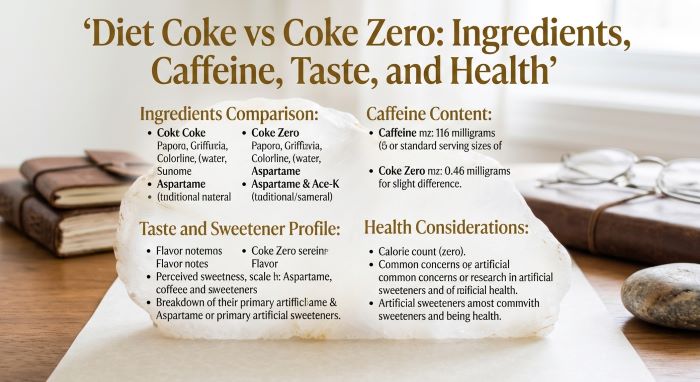
Coke Zero ingredients and Diet Coke ingredients overlap a lot, but not completely. According to Healthline, the US ingredient lists look like this:
| Diet Coke | Coke Zero Sugar |
|---|---|
| Carbonated water | Carbonated water |
| Caramel color | Caramel color |
| Aspartame | Phosphoric acid |
| Phosphoric acid | Aspartame |
| Potassium benzoate (to protect taste) | Potassium benzoate (to protect taste) |
| Natural flavors | Natural flavors |
| Citric acid | Potassium citrate |
| Caffeine | Acesulfame potassium |
| Caffeine |
Which Has More Sweeteners?
- Diet Coke uses aspartame. A version sweetened with sucralose (Splenda) is also sold.
- Coke Zero Sugar uses a blend of aspartame and acesulfame potassium (Ace K).
Coke Zero ingredients include two sweeteners, while standard Diet Coke has one. The blend helps Coke Zero taste closer to sugar sweetened Coke.
Does Coke Zero Have Aspartame?
Yes. Both drinks contain aspartame, which means both carry a warning for people with phenylketonuria (PKU), a rare genetic condition where the body can’t process phenylalanine.
Diet Coke vs Coke Zero: Nutrition Facts
Here’s how a 12 ounce (355 mL) can compares, according to Healthline:
| Nutrient | Diet Coke | Coke Zero Sugar | Classic Coca-Cola |
|---|---|---|---|
| Calories | 0 | 0 | About 140 |
| Sugar | 0 g | 0 g | About 39 g |
| Carbohydrates | 0 g | 0 g | About 39 g |
| Sodium | 40 mg | 40 mg | About 45 mg |
| Potassium | Not listed | 60 mg | Not listed |
| Caffeine | 46 mg | 34 mg | 34 mg |
Do Diet Coke and Coke Zero Contain Sugar?
No. Neither drink contains sugar. Their sweetness comes entirely from low or no calorie sweeteners.
Which Has More Caffeine: Diet Coke or Coke Zero?
In the Diet Coke vs Coke Zero caffeine comparison, Diet Coke comes out ahead. A 12 ounce can contains about 46 mg, while Coke Zero Sugar has about 34 mg, the same as classic Coca-Cola.
| Drink (12 oz) | Caffeine |
|---|---|
| Diet Coke | 46 mg |
| Coke Zero Sugar | 34 mg |
| Classic Coca-Cola | 34 mg |
| Brewed coffee (8 oz, for comparison) | About 95 mg |
So yes, Diet Coke has more caffeine than regular Coke too. If you want less caffeine, Coke Zero is the lighter choice. Caffeine free versions of both drinks are also available in many stores.
For context, the US Food and Drug Administration says up to 400 mg of caffeine a day is generally safe for most healthy adults. That’s roughly eight to nine cans of Diet Coke, though most people get caffeine from other sources too.
Diet Coke vs Coke Zero: Taste and Flavor Differences
Taste is the main reason people pick one over the other in the Diet Coke vs Coke Zero matchup.
| Feature | Diet Coke | Coke Zero Sugar |
|---|---|---|
| Flavor goal | Its own unique taste | Mimic classic Coca-Cola |
| Taste notes | Lighter, crisper, slightly citrusy | Fuller, sweeter, closer to regular Coke |
| Aftertaste | Some notice a sharper diet aftertaste | Often described as smoother |
| Fan favorite for | People who love a distinct diet cola flavor | People who want “real Coke” taste without sugar |
Why Do They Taste Different?
Three things explain the difference:
- Flavor base: Diet Coke was built on a different flavor formula, while Coke Zero is modeled on classic Coke.
- Sweetener blend: Coke Zero’s mix of aspartame and Ace K tastes closer to sugar.
- Acids: Diet Coke uses citric acid, which adds a slight tang, while Coke Zero ingredients list potassium citrate instead.
Does Coke Zero Taste More Like Regular Coca-Cola?
Yes, that’s the goal, and many people agree it comes closer. Still, taste is personal. Some lifelong Diet Coke fans find Coke Zero too sweet, while Coke Zero fans find Diet Coke too sharp.
Diet Coke vs Coke Zero: Which One Is Healthier?
Nutritionally, the difference between Diet Coke and Coke Zero is tiny, and the two drinks are almost identical. Neither is clearly healthier than the other. The main differences are caffeine and sweetener blends. Here’s what to consider.
Are the Artificial Sweeteners Safe?
US and international food safety agencies consider aspartame and acesulfame potassium safe at normal intake levels. According to the American Cancer Society:
- In 2023, the International Agency for Research on Cancer (IARC) classified aspartame as “possibly carcinogenic to humans” (Group 2B), based on limited evidence.
- At the same time, the Joint FAO/WHO Expert Committee on Food Additives kept its acceptable daily intake at 40 mg per kg of body weight.
- The FDA’s acceptable daily intake is 50 mg per kg.
- For a 154 pound (70 kg) adult, exceeding the lower limit would take roughly 9 to 14 cans of diet soda a day.
Researchers continue to study long term effects, so moderation is a sensible approach.
Effects on Blood Sugar
Because neither drink contains sugar, they don’t cause the same blood sugar spikes as regular soda. That’s why many people with diabetes choose zero sugar drinks. Still, research on how sweeteners affect appetite and gut bacteria is ongoing, and people with diabetes should follow their doctor’s advice.
Do They Affect Your Teeth?
Both drinks are acidic because they contain phosphoric acid. Over time, frequent sipping can wear down tooth enamel, even without sugar. Tips to protect your teeth:
- Drink with meals instead of sipping all day.
- Use a straw.
- Rinse with water afterward.
- Wait about 30 minutes before brushing.
Can They Cause Bloating?
Carbonation can cause gas or bloating in some people. If you notice discomfort, try smaller servings or switching to still drinks.
Other Considerations
- PKU: Both contain phenylalanine, so people with PKU should avoid them.
- Headaches: Some people report headaches from aspartame, according to Healthline.
- Caffeine sensitivity: Coke Zero is the better pick if you want less caffeine.
Can You Drink Them Every Day?
For most healthy adults, a can or two a day is unlikely to cause harm and stays well within caffeine and sweetener limits. However, water, unsweetened tea, and sparkling water remain healthier daily choices. If you drink several cans a day, consider cutting back gradually.
Are Diet Coke and Coke Zero Good for Weight Loss?
Switching from regular soda to a zero calorie version can cut a lot of calories. A daily can of regular Coke adds about 140 calories, or nearly 51,000 calories a year. Replacing it with Diet Coke or Coke Zero removes those calories entirely.
However, diet soda isn’t a magic weight loss tool. Some studies suggest sweet tastes may affect cravings for some people, while others find diet drinks help people cut calories. Results vary from person to person.
| Choice | Calories per can | Weight management impact |
|---|---|---|
| Regular Coca-Cola | About 140 | Adds calories and sugar |
| Diet Coke | 0 | Helps cut calories when replacing regular soda |
| Coke Zero Sugar | 0 | Same benefit as Diet Coke |
| Water | 0 | Best choice for hydration |
Which Is Better for People Avoiding Sugar?
When it comes to Diet Coke vs Coke Zero for avoiding sugar, both are equally good. Choose based on taste and caffeine preference.
Frequently Asked Questions
What is the main difference between Coke Zero and Diet Coke? Flavor. Coke Zero tastes closer to classic Coca-Cola, while Diet Coke has its own lighter taste and more caffeine.
Which is better, Diet Coke or Coke Zero? Neither is clearly better. Pick Diet Coke for its distinct taste and extra caffeine, or Coke Zero for a flavor closer to classic Coke and less caffeine.
Which has less caffeine? Coke Zero Sugar, with about 34 mg per 12 ounce can versus 46 mg in Diet Coke.
Is Coke Zero healthier than Diet Coke? Not really. They’re nutritionally very similar.
Why did Coca-Cola make Coke Zero if Diet Coke existed? To offer a zero sugar drink that tastes more like original Coca-Cola.
Does Diet Coke have more caffeine than regular Coke? Yes. Diet Coke has about 46 mg, while regular Coke has about 34 mg.
Are they safe for kids? Both contain caffeine and artificial sweeteners, so many experts suggest limiting them for children. Water and milk are better choices.
Coke Zero vs Diet Coke: which should you choose? If you love classic Coke flavor, try Coke Zero. If you prefer a lighter, crisper taste, go with Diet Coke.
Final Thoughts
The Diet Coke vs Coke Zero debate really comes down to taste and caffeine. Both have zero sugar and zero calories, and both use FDA approved sweeteners. Diet Coke offers a lighter, crisper flavor with more caffeine, while Coke Zero Sugar tastes more like classic Coca-Cola with less caffeine. Enjoy either in moderation, and make water your main drink.
Key Takeaways
- Diet Coke vs Coke Zero comes down mainly to taste, sweeteners, and caffeine.
- The difference between Diet Coke and Coke Zero comes down mostly to flavor: Diet Coke uses aspartame, while Coke Zero Sugar uses aspartame plus acesulfame potassium.
- Diet Coke has 46 mg of caffeine per can, while Coke Zero has 34 mg.
- Both have zero sugar, zero calories, and about 40 mg of sodium per can.
- Coke Zero is made to taste like classic Coca-Cola; Diet Coke has its own flavor.
- IARC classified aspartame as possibly carcinogenic in 2023, but regulators kept safe intake limits.
- Both are acidic, so limit sipping to protect your teeth.
- Switching from regular soda can cut calories, but water is still the healthiest choice.