
Mineral Spirits vs Paint Thinner
You’re standing in the paint aisle with an oil based project ahead of you. On one shelf sits a can of mineral spirits. Right next to it is a cheaper can of paint thinner. They look alike, they both promise to thin paint and clean brushes, and the labels don’t explain much. So which one should you buy?
The truth about mineral spirits vs paint thinner is that they’re closely related. Most paint thinner is actually made from mineral spirits, just a less refined or blended version. Mineral spirits are purer, smell less, and leave less residue. Paint thinner is cheaper and often stronger smelling, but it works fine for many cleanup jobs.
This guide explains what each product is, how they compare, when to use each, and how to handle them safely.
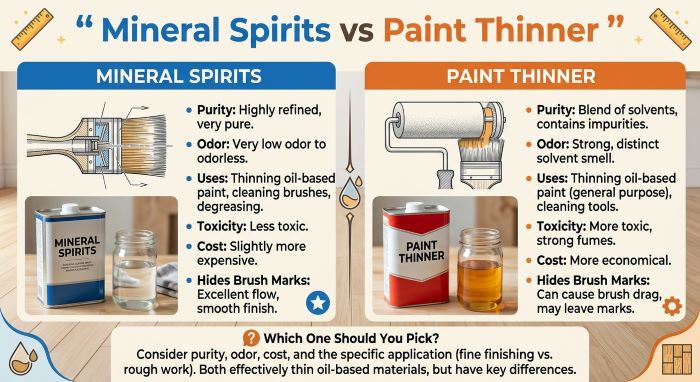
Quick Comparison
| Mineral Spirits | Paint Thinner | |
|---|---|---|
| What it is | A refined petroleum solvent | A general term for solvents, often less refined mineral spirits or blends |
| Purity | Higher | Lower, may contain other solvents |
| Odor | Milder; odorless versions available | Stronger smell |
| Residue | Very little | Can leave more residue |
| Cost | Higher | Lower |
| Best for | Thinning oil paint and varnish, fine finishing, wood prep | Cleaning brushes and tools, general cleanup |
| Works with latex paint? | No | No |
What Are Mineral Spirits?
Mineral spirits are a clear liquid made by refining petroleum. They’re also known as white spirit in many countries, and one common type is called Stoddard solvent. They dissolve oil based paints, stains, varnishes, and grease.
Because they’re refined, mineral spirits have a milder smell and evaporate cleanly without leaving an oily film. You can also buy “odorless mineral spirits,” which go through extra refining to remove the harshest smelling compounds.
What Is Paint Thinner?
“Paint thinner” isn’t one specific chemical. It’s a broad term for any solvent used to thin or clean up paint. In the US, the product sold as paint thinner is usually a less refined form of mineral spirits. Some brands may also contain other solvents, such as naphtha or other petroleum distillates. Other solvents that can technically be called thinners include turpentine, acetone, and lacquer thinner.
Because it’s less refined, paint thinner tends to smell stronger and cost less. It can also leave a bit more residue on surfaces.
Mineral Spirits vs Paint Thinner: Key Differences
1. Purity
The biggest difference in mineral spirits vs paint thinner is purity. Mineral spirits are refined further, so they contain fewer impurities. Paint thinner is less refined or blended with other solvents.
2. Smell
Paint thinner has a strong, sharp odor. Mineral spirits are milder, and odorless mineral spirits are better still for indoor work. Keep in mind that “odorless” doesn’t mean fume free. You still need good ventilation.
3. Residue
Mineral spirits evaporate cleanly. Paint thinner can leave a slight film, which matters if you’re prepping a surface for a fine finish.
4. Cost
Paint thinner is cheaper, usually by a noticeable amount per gallon. For big cleanup jobs, that savings can add up.
5. Strength
Paint thinner is sometimes a bit more aggressive because of its added solvents. That can help when cleaning tools caked with paint.
When to Use Mineral Spirits
When weighing mineral spirits vs paint thinner for a project, choose mineral spirits for jobs where quality and finish matter:
- Thinning oil based paint, stain, or varnish. The cleaner solvent won’t affect the finish.
- Cleaning wood before staining or finishing. Wipe the surface to remove dust and grease. Mineral spirits also reveal how stain will look on bare wood.
- Removing sticky residue. It lifts adhesive left by tape and labels from many surfaces.
- Degreasing tools and metal parts. It cuts grease without harsh fumes.
- Indoor projects. Odorless mineral spirits make indoor work more pleasant.
When to Use Paint Thinner
Choose paint thinner when cost matters more than finish quality:
- Cleaning brushes, rollers, and tools after using oil based paint.
- Cleaning spills and drips of oil based paint.
- Outdoor cleanup jobs where smell is less of an issue.
- Large cleanup tasks where you need a lot of solvent.
What About Latex Paint?
The mineral spirits vs paint thinner question only matters for oil based products. Neither product is meant for latex or other water based paints. Clean latex paint with soap and warm water. Using mineral spirits or paint thinner on latex can create a gummy mess.
Mineral Spirits vs Turpentine and Other Solvents
| Solvent | Made From | Strength | Smell | Common Use |
|---|---|---|---|---|
| Mineral spirits | Refined petroleum | Moderate | Mild | Thinning oil paint, cleanup, wood prep |
| Paint thinner | Less refined petroleum or blends | Moderate to strong | Strong | Cleanup |
| Turpentine | Pine tree resin | Strong | Strong, piney | Artists’ oil paints, traditional finishes |
| Acetone | Chemical solvent | Very strong | Sharp | Removing dried paint, nail polish, adhesives |
| Lacquer thinner | Solvent blend | Very strong | Very strong | Lacquer finishes, spray equipment cleanup |
How to Thin Oil Based Paint
- Check the label. Many paint makers list a maximum amount of thinner. Follow it.
- Add a little at a time. Pour in a small amount of mineral spirits and stir well.
- Test the flow. For brushing, the paint should flow smoothly without dripping. For spraying, follow the sprayer’s guidelines.
- Don’t overdo it. Too much solvent weakens the paint and causes runs and poor coverage.
How to Clean Brushes With Solvent
- Wipe off extra paint on the can rim or newspaper.
- Swish the brush in a small container of paint thinner or mineral spirits.
- Work the bristles with your fingers while wearing gloves.
- Repeat with fresh solvent until the bristles are clean.
- Wash with soap and water to remove the solvent, then let the brush dry.
Mineral Spirits vs Paint Thinner by Project
| Project | Better Choice | Why |
|---|---|---|
| Thinning oil paint for brushing | Mineral spirits | Cleaner finish |
| Thinning varnish or polyurethane | Mineral spirits | Less residue |
| Cleaning brushes after oil paint | Paint thinner | Cheaper and effective |
| Wiping wood before staining | Mineral spirits | Evaporates cleanly |
| Removing sticker residue | Mineral spirits | Gentler and less smelly |
| Cleaning paint spills outdoors | Paint thinner | Low cost |
| Degreasing bike chains or tools | Either | Both cut grease |
| Indoor touch up work | Odorless mineral spirits | Least odor |
Reusing Solvent
You don’t have to throw out used solvent. Pour dirty mineral spirits or paint thinner into a sealed jar and let it sit for a few days. Paint particles will settle to the bottom. Carefully pour the clear solvent into a clean container to reuse it. Dispose of the sludge as hazardous waste.
Safety Tips
Both products are flammable and give off fumes. Follow these safety tips:
- Ventilate. Work outdoors or open windows and use a fan.
- Wear gloves and eye protection. Chemical resistant gloves protect your skin.
- Keep away from flames and sparks. Never use near pilot lights, heaters, or open flames.
- Handle rags carefully. Lay solvent soaked rags flat outdoors to dry, or store them in a sealed metal container filled with water before disposal.
- Store safely. Keep containers sealed, labeled, and away from children and pets.
- Dispose properly. Never pour solvent down a drain or onto the ground. Take it to a household hazardous waste site.
Low VOC Options
Some states, like California, limit volatile organic compounds (VOCs) in solvents. In those areas, you may find “compliant” mineral spirits made with different formulas. They often work more slowly and may look cloudy. Read the label for directions, since they can behave differently from traditional products.
Fixing Paint Problems
Solvents are just one part of a good paint job. If you’re dealing with chips, peeling, or damaged spots, check out our guide on How to Repair Chipped Paint for step by step fixes.
Frequently Asked Questions
Are mineral spirits and paint thinner the same thing? Not exactly. Paint thinner in the US is usually a less refined form of mineral spirits, sometimes blended with other solvents.
Can I use paint thinner instead of mineral spirits? Yes, for cleaning brushes and tools. For thinning finishes or prepping wood, mineral spirits are a better choice.
Which smells less? Mineral spirits, especially odorless mineral spirits.
Can I use either on latex paint? No. Clean latex paint with soap and water.
Final Thoughts
When choosing mineral spirits vs paint thinner, think about the job. For fine finishing, thinning paint, and indoor work, pay a little more for mineral spirits. For cleaning brushes and tools, cheaper paint thinner does the job. Whichever you pick, work safely, ventilate well, and dispose of used solvent the right way.
Key Takeaways
- Mineral spirits vs paint thinner comes down to purity: mineral spirits are more refined, while paint thinner is less refined or blended.
- Mineral spirits smell less, leave less residue, and cost more.
- Paint thinner is cheaper and works well for cleaning brushes, tools, and spills.
- Use mineral spirits for thinning oil based paint and varnish, prepping wood, and indoor projects.
- Neither product should be used on latex paint, which cleans up with soap and water.
- Both are flammable, so ventilate well, handle rags carefully, and dispose of solvent at a hazardous waste site.