Bavette Steak: What It Is, How to Cook It, and Why Chefs Love It
Walk into a French bistro, and you may see “bavette” on the menu, served with shallots and a pile of crisp fries. Ask an American butcher for it, and you might get a puzzled look until you say “flap meat” or “sirloin flap.” Bavette steak is one of the most flavorful and underrated cuts of beef. It has a rich, beefy taste, a loose and open grain that soaks up marinades, and a price well below ribeye or strip steak.
This guide explains what the cut is, where it comes from, how it compares to similar steaks, and exactly how to cook it. You will also find marinades, serving ideas, and tips for buying and storing it.
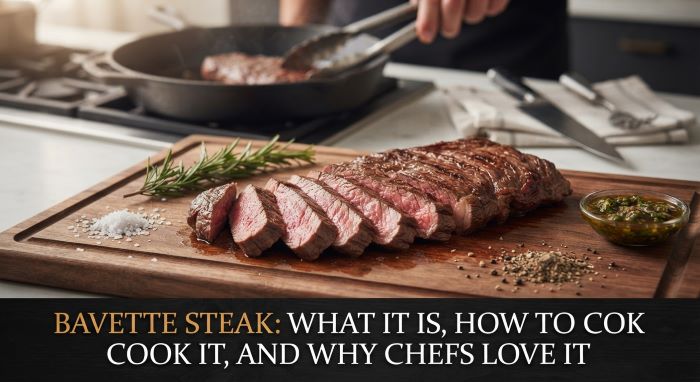
What Is Bavette Steak?
Bavette is the French name for a long, flat cut of beef. The word means “bib” in French, a nod to its flat shape. In the United States, it is most often sold as flap meat, flap steak, or sirloin flap. It comes from the bottom sirloin, near the flank, on the lower abdominal area of the cow.
The muscle does a lot of work, which gives it deep flavor. It has a coarse, loose grain with visible muscle fibers running across the cut. It is thicker than skirt steak, a bit more tender than flank steak, and has good marbling for a lean-looking cut.
In France, the term can be confusing. “Bavette d’aloyau” refers to the sirloin flap. “Bavette de flanchet” refers to flank steak. Most American butchers and chefs use the name for the sirloin flap.
Other Names for the Cut
- Flap meat or flap steak
- Sirloin flap
- Bottom sirloin flap
- Sirloin tips (in New England, where it is often cut into strips or cubes)
- Bavette d’aloyau (French)
- Vacío (in Argentina, a similar cut from the same area)
If your store does not label it bavette, ask the butcher for sirloin flap.
Comparison Table: Bavette vs. Similar Cuts
| Cut | Where It Comes From | Texture | Flavor | Thickness | Best Cooking Method | Price Level |
|---|---|---|---|---|---|---|
| Bavette (sirloin flap) | Bottom sirloin | Loose, open grain, tender when sliced thin | Rich and beefy | Medium to thick | Grill, pan-sear, broil | Moderate |
| Flank steak | Flank, below the loin | Tighter grain, lean | Beefy, slightly milder | Medium | Grill, broil, stir-fry | Moderate |
| Skirt steak | Plate (diaphragm) | Very loose grain, more fat | Intense, buttery | Thin | Very hot, fast sear | Moderate to high |
| Hanger steak | Plate, hangs from the diaphragm | Tender, coarse | Deep, mineral-rich | Thick | Sear, grill | Moderate to high |
| Flat iron | Shoulder (chuck) | Fine grain, tender | Beefy, well marbled | Medium | Grill, pan-sear | Moderate |
| Tri-tip | Bottom sirloin | Tender, lean | Mild to beefy | Thick roast | Grill, roast, smoke | Moderate |
Why Cooks Love This Cut
Flavor: It has a bold, beefy taste that stands up to strong marinades and sauces.
Texture: The loose grain gives it a tender chew when cooked and sliced correctly.
Marinade-friendly: The open fibers absorb flavor quickly.
Value: It usually costs less than premium steaks like ribeye, strip, and filet.
Versatility: It works for steak frites, tacos, fajitas, stir-fries, sandwiches, salads, and kebabs.
Quick cooking: It cooks in minutes over high heat.
How to Buy It
Look for a piece with a deep red color, even thickness, and some marbling. A whole flap usually weighs two to three pounds. Plan on about six to eight ounces per person.
Choose USDA Choice or Prime for the best marbling if available. Grass-fed versions are leaner and have a slightly stronger, more mineral flavor.
If you cannot find it at a supermarket, try a butcher shop, a warehouse club, a Latin American market, or an online meat retailer. Costco and other warehouse stores often sell it as “flap meat.”
How to Prepare It
- Trim: Remove any thick silver skin or large pieces of surface fat.
- Pat dry: Dry meat browns better.
- Portion if needed: A whole flap is often thicker at one end. Cut it into two or three pieces of similar thickness so they cook evenly.
- Season or marinate: Salt generously, or marinate for 30 minutes to 12 hours.
- Bring to room temperature: Let it sit out for 20 to 30 minutes before cooking.
Best Marinades
The cut does not need a marinade, but it takes to one beautifully.
Classic garlic and herb: Olive oil, garlic, rosemary, thyme, black pepper, and a splash of red wine vinegar.
Chimichurri style: Parsley, oregano, garlic, red wine vinegar, olive oil, and red pepper flakes. Use half as a marinade and half as a sauce.
Soy and ginger: Soy sauce, grated ginger, garlic, sesame oil, brown sugar, and rice vinegar.
Citrus and cumin for tacos: Lime juice, orange juice, garlic, cumin, chili powder, and cilantro.
French bistro: Dijon mustard, shallots, red wine, and thyme.
Avoid marinating in very acidic mixtures for more than 12 hours, since acid can turn the surface mushy.
How to Cook Bavette Steak on the Grill
- Heat the grill to high, around 450 to 500 degrees Fahrenheit.
- Clean and oil the grates.
- Remove the meat from the marinade and pat it dry.
- Grill for four to six minutes per side, depending on thickness, turning once.
- Check the internal temperature with a thermometer.
- Rest for five to ten minutes.
- Slice thinly against the grain.
How to Pan-Sear It
- Heat a cast iron skillet over high heat until very hot.
- Add a tablespoon of high smoke point oil, such as avocado or canola.
- Sear the meat for three to five minutes per side until a deep brown crust forms.
- In the last minute, add butter, garlic, and thyme, and spoon the butter over the meat.
- Rest, then slice against the grain.
Other Cooking Methods
Broiling: Place the meat on a broiler pan about four inches from the heat. Broil four to six minutes per side.
Sous vide: Cook at 130 degrees Fahrenheit for two hours, then sear in a very hot pan for one minute per side.
Reverse sear: Cook in a 250-degree oven until the internal temperature reaches about 115 degrees, then sear in a hot pan.
Stir-fry: Slice thinly against the grain before cooking, then stir-fry quickly over very high heat.
Doneness Temperatures
| Doneness | Pull Temperature | Description |
|---|---|---|
| Rare | 120 to 125°F | Cool red center |
| Medium-rare | 130 to 135°F | Warm red center |
| Medium | 140 to 145°F | Warm pink center |
| Medium-well | 150 to 155°F | Slightly pink |
| Well done | 160°F and above | Little or no pink |
Most chefs recommend medium-rare to medium for this cut. Cooked past medium, it can turn tough and chewy. The USDA recommends cooking whole cuts of beef to 145 degrees Fahrenheit with a three-minute rest for food safety.
The Most Important Step: Slice Against the Grain
The grain on this cut is very visible. The muscle fibers run across the width of the meat. To get tender bites, cut across those fibers, not along them. Slicing against the grain shortens the fibers so each bite is easy to chew.
Hold your knife at a slight angle and cut thin slices, about a quarter inch thick. If the grain changes direction along the piece, turn the meat as you go.
Serving Ideas
Steak frites: The French classic. Serve sliced bavette steak with crispy fries and a shallot and red wine sauce or herb butter.
Tacos: Slice thinly and serve in warm tortillas with onion, cilantro, salsa, and lime. It is a great substitute for carne asada.
Steak salad: Lay slices over arugula with cherry tomatoes, blue cheese, and balsamic vinaigrette.
Sandwiches: Pile slices on a crusty roll with caramelized onions, arugula, and horseradish sauce.
Rice bowls: Serve over rice with grilled vegetables and chimichurri or teriyaki sauce.
With chimichurri: An Argentine-style pairing that highlights the meat’s rich flavor.
Stir-fry: Toss with broccoli, peppers, and a soy-ginger sauce.
Sauces That Pair Well
- Chimichurri: Fresh, herby, and tangy.
- Shallot red wine sauce: A French bistro favorite.
- Compound butter: Butter mixed with garlic, parsley, and lemon.
- Peppercorn sauce: Creamy and bold.
- Salsa verde: Bright and herbaceous.
- Horseradish cream: Sharp and cooling.
Side Dishes
- French fries or roasted potatoes
- Mashed potatoes
- Grilled asparagus or green beans
- Roasted mushrooms
- Creamed spinach
- A simple green salad with vinaigrette
- Grilled corn
- Crusty bread
Wine and Drink Pairings
The bold flavor of this cut pairs well with medium to full-bodied red wines. Try Malbec, Cabernet Sauvignon, Syrah, Côtes du Rhône, or Zinfandel. For beer, choose an amber ale, porter, or IPA. Sparkling water with lemon or a tart cherry spritzer makes a good nonalcoholic match.
Storing and Reheating
Refrigerate raw meat and use it within three to five days, or freeze it for up to six to twelve months. Wrap it tightly to prevent freezer burn. Thaw in the refrigerator overnight.
Refrigerate cooked leftovers in an airtight container within two hours and eat them within three to four days. Reheat gently so the meat does not overcook. A low oven or a quick warm in a skillet with a splash of broth works best. For detailed methods, see this guide to the best way to reheat steak. Leftover slices are also great cold in salads and sandwiches.
Nutrition
This cut is a good source of protein, iron, zinc, and vitamin B12. A three-ounce cooked serving has roughly 160 to 200 calories, about 22 to 24 grams of protein, and 8 to 11 grams of fat, depending on trimming and grade. It has no carbohydrates.
Common Mistakes to Avoid
- Overcooking: It turns chewy past medium.
- Slicing with the grain: This makes it tough no matter how well it is cooked.
- Skipping the rest: Resting lets juices redistribute.
- Cooking it wet: Pat off excess marinade so the surface sears instead of steaming.
- Using low heat: High heat builds a flavorful crust.
- Not evening out thickness: Uneven pieces cook unevenly.
Frequently Asked Questions
Is it the same as flank steak? No. They are neighbors on the animal and look similar, but bavette comes from the bottom sirloin and has a looser grain and a bit more fat.
Is it the same as skirt steak? No. Skirt steak comes from the diaphragm, is thinner, and has even more fat.
Is it tender? Yes, when cooked to medium-rare or medium and sliced thinly against the grain.
Can I substitute flank or skirt steak in recipes? Yes. All three cuts work in similar recipes. Adjust cooking time for thickness.
Is it expensive? It is usually more affordable than ribeye or strip, though prices have risen as the cut has become more popular.
Do I need to marinate it? No, but a marinade adds flavor. Salt and pepper alone are enough for a good bavette steak.
A Simple Recipe: Grilled Bavette With Chimichurri
Ingredients:
- 2 pounds sirloin flap
- 2 tablespoons olive oil
- Kosher salt and black pepper
- 1 cup fresh parsley, finely chopped
- 3 cloves garlic, minced
- 2 tablespoons fresh oregano, or 2 teaspoons dried
- 1/2 cup olive oil
- 3 tablespoons red wine vinegar
- 1/2 teaspoon red pepper flakes
Steps:
- Mix parsley, garlic, oregano, olive oil, vinegar, and red pepper flakes with a pinch of salt. Let the sauce sit for at least 20 minutes.
- Rub the meat with oil, salt, and pepper.
- Grill over high heat for four to six minutes per side, to 130 to 135 degrees for medium-rare.
- Rest for ten minutes.
- Slice thinly against the grain and spoon chimichurri over the top.
How Much to Buy and What It Costs
Plan on six to eight ounces of raw meat per adult, or about half a pound if you want leftovers. A whole flap of two to three pounds feeds four to six people.
Prices vary by region, grade, and store. In general, sirloin flap costs less than ribeye, strip, and tenderloin and about the same as flank. Warehouse clubs tend to offer the lowest price per pound. Specialty butchers charge more, but they can trim the cut for you and answer questions about grade and source.
Dry Brining for Better Flavor
If you skip the marinade, try a dry brine. Salt the meat on all sides with about half a teaspoon of kosher salt per pound. Set it on a rack over a tray and leave it in the refrigerator, uncovered, for at least one hour and up to a full day.
The salt first draws out moisture, then the meat pulls that seasoned liquid back in. The surface also dries, which helps it brown fast in a hot pan. You get a deeper crust and meat that tastes seasoned all the way through. Add pepper just before cooking so it does not burn.
Cooking for a Crowd
This cut is a smart choice for parties. It cooks fast, slices into many portions, and tastes good warm or at room temperature. Here is a simple plan.
- Marinate or dry brine the meat the night before.
- Grill the pieces in batches about 30 minutes before you eat.
- Rest them under loose foil.
- Slice just before serving so the meat stays juicy.
- Set out two sauces, such as chimichurri and horseradish cream, and let guests choose.
Serve the slices on a large board with tortillas or rolls, a salad, and a potato dish. Thin slices go a long way, so guests feel well fed without a huge steak on each plate.
Grass-Fed vs. Grain-Fed
Grain-fed beef has more marbling, a milder taste, and a softer bite. Grass-fed beef is leaner, with a stronger, slightly mineral flavor. Because it has less fat, grass-fed meat cooks faster and dries out sooner. Pull it from the heat about five degrees earlier, and do not take it past medium-rare. Either type works well in every recipe in this guide.
Final Thoughts
Bavette steak offers big flavor, quick cooking, and good value. It is a favorite in French bistros and Argentine grills for a reason. Cook it hot and fast, keep it at medium-rare to medium, let it rest, and slice it thinly against the grain.
Whether you serve it with fries, tuck it into tacos, or top a salad with it, bavette steak deserves a regular place in your cooking. Once you try bavette steak cooked the right way, it may become your go-to cut for weeknight dinners and weekend grilling. Ask your butcher for bavette steak, or sirloin flap, the next time you shop.
Key Takeaways
- Bavette is the French name for sirloin flap, a flat, flavorful cut from the bottom sirloin.
- It has a loose grain that absorbs marinades well and a rich, beefy taste.
- It is similar to flank and skirt steak but is thicker than skirt and more tender than flank.
- Cook it hot and fast on a grill or in a cast iron pan to medium-rare or medium.
- Rest the meat for five to ten minutes and always slice thinly against the grain.
- It is ideal for steak frites, tacos, salads, sandwiches, and stir-fries.
- Reheat leftovers gently to avoid overcooking, or enjoy them cold in salads and sandwiches.