Best Tamal Costeño Near Me: Where to Find Colombia’s Caribbean Tamal and What to Look For
A good tamal costeño is a full meal wrapped in a leaf. Open the bundle, and steam rises from soft corn masa studded with pork, chicken, vegetables, and the briny pop of olives and capers. It is a dish tied to family gatherings, Sunday breakfasts, and December celebrations along Colombia’s Caribbean coast, in cities like Barranquilla, Cartagena, and Santa Marta.
Outside Colombia, tamal costeño is harder to find than the better-known tamal tolimense. That makes the search for the best tamal costeño near me a bit of a treasure hunt. This guide explains what the dish is, how it compares with other Colombian tamales, the best places to look, and how to tell a great one from an average one.
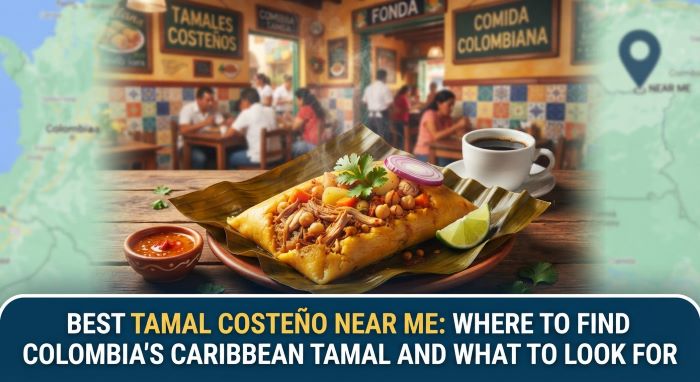
What Is a Tamal Costeño?
“Costeño” means “from the coast.” In Colombia, the word refers to the Caribbean coastal region. A tamal costeño is the coastal version of the Colombian tamal, a large, leaf-wrapped bundle of seasoned masa and fillings that is slowly simmered for hours.
A traditional tamal costeño includes:
- Masa: Seasoned corn masa made from yellow corn or cooked ground corn.
- Meats: Pork and chicken, often with bacon or pork belly.
- Starches: Cooked rice and potatoes.
- Vegetables: Carrots and peas, often with a slice of hard-boiled egg.
- Signature accents: Green olives and capers, which add a salty, tangy note.
- Seasoning: A sofrito of onion, tomato, and garlic with cumin and achiote-infused oil for color.
- Wrapper: Bijao leaves or plantain leaves, softened over heat so they bend without tearing.
The wrapped tamales simmer for about two and a half to three hours. The leaves give the masa a distinctive earthy aroma and keep it moist.
Tamal Costeño, Pastel, and Hayaca
On the Colombian Caribbean coast, you may also hear the words “pastel” and “hayaca.” A pastel is a close cousin made with seasoned rice instead of corn masa, popular at Christmas and New Year. Hayaca is another regional name for leaf-wrapped corn masa bundles, related to the Venezuelan hallaca. Menus and families use these names differently, so if you are searching for the best tamal costeño near me, ask the restaurant what is inside. You may discover a pastel or hayaca you love just as much.
Comparison Table: Colombian Tamales by Region
| Tamal | Region | Masa or Base | Typical Fillings | Wrapper | Signature Trait |
|---|---|---|---|---|---|
| Tamal costeño | Caribbean coast | Corn masa | Pork, chicken, bacon, rice, potato, carrot, peas, egg, olives, capers | Bijao or plantain leaf | Briny olives and capers |
| Pastel costeño | Caribbean coast | Seasoned rice | Pork, chicken, vegetables, olives, capers | Bijao leaf | Rice-based holiday dish |
| Tamal tolimense | Tolima | Corn masa mixed with rice and peas | Pork, chicken, egg, potato, carrot | Plantain leaf | Round shape, tied at the top |
| Tamal santandereano | Santander | Corn masa | Pork, chicken, chickpeas, onion, paprika | Plantain leaf | Rectangular with chickpeas |
| Tamal valluno | Valle del Cauca | Corn masa | Pork, chicken, potato | Plantain leaf | Large, served with aji sauce |
| Tamal antioqueño | Antioquia | Corn masa | Pork, potato, carrot, peas | Bijao leaf | Smaller, compact |
| Tamal bogotano (santafereño) | Bogotá | Corn masa | Chicken, pork, longaniza sausage, chickpeas, carrot | Plantain leaf | Served with hot chocolate and bread |
| Tamal de pipián | Cauca | Corn masa | Peanut and potato filling | Corn husk or plantain leaf | Small, served with peanut aji |
Recipes vary by family and town, so expect differences from one kitchen to the next.
Where to Find Tamal Costeño: 10 Places to Look
1. Colombian restaurants with coastal roots. Look for restaurants that mention Barranquilla, Cartagena, or “comida costeña” on their menu or signage. Dishes like arepa de huevo, carimañolas, mojarra frita, and arroz con coco are signs of a coastal kitchen that may also serve tamal costeño.
2. Colombian bakeries and panaderías. Many Colombian bakeries sell tamales on weekends alongside pandebono, buñuelos, and empanadas. Ask which regional style they make.
3. Weekend breakfast specials. Tamales are a classic Saturday and Sunday breakfast in Colombia. Many restaurants only make them on weekends, and they often sell out by noon.
4. Latin American grocery stores. Check the hot food counter and the refrigerated or frozen section. Some stores sell locally made tamales from home-style producers.
5. Home cooks and small vendors. In cities with large Colombian communities, home cooks often take orders through social media or community groups, especially in December.
6. Colombian festivals and Independence Day events. Food stalls at July 20 celebrations and Latin food festivals often feature regional specialties.
7. Neighborhoods with large Colombian communities. Jackson Heights in Queens, New York, is one of the best-known hubs. Elizabeth and other northern New Jersey towns, Miami and Doral, Orlando and Kissimmee, Houston, and parts of Rhode Island and Massachusetts also have many Colombian restaurants and bakeries.
8. Delivery apps. Search for “tamal colombiano,” “tamal costeño,” and “pastel” rather than only “tamales,” which often returns Mexican results.
9. Colombian catering services. Caterers often make tamales by the dozen for parties and holidays.
10. Online Latin food shops. Some shops ship frozen Colombian tamales nationwide. Check which regional styles are offered.
Because tamal costeño is a regional specialty, it helps to call ahead and ask. Restaurants owned by people from the coast are your best bet.
How to Spot a Great Tamal Costeño
When you find a candidate for the best tamal costeño near me, check for these signs of quality:
- Moist, tender masa: It should be soft and flavorful, not dry or crumbly.
- Generous filling: Look for real pieces of pork and chicken, not just a few shreds.
- Olives and capers: These define the coastal flavor.
- Leaf aroma: A proper tamal smells of the bijao or plantain leaf it was cooked in.
- Served hot: Tamales should be steamed or simmered to order, not microwaved until rubbery.
- Balanced seasoning: Cumin, achiote, and sofrito should be present but not overpowering.
What to Eat With Tamal Costeño
On the coast, tamales are often served with:
- Arepa or bollo: A plain corn arepa or bollo limpio (boiled corn dough) on the side.
- Hot chocolate or coffee: Especially at breakfast.
- Suero costeño: A tangy fermented cream similar to sour cream.
- Aji picante: A fresh hot sauce with cilantro, onion, and chili.
- Fresh juice: Corozo, tamarind, lulo, or passion fruit.
Other Colombian Favorites to Try
If you enjoy hunting for regional Colombian food, there is much more to explore. Cheesy breads are a great place to start. This guide to the best pandebono relleno near me covers the stuffed version of Colombia’s famous cheese bread.
For a shareable feast, try a picada, a platter of grilled meats, sausages, potatoes, plantains, and arepas. See this guide to the best picada colombiana near me for tips on finding a great one.
For something sweet, look for roscón, a ring-shaped sweet bread filled with guava paste or arequipe. This guide to the best roscón colombiano near me explains what to look for at Colombian bakeries.
Tamal Costeño vs. Mexican Tamales
If you only know Mexican tamales, Colombian tamales may surprise you.
- Size: Colombian tamales are much larger, often a full meal on their own.
- Wrapper: Colombian tamales use plantain or bijao leaves, while most Mexican tamales use corn husks.
- Filling: Colombian tamales include whole pieces of meat, vegetables, and sometimes rice and egg inside the masa.
- Texture: The masa is softer and wetter.
- Cooking: Colombian tamales are usually boiled or simmered for hours rather than steamed.
When Tamales Are Eaten
Tamales are everyday comfort food in Colombia, but they are especially tied to weekend breakfasts and December holidays. Families gather to prepare dozens at a time for Christmas Eve and New Year’s Eve. On the coast, pasteles are especially popular for holiday tables. If you want to try several styles, December is the best time to find them at Colombian restaurants and bakeries abroad.
How to Order Like a Local
- Ask “¿Tienen tamal costeño?” (Do you have coastal tamal?)
- Ask “¿De qué región es el tamal?” (What region is the tamal from?)
- Order early on weekends, since tamales sell out.
- Ask for aji on the side.
- Order a hot chocolate or tinto (black coffee) to go with it.
- Buy extra to freeze. Tamales reheat well.
Reheating and Storing Tamales
Keep tamales wrapped in their leaves. Refrigerate for up to four or five days or freeze for up to three months. To reheat, steam or simmer the wrapped tamal for 15 to 25 minutes until hot in the center. Reheating in the leaf keeps the masa moist. A microwave works in a pinch, but cover the tamal with a damp paper towel to prevent drying.
Making Tamal Costeño at Home
If you cannot find one nearby, you can make it yourself. It takes time, so many families turn it into a group activity.
- Marinate pork and chicken in a sofrito of onion, tomato, garlic, cumin, and achiote.
- Prepare corn masa seasoned with broth and achiote oil.
- Soften bijao or plantain leaves over a flame or in hot water.
- Spread masa on the leaf, then add meat, rice, potato, carrot, peas, egg, olives, and capers.
- Fold the leaf into a tight packet and tie it with string.
- Simmer in salted water for two and a half to three hours.
Latin grocery stores often carry frozen plantain leaves and precooked cornmeal for making masa.
What to Expect to Pay
Prices vary by city and restaurant, but a Colombian tamal in the United States often costs roughly $8 to $15, depending on size and what comes with it. Many restaurants serve it as a breakfast plate with an arepa, bread, and hot chocolate or coffee. Buying by the dozen from a caterer or home cook usually lowers the price per tamal, especially around the holidays. Since each tamal is a full meal, it is one of the better values on a Colombian menu.
A Taste of the Colombian Caribbean
The Caribbean coast has a food culture all its own, shaped by Indigenous, African, Spanish, and Middle Eastern influences. Coconut rice, fried fish, plantains, yuca, and fresh tropical fruit are everyday staples. Street food is everywhere, from arepas de huevo to carimañolas and butifarras. Tamales and pasteles appear on weekends and holidays, when families have time for slow cooking.
Barranquilla’s Carnival, one of the largest in the world, fills the streets with music, dancing, and food each year before Lent. Cartagena draws visitors with its walled old city and seafood. Santa Marta sits between the sea and the Sierra Nevada mountains. Tasting a tamal costeño is a small way to experience that region wherever you live, which is part of why people search for the best tamal costeño near me even far from Colombia.
Dietary Notes
Traditional tamal costeño contains pork and chicken, so it is not vegetarian. The masa is corn-based and naturally gluten-free, but broths, seasonings, and shared kitchens can introduce gluten, so ask if you are sensitive. Some cooks make chicken-only versions for people who avoid pork. Vegetarian tamales with vegetables, chickpeas, or cheese are sometimes available, though they are less traditional. If you have allergies, ask about ingredients before ordering.
Supporting Small Colombian Businesses
Many of the best tamales come from small, family-run restaurants, bakeries, and home kitchens. Leaving a positive review, sharing photos, and telling friends helps these businesses reach more customers. If you find a place that makes a great tamal costeño, ask whether they take holiday orders. Building a relationship with a local cook is often the most reliable way to keep the best tamal costeño near me on your table year after year.
Questions to Ask Before You Order
- Is the tamal made in house or brought in from a supplier?
- Which region’s style is it?
- Does it include olives and capers?
- Is it wrapped in bijao or plantain leaf?
- What days is it available?
- Can I order ahead or buy frozen tamales to take home?
Asking a few friendly questions shows interest and often leads to great recommendations for other dishes. It is also the quickest way to confirm that you have truly found the best tamal costeño near me rather than a different regional style.
Hosting a Colombian Breakfast at Home
If you buy tamales by the dozen, turn them into a weekend gathering. Steam the tamales in their leaves and serve them with warm arepas, fresh cheese, scrambled eggs with tomato and scallion (huevos pericos), hot chocolate, and strong coffee. Add fresh fruit like papaya, mango, and pineapple, plus a bowl of aji for anyone who likes heat. Let each guest unwrap their own tamal at the table, since the rising steam and aroma are part of the experience. It is an easy, memorable way to share Colombian food with friends and family.
Tips for Searching Online
Search engines often mix up Colombian and Mexican tamales. Use specific terms like “Colombian restaurant,” “comida costeña,” “restaurante barranquillero,” or “tamales colombianos.” Read reviews and look at photos to see whether the tamales are leaf-wrapped and large. Check social media pages, since many small restaurants post weekend specials there instead of on their websites.
When you search for the best tamal costeño near me, widen your search area. A 30-minute drive to a neighborhood with a strong Colombian community is often worth it.
Finding Your Favorite
Tamal costeño is a taste of Colombia’s Caribbean coast, rich with pork, chicken, vegetables, olives, and capers. It may take a little effort to find, but the search is part of the fun. Start with Colombian restaurants and bakeries in your area, ask about regional styles, and try several versions.
The best tamal costeño near me search often ends at a small, family-run spot where the cook learned the recipe from a grandmother in Barranquilla or Cartagena. When you find it, buy a few extra for the freezer. With these tips, the best tamal costeño near me is easier to track down than you might think.
Key Takeaways
- Tamal costeño is the Colombian Caribbean version of the tamal, made with corn masa, pork, chicken, vegetables, olives, and capers.
- It is wrapped in bijao or plantain leaves and simmered for about two and a half to three hours.
- Pastel and hayaca are related coastal dishes, so ask what is inside when ordering.
- Look in Colombian restaurants with coastal roots, bakeries, Latin markets, and weekend breakfast menus.
- Neighborhoods with large Colombian communities, like Jackson Heights, Miami, Orlando, and northern New Jersey, are the best places to search.
- A great tamal has moist masa, generous meat, a clear leaf aroma, and the briny flavor of olives and capers.
- Tamales freeze well and should be reheated by steaming in their leaves.