Best Wood for Cutting Board: 10 Woods Ranked for Durability and Knife Care
Choosing the best wood for cutting board use comes down to a balance most people do not think about until their knives start dulling faster than expected. A wood that is too hard damages knife edges over time, while a wood that is too soft gouges easily and can trap bacteria in deep knife marks. This guide breaks down specific wood types worth choosing, explains the difference between end grain and edge grain construction, and covers the maintenance that keeps any wooden board performing well for years.
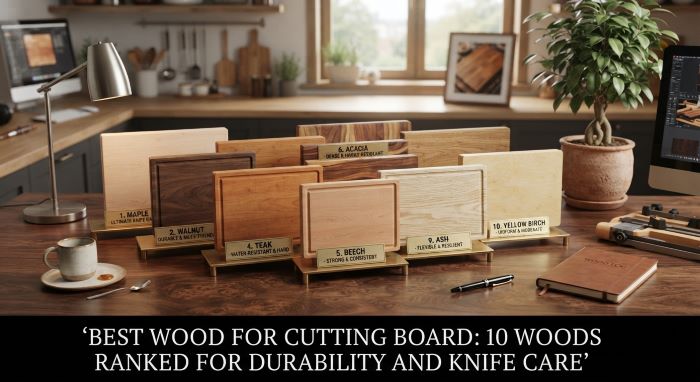
Why Wood Still Beats Plastic and Glass
Before comparing specific woods, it is worth understanding why wood remains the best wood for cutting board use compared to plastic or glass alternatives. Wood has natural antimicrobial properties and a slightly self-healing quality, since its fibers close back up somewhat after a knife cut rather than staying permanently grooved the way plastic does. Glass and stone surfaces, while easy to clean, are genuinely damaging to knife edges since they offer zero give, dulling blades far faster than any wood option. Plastic boards are dishwasher safe and inexpensive, but they develop deep knife grooves over time that are difficult to fully sanitize, eventually requiring replacement in a way a well maintained wood board does not.
Comparison Table: 10 Woods at a Glance
| Wood | Janka Hardness (approx. lbf) | Knife Friendliness | Water Resistance | Price Level | Best For |
|---|---|---|---|---|---|
| Maple | 1,450 | Very good | Good (closed grain) | Moderate | Everyday all-purpose board |
| Walnut | 1,010 | Excellent | Good | Moderate to high | Gentle on knives, handsome look |
| Cherry | 950 | Excellent | Good | Moderate | Board that doubles as a server |
| Teak | 1,000 to 1,150 | Very good | Excellent (natural oils) | High | Frequent washing, low upkeep |
| Beech | 1,300 | Very good | Good | Low to moderate | Maple-like performance for less |
| Acacia | 1,700 to 2,300 (varies by species) | Good | Good | Low to moderate | Striking grain on a budget |
| Olive | about 2,700 | Fair | Very good | High | Small boards, natural antimicrobial |
| Bamboo | 1,300 to 3,000+ (varies by type) | Fair | Good | Low | Eco-friendly, low cost |
| Hard Rock Maple (end grain) | 1,450 | Excellent | Good | High | Butcher blocks, heavy daily use |
| Mahogany | 800 to 900 | Excellent | Good | Moderate to high | Display and light prep |
Janka hardness measures how much force it takes to press a steel ball into the wood. The 900 to 1,500 range is the sweet spot: hard enough to resist deep gouges, soft enough to spare your knife edges.
1. Maple
Hard maple is one of the most commonly recommended choices and a genuine benchmark for the best wood for cutting board construction. It has a tight, closed grain that resists moisture absorption and bacteria growth, combined with a hardness that stands up to daily use without being so hard that it dulls knives quickly.
2. Walnut
Walnut offers a beautiful, rich dark color along with a slightly softer profile than maple, which some cooks prefer specifically because it is gentler on knife edges. Its closed grain structure still provides good durability and moisture resistance despite the softer feel underfoot of the blade.
3. Cherry
Cherry wood combines an attractive reddish tone with a hardness level similar to walnut, sitting comfortably in the middle of the hardness spectrum. It is a popular choice for cutting boards that double as a serving piece, since its appearance holds up beautifully even when displayed on a table.
4. Teak
Teak contains natural oils that make it exceptionally water resistant, which is a genuine advantage for a board that gets washed frequently. Its natural oil content also means teak requires less frequent conditioning than drier hardwoods, though it comes at a higher price point than more common domestic woods.
5. Beech
Beech is a dense, tight grained wood that performs similarly to maple in terms of durability and knife friendliness, often at a somewhat lower price point. It is a strong, practical choice for anyone who wants maple-like performance without the premium cost some maple boards carry.
6. Acacia
Acacia wood offers a striking, varied grain pattern with rich color variation from board to board, making each one visually unique. It is reasonably hard and durable, though slightly more prone to warping than maple or walnut if it is not properly cared for with regular oiling.
7. Olive Wood
Olive wood is dense, beautiful, and naturally antimicrobial, with a distinctive swirling grain pattern that makes every board unique. It is more commonly found in smaller boards, since olive trees do not produce the large, straight sections of trunk that bigger boards typically require.
8. Bamboo
Bamboo is technically a grass rather than a hardwood, but it is widely marketed and used as a cutting board material due to its rapid renewability and genuine hardness. It is harder than most true hardwoods, which makes it more durable against scratches but also somewhat tougher on knife edges over time compared to true wood options.
9. Hard Rock Maple (Specifically for End Grain Boards)
Hard rock maple deserves its own mention separate from standard maple, since it is specifically prized for end grain construction due to its exceptional density and consistency, making it the traditional choice for professional butcher blocks that see heavy daily use.
10. Mahogany
Mahogany offers a warm reddish brown tone and a hardness comparable to walnut, along with a naturally attractive grain that many cooks appreciate for a board that will be displayed as much as used. It performs well under regular use, though it is less commonly available than more mainstream cutting board woods.
End Grain vs Edge Grain: Which Actually Matters More
The construction method affects performance nearly as much as the wood species itself. End grain boards are built with the wood fibers running vertically, so your knife cuts between the fibers rather than across them, which is genuinely gentler on blade edges and gives the board a self-healing quality as the fibers separate and close back around knife marks. Edge grain boards, built with fibers running horizontally, are more affordable to produce and still perform well, just with slightly more visible wear over time compared to end grain construction. For anyone doing serious daily cooking, an end grain board in a wood like hard rock maple or walnut is worth the extra cost, while edge grain boards in maple or beech remain a completely reasonable choice for typical home use.
Sizing Your Board for How You Actually Cook
A board that is too small forces ingredients to spill over the edges constantly, while an oversized board can be awkward to maneuver and clean in a smaller kitchen. For most home cooks, a board in the 15 by 20 inch range provides enough surface area for typical meal prep without becoming unwieldy. If you frequently break down whole chickens or larger cuts of meat, sizing up to something closer to 18 by 24 inches gives you the room to work without ingredients constantly falling off the edges.
Maintaining Your Board So It Lasts for Years
Regardless of which wood you choose, regular oiling is essential to prevent cracking and warping. Food grade mineral oil, applied every few weeks for a board in regular use, keeps the wood from drying out and developing cracks where bacteria could otherwise take hold. Avoid the dishwasher entirely, since the combination of intense heat and prolonged water exposure will warp and crack any wood board over time, no matter how well made it is. Hand wash with mild soap and water, dry immediately rather than letting it air dry sitting in a wet state, and store it standing on edge to allow full airflow around both sides.
Caring for Your Knives Alongside Your Board
A good cutting board and well maintained knives work together, and neglecting one undermines the benefit of the other. If you are investing in quality wood specifically to protect your knife edges, it is worth reading up on best sushi knives to understand how different blade types and steel hardness levels interact with cutting surfaces, since a genuinely sharp, well cared for knife performs better and lasts longer on a quality wood board than on a harder surface like glass or bamboo that accelerates dulling regardless of how good the knife itself is.
What to Avoid When Choosing a Board
Avoid softwoods like pine or cedar for cutting boards, since their open, porous grain absorbs moisture and odors far more readily than hardwoods, and their softer surface gouges easily under regular knife use. Be cautious with unfinished or improperly sealed boards from unknown sources, since wood that has not been properly kiln dried and finished can harbor moisture that leads to warping, cracking, or bacterial growth over time regardless of the species itself.
Separate Boards for Different Foods
Even with the best wood for cutting board use sitting on your counter, food safety practices matter as much as the material itself. Many home cooks keep a dedicated board for raw meat and poultry, separate from the board used for produce, bread, and other ready to eat foods, to avoid cross contamination between raw proteins and foods that will not be cooked afterward. Color coding boards, or simply designating specific boards by size or shape for specific purposes, makes it easy to keep this system consistent in a busy kitchen without having to think about it each time. Even a single high quality wood board can work for this purpose if you are diligent about washing thoroughly with hot soapy water between different food types, though having two dedicated boards removes any guesswork entirely.
Refinishing a Board That Has Seen Better Years
A wood cutting board that has developed deep knife grooves, minor cracks, or a rough surface after years of use is not necessarily beyond saving. Light sanding with progressively finer grit sandpaper, starting around 120 grit and working up to 220, can smooth out surface scratches and restore a more even cutting surface. Deeper cracks are more concerning, since they can harbor bacteria that washing alone cannot fully reach, and a board with cracks running deep into the wood is generally safer to replace than to attempt repairing. After sanding, a thorough re-oiling with several coats of food grade mineral oil, applied over a few consecutive days, restores both the wood’s appearance and its natural moisture resistance.
Budget Considerations Across Wood Types
Pricing for wood cutting boards varies considerably based on both species and construction method. Edge grain boards in more common woods like maple or beech tend to be the most affordable entry point into a genuinely good quality board, typically costing meaningfully less than end grain construction in the same species. End grain boards, along with less common woods like teak or olive, command a premium both for the material itself and for the more labor intensive construction process end grain boards require. For most home cooks, a mid range edge grain maple or walnut board delivers the large majority of the practical benefits found in more expensive options, making it a sensible starting point before investing in a premium end grain board down the line.
Sustainability Considerations When Choosing Wood
For shoppers who care about environmental impact alongside performance, sourcing matters when picking the best wood for cutting board use. Bamboo, while technically harder on knives than true hardwoods, remains one of the most rapidly renewable materials available, since it regrows to harvestable size in just a few years compared to decades for a hardwood tree. Domestically sourced maple, walnut, and cherry, common throughout North American forests, generally have a smaller environmental footprint than imported woods like teak or exotic acacia, simply due to reduced shipping distance. Looking for FSC certification, which indicates responsibly managed forestry practices, is a straightforward way to make a more sustainable choice regardless of which specific wood species you ultimately choose.
Signs It Is Time to Replace Your Board
Even a well maintained board eventually reaches the end of its useful life, and recognizing the signs prevents continuing to use a board that has become a genuine food safety risk. Deep grooves that no longer respond to sanding, persistent odors that survive thorough washing and oiling, or visible mold growth in cracks are all clear signals that a board should be retired rather than repaired. A board that has developed a noticeable warp, where it no longer sits flat on the counter, has also likely developed internal moisture damage that oiling alone cannot fully correct, and continuing to use a warped board increases the risk of it cracking further during regular use.
Gift Considerations for Cutting Boards
A quality wood cutting board makes a genuinely popular housewarming or wedding gift, and knowing what separates the best wood for cutting board gifting from a purely decorative option helps avoid giving something that looks nice but performs poorly. A board intended primarily for display, often thinner and sometimes made from a softer decorative wood, differs meaningfully from a genuinely functional daily use board, and it is worth clarifying with the recipient, or simply choosing a proven functional wood like maple or walnut, if the gift is meant for actual kitchen use rather than purely decorative display.
Pairing Boards with Specific Kitchen Tasks
Many serious home cooks eventually own more than one board, each suited to a specific task rather than trying to make a single board do everything. A smaller, lighter board is convenient for quick jobs like slicing a lemon or chopping a handful of herbs, without needing to haul out a large, heavy end grain board for a task that takes thirty seconds. A larger board, reserved for bigger jobs like breaking down a whole chicken or prepping vegetables for a big batch of soup, earns its size and weight specifically for those bigger tasks. Building out a small collection over time, rather than trying to find one perfect board for every job, often produces a more genuinely functional kitchen setup than a single board ever could. Starting with one solid, versatile board and adding a second, more specialized one only once you have a clear sense of what your own cooking habits actually demand tends to produce a more useful collection than buying several boards all at once before you know what you really need. Paying attention to which board you reach for most often after a few months of regular cooking tells you far more about what actually fits your kitchen than any single recommendation, including the ones in this guide, ever could on its own. Trust that ongoing feedback from your own daily habits more than any single ranking, and your cutting board collection will end up genuinely suited to how you actually cook rather than how a generic list assumes everyone cooks.
A Final Word on Choosing Your Board
There is no single universally correct answer to which wood makes the best wood for cutting board use for every kitchen, since the right choice depends on your cooking habits, budget, and how much maintenance you are realistically willing to keep up with. A board you actually oil regularly and enjoy using will always outperform a technically superior wood that gets neglected, so choosing a species and construction style that fits your actual routine matters more than chasing the theoretical top performer on any list.
Key Takeaways
- The best wood for cutting board use balances hardness against knife friendliness, with maple, walnut, and cherry as reliable, widely available choices.
- Teak and olive wood offer natural water resistance and antimicrobial properties, though often at a higher price point.
- Bamboo is technically a grass, not a hardwood, and its extra hardness can be tougher on knife edges over time.
- End grain construction is gentler on knives and more self-healing than edge grain, making it worth the extra cost for serious daily cooking.
- Regular oiling with food grade mineral oil prevents cracking and extends the life of any wood board significantly.
- Never put a wood cutting board in the dishwasher, since heat and prolonged moisture will warp and crack it over time.
- A quality wood board and well maintained knives work together, extending the life and performance of both.