Best Peel and Stick Wallpaper: 10 Renter-Friendly Picks That Look Like the Real Thing
Finding the best peel and stick wallpaper means looking past the pretty pattern in a product photo and paying attention to material, since that single factor determines whether your wallpaper goes up smoothly, stays flat for years, and comes off clean when you are ready for a change. Cheap vinyl can bubble within weeks, while a well made paper or fabric based option can look genuinely professional and survive a full apartment lease. This guide lists specific, named wallpaper brands and products across styles and price points, along with the prep and application details that make the biggest difference in how the final result actually looks.
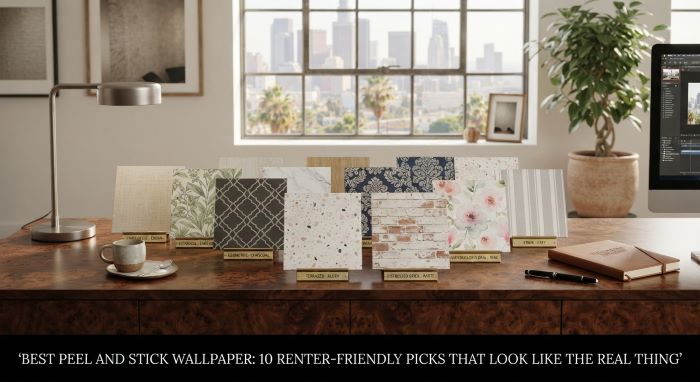
What Material Actually Means for Your Wall
Before picking a pattern, it helps to understand the material differences that separate the best peel and stick wallpaper from options that disappoint after installation. Vinyl wallpaper is the most durable and moisture resistant option, making it well suited to kitchens and bathrooms, though lower quality vinyl can look slightly plasticky up close. Paper based peel and stick wallpaper, often made from a textured, matte stock, tends to look the most like traditional wallpaper and takes ink beautifully for detailed prints, but it is less forgiving of moisture. Fabric or poly-woven wallpaper splits the difference, offering a soft, slightly textured finish that hides minor wall imperfections better than paper or vinyl.
1. Spoonflower Brush Stroke Stripes
Spoonflower’s peel and stick wallpaper is made from 100 percent paper and printed on demand, which means you get genuinely vivid color and fine detail. The Brush Stroke Stripes design comes in ten colorways, making it easy to match an existing room palette rather than building a room around the wallpaper.
2. Chasing Paper Wilder Stripe
Chasing Paper uses a poly-woven fabric material that installs with noticeably less bubbling than stiffer vinyl options, and the Wilder Stripe pattern comes in eleven colorways. The fabric base also makes it easier to reposition during application if you do not get the alignment perfect on the first try.
3. Tempaper Designer Collections
Tempaper is one of the most established names in removable wallpaper, known for vinyl that installs smoothly and removes cleanly even after a year or more on the wall. Their designer collaboration lines offer patterns ranging from subtle textures to bold statement prints, all backed by a reputation for consistent quality control.
4. WallPops Peel and Stick Collections
WallPops offers some of the most budget friendly peel and stick wallpaper on the market, with a wide range of patterns from geometric to botanical. The tradeoff for the lower price is a thinner vinyl that requires more careful, patient application to avoid visible seams between panels.
5. RoomMates Wallpaper
RoomMates has built a reputation specifically around rental friendly wallpaper, with vinyl formulated to remove without damaging paint or drywall underneath, which matters enormously for anyone worried about a security deposit. Their catalog spans traditional florals to playful kids’ room patterns.
6. NuWallpaper
NuWallpaper sits in a similar budget tier to WallPops but tends to offer slightly thicker vinyl, which helps disguise minor wall texture and imperfections better than the thinnest peel and stick options on the market.
7. Wallshoppe Desert Clay
The Desert Clay pattern from Wallshoppe uses a heavy grade paper that feels noticeably more substantial than typical peel and stick options, giving it a look closer to traditional hung wallpaper once installed. It comes in seven colorways for flexibility across different rooms.
8. Rejuvenation Faux Grasscloth Geo
This vinyl substrate wallpaper mimics the textured look of natural grasscloth while remaining moisture resistant, making it one of the better choices for a powder room or kitchen accent wall where a natural fiber look is desired without the fragility of the real thing.
9. Mitchell Black Flourish Floral
The Flourish Floral design uses a vinyl material with rich, saturated color that holds up well over time without fading, and its detailed botanical pattern works particularly well as a single accent wall rather than covering an entire room.
10. Etsy Independent Sellers (Ziggy Stripe and Similar)
Independent sellers on Etsy, including patterns like the popular Ziggy Stripe design, often offer the widest color range of any source, sometimes up to two dozen or more colorways of a single pattern. Quality varies more by individual seller than with established brands, so checking reviews and requesting a sample swatch before committing to a full roll is worth the extra step.
How to Prep Your Wall Before Applying
Even the best peel and stick wallpaper will fail on a poorly prepped wall. Start by cleaning the wall thoroughly with a mild soap and water solution to remove dust, grease, and any residue, then let it dry completely. Fill any nail holes or minor dents with spackle and sand them smooth once dry, since peel and stick material will show through and highlight small imperfections rather than hiding them. Avoid applying wallpaper over freshly painted walls, since most manufacturers recommend waiting at least four weeks after painting for the paint to fully cure, or the wallpaper’s adhesive may pull the paint off when removed later.
Application Tips That Prevent Bubbles and Wrinkles
Work in manageable sections, peeling back only six to twelve inches of backing at a time rather than removing the entire strip at once, which gives you far more control over alignment. Use a smoothing tool, a plastic scraper wrapped in a soft cloth, to press out air bubbles as you go, working from the center of each strip outward toward the edges. If you do get a stubborn bubble, a pin prick followed by smoothing usually resolves it without leaving a visible mark. Take your time on the first strip especially, since it sets the vertical line every subsequent strip will follow.
Room by Room Recommendations
Kitchens and bathrooms benefit from vinyl options like Tempaper or the Rejuvenation Faux Grasscloth, since moisture resistance matters most in these rooms. Bedrooms and living rooms have more flexibility, and paper based options like Spoonflower or Wallshoppe tend to look the most elevated for spaces where moisture is not a daily concern. Kids’ rooms are a good match for budget friendly options like RoomMates or WallPops, since children’s taste in patterns changes quickly and a lower cost option makes a future update far less painful.
Removal Without Damaging Your Walls
When it is time to take the wallpaper down, pull slowly and at a low angle, close to parallel with the wall, rather than yanking straight out, which reduces the chance of pulling paint or drywall paper along with the wallpaper backing. If any adhesive residue remains, a hair dryer on low heat softens it enough to wipe away with a damp cloth. Well made peel and stick wallpaper from established brands should come off cleanly even after a year or more, which is exactly the promise that separates the best peel and stick wallpaper from cheaper imitations that leave a sticky residue or damaged paint behind.
Peel and Stick vs Traditional Wallpaper: Cost Comparison
Traditional wallpaper generally requires professional installation with paste, which adds labor costs on top of the material itself, and removal is a genuinely messy, time consuming project. Peel and stick wallpaper costs somewhat more per roll on average than traditional paper, but the installation and removal savings, since most people can do both themselves in an afternoon, make it the more economical choice for anyone who expects to move or redecorate within a few years.
Tools You Actually Need Before Starting
Beyond the wallpaper itself, a short list of inexpensive tools makes installation go far more smoothly. A smoothing tool, sometimes sold as a wallpaper squeegee, is essential for pressing out air bubbles as you work. A sharp utility knife with fresh blades cuts clean edges around outlets, switches, and trim without tearing the material. A level, whether a traditional bubble level or a laser level, keeps your very first strip perfectly vertical, which matters enormously since every subsequent strip follows that initial line. A tape measure and a pencil for light marking round out the essential kit, and a step stool or small ladder makes reaching the top of taller walls far less awkward than standing on furniture.
How Much Wallpaper to Order
Measuring correctly before you order the best peel and stick wallpaper for your space saves you from a frustrating mid-project shortage or an unnecessarily large return. Measure the height and width of each wall you plan to cover, multiply to get square footage, then add roughly ten to fifteen percent extra to account for pattern matching and cutting waste, especially with patterns that need to align across seams like stripes or large scale florals. Most rolls list their coverage area clearly, so dividing your total adjusted square footage by a single roll’s coverage tells you how many rolls to order. Buying slightly more than the bare minimum from the same dye lot is worth it, since color can vary subtly between production batches.
Working Around Outlets, Switches, and Corners
The trickiest parts of any peel and stick wallpaper installation are rarely the flat, open sections of wall, they are the details around outlets and corners. For outlets and switches, apply the wallpaper directly over the covered opening, then use a utility knife to cut a small X shape centered on the outlet before folding the flaps back and trimming them flush with the edges. Inside corners rarely run perfectly straight on older homes, so it often works better to overlap two strips slightly at the corner rather than trying to wrap a single strip cleanly around the bend, trimming the overlap with a straightedge and sharp blade for a seamless looking finish.
Fixing Mistakes Without Starting Over
Even careful installation occasionally goes wrong, and knowing a few fixes prevents a small mistake from ruining an entire strip. If a strip goes on crooked, most peel and stick materials can be gently peeled back within the first few minutes and repositioned, as long as you have not pressed firmly across the entire surface yet. A small tear or crease that happens during application can often be smoothed flat again while the adhesive is still fresh, though a repeat offender spot may need a small patch cut from a scrap of the same roll. Keeping leftover scraps from every project specifically for this kind of future repair is a smart habit worth building from your very first wallpaper project.
Testing a Sample Before Committing to a Full Room
Most reputable sellers of the best peel and stick wallpaper offer small sample swatches before you commit to purchasing a full roll, and it is worth the small extra cost and short wait to order one. Colors can look noticeably different on screen versus printed on the actual material, and lighting in your specific room, whether it leans warm from incandescent bulbs or cool from daylight LED fixtures, changes how a pattern reads once it is actually on your wall. Sticking a sample directly onto the wall you plan to cover, rather than just holding it up, gives the most accurate sense of how the finished room will actually look.
Peel and Stick Wallpaper on Furniture and Small Projects
Beyond full walls, the best peel and stick wallpaper works surprisingly well on smaller surfaces like dresser drawers, the back panel of an open bookshelf, or even a stair riser, giving a design refresh to furniture or fixtures without the cost or commitment of a full room. These smaller projects are also an excellent way to practice your application technique on a low stakes surface before tackling an entire accent wall, letting you get comfortable with smoothing out bubbles and aligning patterns on something easily replaceable if the first attempt does not go perfectly.
Matching Wallpaper to Existing Decor
Choosing a pattern that works with furniture and decor you already own, rather than planning to replace everything around a bold new wallpaper choice, keeps a room renovation more manageable and budget friendly. Neutral or tonal patterns tend to blend into an existing room with minimal disruption, while a bold, high contrast pattern works best as a single accent wall rather than covering an entire room, letting the wallpaper serve as a focal point without overwhelming the space or clashing with existing furniture, artwork, or textiles already in the room.
Seasonal Timing for a Wallpaper Project
Temperature and humidity at the time of installation genuinely affect how well peel and stick wallpaper adheres and how easily it goes on smoothly. Extremely cold rooms can make the adhesive stiffer and less tacky, leading to weaker initial adhesion, while very humid conditions can interfere with proper bonding as well. Most manufacturers recommend installing in a room maintained between 65 and 75 degrees Fahrenheit for the best results. If you are renovating during an extreme season, running the heat or air conditioning for a few hours before starting the project to bring the room into that ideal range makes a noticeable difference in how smoothly the installation goes and how well the wallpaper holds up over the following months.
A Final Word on Getting Started
Committing to a first wallpaper project can feel intimidating, especially for anyone who has never worked with the material before, but the low permanence and forgiving nature of peel and stick wallpaper makes it one of the most approachable home projects to attempt. Starting with a small accent wall or a single piece of furniture, rather than jumping straight into an entire room, builds confidence and technique before tackling a larger, more visible space. Keep a photo record of your finished project alongside the specific brand and pattern name, since finding the exact match again for a future repair or an adjoining room years later can otherwise turn into a surprisingly difficult search once a particular print or colorway goes out of production. A leftover partial roll, stored flat in a cool, dry place rather than rolled tightly for years, also stays in usable condition longer if a small repair is ever needed down the road.
Key Takeaways
- The best peel and stick wallpaper depends heavily on material: vinyl for moisture resistance, paper for the most realistic traditional look, and fabric for the easiest application.
- Spoonflower, Chasing Paper, and Wallshoppe are strong picks for a more elevated, boutique look.
- Tempaper and RoomMates are established, dependable choices known for clean removal that protects rental deposits.
- WallPops and NuWallpaper are the most budget friendly options, well suited to kids’ rooms or frequently changing spaces.
- Proper wall prep, including cleaning and patching, matters as much as the wallpaper itself for a smooth final result.
- Work in small sections and smooth from the center outward to avoid bubbles and wrinkles during application.
- Peel and stick wallpaper generally saves money over traditional wallpaper once installation and removal costs are factored in.