Build a Comfortable Modern Living Room Around the Way You Actually Sit
Living rooms are often arranged around a centered photograph: sofa against a wall, table in the middle, chairs facing forward. Real evenings are less symmetrical. People read sideways, stretch out, work on a laptop, talk across corners, and share space with pets.
A comfortable plan starts with those positions and builds furniture, tables, light, and paths around them. Style follows the behavior rather than forcing everyone into one formal posture.
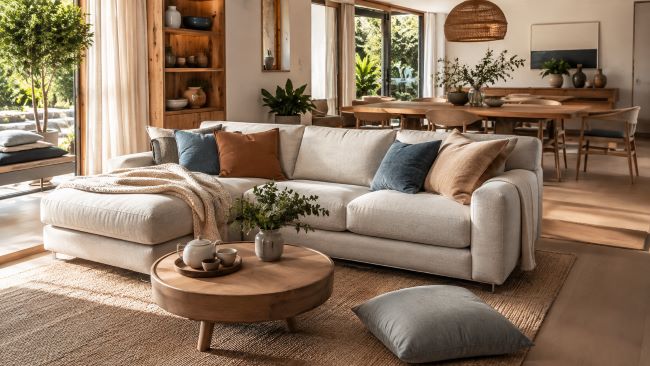
A broad selection of comfy couches for modern living rooms can help compare deep seats, adjustable cushions, recliners, sleepers, modular pieces, leather, and fabric. The useful choice is the one whose function matches the household’s repeated sitting patterns.
Keep a One-Week Sitting Log
For seven days, note who uses the room, where they sit, what they do, and which object they reach for. Record books, drinks, chargers, pillows, blankets, toys, and pet positions.
Do not change behavior for the exercise. The log should reveal the current friction: a lamp on the wrong side, a table out of reach, or one seat that everyone avoids.
Choose Seat Depth by Posture
Upright conversation usually needs back support and feet that can reach the floor or a stable support. Curled-up lounging benefits from more depth and movable cushions.
Measure both positions on existing furniture. A sofa with adjustable back cushions can serve several bodies, but only if the moved cushions remain supportive and have a place when removed.
Place Tables at the Point of Use
Each regular seat needs a safe surface for a drink, book, or device. One large coffee table may not serve a deep sofa because the user’s body sits farther from its edge.
Use a mix of side tables and movable small surfaces. Check stability, edge safety, and walking clearance. A table that looks light but tips under a pet or child is not a useful solution.
Layer Light by Activity
Conversation, reading, screen viewing, and cleaning need different light. Plan an ambient source, a task light near the reading position, and a low evening option.
Sit before choosing lamp height. The bulb should not glare into the eyes or reflect strongly on a screen. Keep cords along fixed routes and away from recliners, sleeper extensions, and traffic.
Leave Clear Paths Around Deep Seating
Tape the full sofa footprint and every extended position. Walk the main route with ordinary objects in hand, not only through an empty room.
Keep access to doors, windows, and other rooms clear. A comfortable seat loses value when the household bumps a table or steps around a footrest on every trip.
Plan for Shared and Private Moments
Face seats toward one another enough for conversation, but allow one chair or sofa corner to turn toward reading or a window. Everyone does not need the same orientation.
Use a light chair or ottoman that can move for larger gatherings. Permanent seating should serve the typical group, while flexible pieces handle occasional visitors without crowding the daily layout.
Give Soft Items a Home
Deep lounging often involves extra pillows and blankets. Store them in a nearby basket, bench, or cabinet so upright seating can be restored without piling items on another chair.
Limit the number to what the household uses. Too many decorative pillows reduce usable seat area and create a setup step before relaxation begins. Comfort should be available when someone sits down.
Match Upholstery to Contact
Pet hair, snacks, children’s use, and direct sun affect the best material choice. Read exact fiber, resistance, cleaning, and care information instead of relying on broad performance labels.
Request a swatch and test hair release, touch, and color in the room. Keep approved cleanup supplies nearby. The maintenance routine should be short enough that people follow it.
Control the Visual Weight
A deep or oversized couch can be balanced with slimmer tables, visible floor, and lighter companion chairs. Curved shapes and exposed legs can soften appearance, but circulation still depends on actual measurements.
Use a rug large enough to connect the seating group. A small rug in front of a large sofa can make both pieces feel isolated. Leave some wall and floor open around the main form.
Include Power and Charging Safely
Powered seats and device charging can reduce cable clutter when outlets are planned. Locate connections where cords do not cross walkways or enter moving mechanisms.
Follow the product’s electrical guidance and keep controls reachable. Do not run loose chargers beneath rugs. Provide a cable destination so convenience does not create a new hazard.
Rehearse a Typical Evening
Before ordering, recreate the taped layout with current chairs, boxes, or cushions. Sit, reach for a drink, switch on a lamp, walk to the kitchen, and imagine another person passing.
Run the rehearsal again with the recliner or sleeper outline open. This small test exposes conflicts that measurements on paper can miss. Move the plan, not the people.
Edit the Room After a Month
Observe which seat remains empty and where objects accumulate. Relocate a lamp or table before buying another storage piece. Remove decor that occupies a useful surface without supporting the room.
The final arrangement should make the most common evening consistently easy for every regular household member spending time at home. A modern living room feels comfortable when posture, reach, light, movement, and material care support real behavior instead of a staged centerline.
Include Sound in the Comfort Plan
Hard walls and bare floors can make conversation and television sound harsh. Upholstery, curtains, rugs, and other soft surfaces absorb some reflection and can make long evenings feel calmer.
Do not cover every surface in the name of acoustics. Add softness where it also serves touch, light control, or floor comfort. If speech remains hard to understand or equipment needs tuning, seek appropriate acoustic or audio guidance rather than raising volume alone.
Prepare for Guests Without Redesigning Daily Life
Keep one light chair, stool, or floor cushion available for an extra visitor, with a defined storage place when not needed. The main sofa layout should continue serving the regular household.
Check that temporary seating has a safe path, a view of other people, and access to a table. Occasional capacity should join the room without blocking doors or pushing the coffee table against someone’s knees.