Best Water Filter for Home
Choosing the best water filter for home depends heavily on what is actually in your water and how much you are willing to spend to remove it. A pitcher filter that costs thirty dollars solves a different problem than a whole house system that costs over a thousand. This guide lists specific, named filters across every category, pitcher, under sink, whole house, and gravity fed, so you can match the right system to your actual water quality concerns and budget.
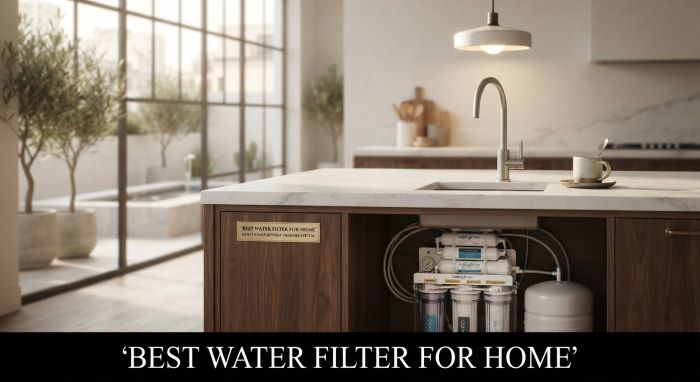
How to Know What You Actually Need
Before buying the best water filter for home, it helps to know what you are filtering out. A basic pitcher filter handles chlorine taste and odor well but does little against heavy metals or dissolved solids. Reverse osmosis systems remove a much broader range of contaminants, including lead, fluoride, and many pharmaceuticals, but they also waste some water in the process and require more maintenance. If you are on well water, a whole house system that addresses sediment, iron, or bacteria before water even reaches your tap is usually the better long term investment.
1. AquaTru Carafe
The AquaTru Carafe brings reverse osmosis filtration to a countertop pitcher format, which is unusual since most reverse osmosis systems require permanent under sink installation. It removes a wide range of contaminants including lead and chromium 6, making it a strong pick if you want RO level filtration without plumbing work.
2. AquaTru Classic
The AquaTru Classic is a larger countertop reverse osmosis unit that filters faster and holds more water than the Carafe. It uses a four stage filtration process and requires no installation, just a nearby outlet, which makes it one of the more convenient options if you want the best water filter for home without hiring a plumber.
3. ZeroWater Pitcher
The ZeroWater pitcher uses a five stage ion exchange filter that reduces total dissolved solids more aggressively than most standard pitcher filters. It comes with a built in TDS meter so you can actually measure your water quality before and after filtering, which is a nice touch for anyone who wants proof the filter is working.
4. Cloud RO Under Sink System
The Cloud RO system delivers reverse osmosis filtration installed directly under your sink, keeping your countertop clear while still providing thoroughly filtered water on demand. It is a strong middle ground option for households that want RO level filtration without a bulky countertop unit.
5. Waterdrop G3 P800 Tankless RO
The Waterdrop G3 P800 is a tankless reverse osmosis system, meaning it filters water on demand rather than storing pre filtered water in a tank. This design saves under sink space and tends to filter faster than older tank based RO systems, making it a popular pick among people upgrading an existing under sink setup.
6. Clearly Filtered 3-Stage Under Sink
This system combines carbon and ion exchange filtration to target a broad spectrum of contaminants, including PFAS chemicals that have become a growing concern in municipal water supplies. It is a solid choice if reverse osmosis feels like overkill for your water quality but you still want more than a basic carbon filter provides.
7. SpringWell CF Whole House System
The SpringWell CF is a tank based whole house filter using KDF and catalytic carbon media to treat water as it enters your home, before it reaches any individual tap or shower. This is the category to consider if you want the best water filter for home to also improve shower water, laundry water, and every faucet at once, not just drinking water.
8. Kind E-3000 Whole House System
The Kind E-3000 uses replaceable cartridges rather than a tank, which some homeowners prefer for easier maintenance. It is designed to handle chlorine, sediment, and a range of common municipal water contaminants across your entire home’s water supply.
9. British Berkefeld Gravity Filter
For anyone who wants filtration that works entirely without electricity or plumbing, the British Berkefeld gravity filter is a dependable pick. Water is poured into an upper chamber and filters down through ceramic elements into a lower chamber, making it useful for off grid living, emergency preparedness, or simply avoiding any installation at all.
10. Brita Elite Pitcher
For a simple, budget friendly entry point, the Brita Elite pitcher remains one of the most widely used water filters in the country. It significantly reduces chlorine taste and odor and is a reasonable starting point if your main concern is how your tap water tastes rather than specific contaminant removal.
Whole House Systems and Your Water Heater
If you are installing a whole house filtration system, it typically gets placed at your home’s main water line, which is also the point where many homeowners consider related plumbing upgrades at the same time. If your water heater is aging or you are coordinating both projects, looking into water heater installation near you alongside your filter install can save you a second visit from a plumber and ensure both systems are set up correctly from the start.
Water Filtration and Indoor Air Quality Go Hand in Hand
Homeowners focused on improving water quality often start thinking about indoor air quality at the same time, and the two are more connected than people expect. Both chlorine byproducts in water and airborne allergens contribute to how healthy your home environment actually is. Understanding the role of air filters in reducing seasonal allergies can help you decide whether to tackle both projects together, since many of the same contaminant sources, like older plumbing and outdated HVAC filters, affect both systems. Similarly, learning how pleated air filters enhance indoor air quality rounds out a broader plan for a healthier home if you are already investing in the best water filter for home.
Pitcher vs Under Sink vs Whole House: Which Is Right for You
If you rent or move frequently, a pitcher filter like the ZeroWater or Brita Elite makes the most sense since it requires zero installation. If you own your home and want consistently filtered drinking and cooking water without countertop clutter, an under sink system like the Cloud RO or Waterdrop G3 P800 is worth the modest installation effort. If you are on well water, have known contaminants like iron or sulfur, or simply want every tap in your house to deliver filtered water, a whole house system like the SpringWell CF or Kind E-3000 is the best water filter for home in the long run, even though the upfront cost is higher.
Maintenance Matters More Than the Filter Itself
Even the best water filter for home stops working effectively if you skip filter replacements. Pitcher filters typically need replacement every two to six months depending on usage, under sink RO systems usually need cartridge changes every six to twelve months, and whole house systems vary depending on your water hardness and household size. Set a calendar reminder when you install any new filter, since a neglected filter can eventually perform worse than no filter at all.
Understanding What Is Actually in Your Tap Water
Before you can choose the best water filter for home with confidence, it helps to know what your municipal water supplier or well is actually delivering. Every public water system in the United States is required to publish an annual water quality report, often called a Consumer Confidence Report, which lists detected contaminants and their concentrations compared to federal safety limits. These reports are usually available directly from your utility’s website with a quick search of your city or county name. If you are on a private well, a report from your municipality will not help, and it is worth paying for an independent water test that checks for common well water issues like iron, sulfur bacteria, nitrates, and coliform bacteria, since well water quality can vary significantly even between neighboring properties.
Reverse Osmosis: What You Gain and What You Lose
Reverse osmosis systems consistently rank among the most effective filtration options overall, since they remove a genuinely wide range of contaminants including lead, arsenic, fluoride, and many dissolved solids that carbon filtration alone cannot touch. The tradeoff is that reverse osmosis systems waste some water during the filtration process, typically producing several gallons of wastewater for every gallon of filtered water produced, though newer tankless models like the Waterdrop G3 P800 have improved this ratio considerably compared to older designs. Reverse osmosis also strips beneficial minerals like calcium and magnesium along with contaminants, which is not a health concern for most people but does change the taste slightly, leading some households to add a remineralization stage or cartridge to restore a more neutral flavor.
Installation: What to Expect
Pitcher filters need zero installation beyond rinsing the cartridge before first use. Under sink systems, including the Cloud RO and Clearly Filtered 3-Stage, typically require drilling a small hole in your countertop or sink for a dedicated faucet, along with connecting to your cold water supply line, a project that many confident do it yourself homeowners complete in an afternoon, though hiring a plumber remains a reasonable option if you would rather not deal with existing under sink plumbing. Whole house systems like the SpringWell CF and Kind E-3000 require the most involved installation, since they get plumbed directly into your home’s main water line, usually near where the line enters your house or basement, and most homeowners hire a licensed plumber for this step to ensure it is done correctly and does not affect your home’s water pressure.
Cost Over Time, Not Just Upfront Price
When comparing systems across categories, factor in ongoing filter replacement costs, not just the purchase price. A thirty dollar pitcher filter might need a ten dollar cartridge replacement every two months, which adds up to sixty dollars a year in ongoing costs. A whole house system with a higher upfront cost often has replacement cartridges that last six months to a year and cost more per cartridge, but the cost per gallon of filtered water is usually lower once you account for the much larger volume a whole house system processes. Calculating cost per gallon rather than sticker price alone gives a more accurate picture of which system is actually the most economical choice for your household’s real water usage.
Common Contaminants and Which Filter Type Handles Them
Different filtration technologies target different contaminants, so it helps to match the filter to the specific concern rather than assuming any filter handles everything equally well. Activated carbon, found in pitcher filters like the Brita Elite and ZeroWater, is effective at improving taste and odor by removing chlorine, but it does relatively little against heavy metals like lead. Reverse osmosis, used in the AquaTru line, Cloud RO, and Waterdrop G3 P800, is the most comprehensive category, removing lead, arsenic, fluoride, nitrates, and many dissolved solids, though at the cost of some water waste during filtration. Ion exchange, often paired with carbon in systems like the ZeroWater and Clearly Filtered 3-Stage, is particularly effective against dissolved solids and certain heavy metals. KDF and catalytic carbon media, used in whole house systems like the SpringWell CF, excel at reducing chlorine and chloramine across your entire home’s water supply, which matters for skin and hair health during showers as much as for drinking water quality.
Renting vs Owning: Does It Change Your Options
Renters often assume whole house or even under sink filtration is off the table, but that is not always true. Countertop reverse osmosis systems like the AquaTru Classic and pitcher filters like the ZeroWater require zero permanent installation and move easily from one apartment to the next, making them the most practical category for anyone who is not sure how long they will stay in their current home. Some under sink systems, including certain configurations of the Clearly Filtered 3-Stage, use a diverter valve that attaches without permanent modification to existing plumbing, which is worth asking about specifically if you rent but still want under sink convenience. Whole house systems generally require homeowner level commitment, both because of the installation involved and because it makes little financial sense to invest in a system you cannot take with you when you move.
Testing Your Water After Installation
Once the best water filter for home is installed, it is worth confirming it is actually performing as expected rather than assuming it works indefinitely without any changes. A simple at home test strip, available inexpensively at most hardware stores, can check basic measures like chlorine and total dissolved solids before and after filtration to confirm the system is doing its job. For anyone with specific health concerns, such as a well with known heavy metal contamination, periodic lab testing through a certified water testing laboratory offers far more precise results than a home test kit and is worth the extra cost every year or two, particularly for households with young children or anyone who is pregnant, since both groups are more sensitive to certain contaminants like lead than the general population.
Questions to Ask Before You Buy
A short checklist helps narrow down the right system quickly. Ask what specific contaminants a filter is certified to reduce, and look for independent certification from organizations like NSF International rather than relying on marketing claims alone. Ask about the expected lifespan of replacement filters or cartridges and their ongoing cost, since this affects the true long term price far more than the upfront purchase. Ask whether installation requires a professional or is genuinely manageable as a do it yourself project, and be honest with yourself about your own comfort level with basic plumbing work. Finally, ask whether the system fits your actual daily water usage, since a small pitcher filter will struggle to keep up with a large family’s demand, while a whole house system may be more capacity than a single renter genuinely needs. Writing these answers down side by side for the two or three systems you are considering makes the final decision far easier than trying to hold every specification in your head while comparing product pages in separate browser tabs.
Key Takeaways
- The best water filter for home depends on your specific water quality issues and whether you want to treat drinking water only or your whole house.
- Reverse osmosis systems like the AquaTru Carafe, AquaTru Classic, Cloud RO, and Waterdrop G3 P800 remove the broadest range of contaminants.
- Pitcher filters like the ZeroWater and Brita Elite are the easiest entry point for renters or anyone avoiding installation.
- Whole house systems like the SpringWell CF and Kind E-3000 treat every tap, shower, and appliance at once.
- Gravity filters like the British Berkefeld work without electricity, making them useful for off grid or emergency situations.
- Coordinate whole house filtration installation with related plumbing projects, such as water heater work, to save time and cost.
- Regular filter replacement matters as much as the initial purchase, since a neglected filter loses its effectiveness over time.