Walking Trails Near Me: How to Find the Right Path for Any Walk
The best exercise is the one you will actually do, and for an enormous number of people, that turns out to be walking. It requires no membership, no special skill, and no equipment beyond shoes, and a good trail turns it from a chore into something you look forward to. The challenge is that “go for a walk” is easy while “find a genuinely good place to walk” takes a little knowledge, since trails vary enormously in difficulty, scenery, surface, and how crowded or safe they are. If you are searching walking trails near me, here is the guide to finding the right path, matching it to your ability, and getting the most out of every walk.
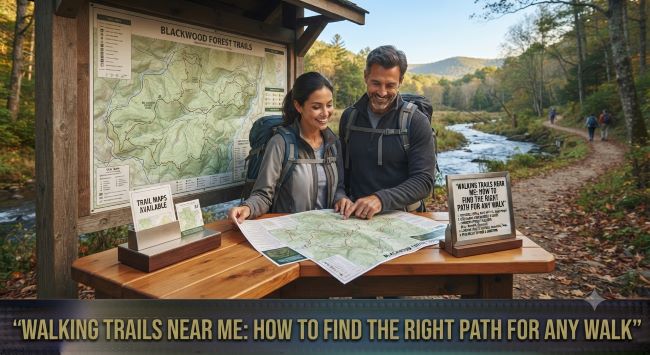
The Types of Walking Trails
Walking trails near me are not all the same, and knowing the categories helps you find the right fit:
Paved multi-use paths. Smooth, flat, accessible paths (often rail-trails or greenways) shared with cyclists and runners. Ideal for easy walking, strollers, wheelchairs, and all fitness levels.
Park and nature trails. Unpaved paths through local, regional, and state parks, ranging from flat and easy to hilly and rugged. The most common and varied category.
Urban walking routes. City greenways, waterfront paths, and neighborhood loops, convenient and often scenic without leaving town.
Nature preserves and wildlife areas. Quieter trails through protected land, better for solitude and wildlife.
Hiking trails. More rugged paths with elevation and natural terrain, shading into hiking rather than casual walking.
Loop vs. out-and-back. Loops return you to the start via a different route; out-and-back trails you reverse. Loops offer variety; out-and-back lets you turn around whenever you have gone far enough.
How to Find the Best Local Trails
The walking trails near me search rewards using the right tools:
- Trail apps like AllTrails are the single best resource, with trail maps, difficulty ratings, distances, elevation, photos, and reviews from other walkers. Filtering by difficulty, length, and features (dog-friendly, paved, kid-friendly) narrows options fast.
- Local and regional park websites, which list their trails, maps, and amenities.
- City and county parks-and-recreation departments, which maintain greenways and urban paths.
- State park systems for larger natural areas.
- Local walking and hiking groups on social media, which share favorite routes and organize group walks.
- Simply driving or biking your area, since trailheads and greenways are often hiding in plain sight near you.
Reviews and recent photos matter for walking trails near me, since they reveal trail conditions, crowding, safety, and whether a path is currently maintained or overgrown.
Matching the Trail to Your Fitness and Goals
The right walking trails near me depend on what you want from the walk, so match trail to goal:
| Goal | Look For |
|---|---|
| Easy daily exercise | Flat paved paths, short loops |
| Fitness challenge | Hills, elevation gain, longer distance |
| Scenery and relaxation | Nature preserves, waterfront paths |
| Family with kids | Short, flat, interesting trails |
| Solitude | Quieter preserves, off-peak times |
| Accessibility needs | Paved, ADA-accessible paths |
Trail difficulty ratings (easy, moderate, hard) account for distance, elevation, and terrain, so check them against your honest fitness level, especially when starting out. It is better to finish an easy trail wanting more than to struggle up a hard one and dread the next walk.
What to Bring
Even casual walking on the trails benefits from a little preparation:
- Proper footwear, the single most important item. Supportive walking or trail shoes prevent the blisters and soreness that end walking habits.
- Water, especially on longer or hotter walks.
- Weather-appropriate layers, since conditions change.
- Sun protection: hat, sunscreen, sunglasses.
- Phone, for navigation, emergencies, and trail apps.
- A small snack for longer walks.
- Bug spray in warmer months and wooded areas.
For longer or more remote trails, add a downloaded offline map, and tell someone where you are going and when you expect to return.
Walking Safely
A few habits keep any walking trails near me experience safe and enjoyable:
- Stay aware of your surroundings, and keep music at a volume that lets you hear approaching cyclists and others.
- Walk in daylight or well-lit areas, and favor populated trails if walking alone.
- Tell someone your route for longer or remote walks.
- Watch footing on uneven terrain, the most common cause of walking injuries.
- Respect trail etiquette: keep right, pass on the left, and yield appropriately on shared paths.
- Check conditions and weather before heading out, especially for natural trails after rain.
- Carry identification and any necessary medication.
Making Walking a Habit
The real value of finding good walking trails near me is that the right trail turns walking from an obligation into something you genuinely want to do. A few habits build the routine: rotate a few favorite trails to prevent boredom, walk with a friend or group for accountability and enjoyment, use a step or distance goal for motivation, and vary the difficulty to keep progressing. A pleasant, convenient trail you enjoy is worth more than the “best” trail an hour away that you never visit.
Walking also pairs naturally with other local activities, and building it into a broader active lifestyle keeps it fresh. For ideas on rounding out the walking with other options, the suggestions in Fun Things to Do Near Me help turn a single walk into part of a fuller, more active exploration of your area, which is exactly how a walking habit becomes a lasting one rather than a brief resolution.
The walking trails near me search, done well, ends with a handful of go-to routes matched to your fitness, your schedule, and your mood, which is the foundation of one of the most sustainable and rewarding fitness habits there is.
Key Takeaways
- Trail types range from flat paved multi-use paths to rugged nature trails, so match the type to your ability and goals.
- Trail apps like AllTrails are the best resource, with difficulty ratings, distances, photos, and filterable features.
- Check local park websites, parks-and-recreation departments, and state park systems for maps and amenities.
- Match the trail to your goal: flat paved paths for easy exercise, hills for a challenge, preserves for solitude.
- Check difficulty ratings honestly against your fitness, since finishing an easy trail beats struggling on a hard one.
- Bring proper footwear above all, plus water, weather layers, sun protection, and a phone.
- Walk safely: stay aware, favor daylight and populated trails when alone, tell someone your route, and watch your footing.
- Rotate favorite trails, walk with others, and pair walking with other local activities to make it a lasting habit.