Best Camping Gear Checklist: Everything You Actually Need to Pack
Every experienced camper has a story about the one thing they forgot. The tent poles left in the garage. The lighter that ran out on night one. The realization at 2 a.m. that a 45-degree sleeping bag does not work at 38 degrees. Those stories are why checklists exist, and why the best camping gear checklist is not the longest one but the one organized so nothing essential slips through. This guide covers the categories, the genuinely essential items in each, what you can skip, and the small things that turn a rough trip into a comfortable one.
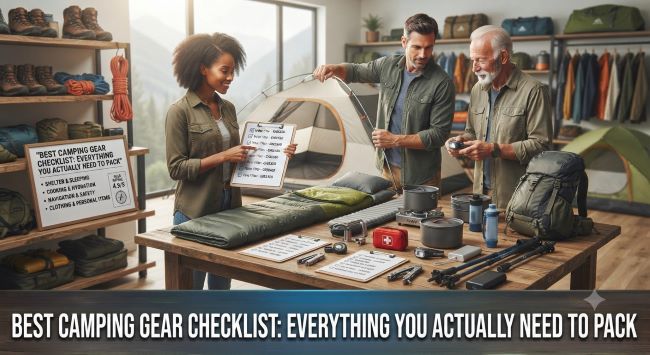
Start With the Trip Type
Before packing anything, know what kind of camping you are doing, because the gear list changes enormously between them. Car camping at a developed campground with bathrooms and a picnic table is a completely different packing exercise than backcountry backpacking, winter camping, or overlanding. The gear weight tolerance alone reshapes every decision: car campers can bring a cooler and a camp chair, while backpackers count ounces on a toothbrush handle. Understanding the different Types of Camping first tells you which version of this checklist applies to your trip.
This checklist assumes car camping at a campground, with notes for adjusting to backpacking.
Shelter and Sleep System
The best camping gear checklist starts here, because this category determines whether you sleep or suffer:
- Tent with rainfly, poles, and stakes (count them before leaving)
- Ground tarp or footprint to protect the tent floor
- Extra stakes and guylines, since the included ones bend
- Sleeping bag rated at least 10 degrees below the coldest expected night temperature
- Sleeping pad (this matters more than the bag for warmth, since ground conduction steals more heat than air)
- Pillow (camp pillow or a stuff sack filled with clothing)
- Extra blanket for shoulder-season trips
- Mallet or hammer for stakes in hard ground
The pad-versus-bag insight deserves emphasis on any best camping gear checklist: campers routinely blame a cold night on their sleeping bag when the actual culprit is an inadequate pad. R-value on the pad is the specification that matters for cold-weather comfort.
Camp Kitchen
Food logistics make or break morale:
- Camp stove and fuel (bring more fuel than you calculate needing)
- Lighter and waterproof matches, both
- Cookware: pot, pan, and a lid
- Utensils: spatula, long spoon, tongs, knife, cutting board
- Eating gear: plates, bowls, cups, utensils per person
- Cooler with ice or ice packs
- Water containers and a water filter or purification method
- Dish washing kit: biodegradable soap, sponge, dish towel, wash basin
- Trash bags (pack it in, pack it out)
- Food storage: bear canister or hang bag where required, sealed containers everywhere
- Coffee method (the item most likely to prevent a morning mutiny)
- Aluminum foil, paper towels, ziplock bags
Clothing and Layers
The layering system that works in nearly all conditions:
- Base layer (moisture-wicking, never cotton against skin in cold or wet conditions)
- Insulating mid layer (fleece or puffy jacket)
- Shell layer (waterproof and windproof rain jacket)
- Hiking pants plus one warm pair
- Extra socks (more than you think; wet socks ruin days)
- Hat for sun and a warm beanie for night
- Gloves in shoulder seasons
- Camp shoes to change into after hiking
- Sleep clothes dedicated to sleeping only, kept dry
The cotton warning is the most important line in this section of any best camping gear checklist. Cotton holds moisture, loses insulating value when wet, and dries slowly, which turns an uncomfortable situation into a dangerous one in cold conditions.
Safety and Navigation
Non-negotiable on any best camping gear checklist, even for one night at a familiar campground:
- First aid kit with blister care, pain relievers, antiseptic, and any personal medications
- Headlamp per person, plus spare batteries (headlamps beat flashlights because your hands stay free)
- Map and compass, plus downloaded offline maps on your phone
- Fully charged power bank
- Emergency whistle
- Multi-tool or knife
- Fire starter and small kindling
- Sunscreen and insect repellent
- Emergency blanket
- Trip plan left with someone at home, including your location and expected return
Comfort Items That Earn Their Space
The line between adequate and genuinely enjoyable:
| Item | Why It Matters |
|---|---|
| Camp chairs | Sitting on a log for three hours is worse than it sounds |
| Camp table | Prep space when the site has none |
| Lantern | Ambient light beats headlamps for group areas |
| Hammock | The single best afternoon-comfort upgrade |
| Firewood (bought locally) | Never transport firewood between regions |
| Card games or a book | Evenings are long |
| Small broom or brush | Keeping the tent sand-free changes everything |
| Baby wipes | The shower substitute |
The Things Everyone Forgets
The best camping gear checklist earns its keep on these items specifically, because they are exactly the ones that never make an ad-hoc packing list:
- Tent stakes and poles (verify separately from the tent bag)
- Extra lighter
- Can opener
- Duct tape (wrapped around a water bottle to save space)
- Trash bags
- Toilet paper
- Hand sanitizer
- Cash for campground fees, firewood, and ice
- Sunglasses
- Chargers and cables
- Rope or paracord
- Rain cover for backpacks
Adjusting for Backpacking
If you are hiking in rather than driving up, the best camping gear checklist compresses ruthlessly. Drop camp chairs, the table, the cooler, heavy cookware, and most comfort items. Upgrade to a lightweight tent, a compressible sleeping bag, and a small canister stove. Add a properly fitted backpack, trekking poles, and a water filter. Weigh everything, and apply the standard rule that your loaded pack should stay under roughly 20 percent of your body weight for comfortable hiking.
Print this checklist, cross items off as you load the car, and check the tent bag contents before you leave the driveway. The best camping gear checklist is only useful if you actually run it, and running it once at home beats discovering a missing rainfly at 9 p.m. in a downpour.
Key Takeaways
- Identify your camping type first, since car camping, backpacking, and winter camping demand different gear entirely.
- Sleeping pad R-value matters more than sleeping bag rating for staying warm, since ground conduction steals more heat than air.
- Bring more stove fuel than calculated and two ignition sources (lighter plus waterproof matches).
- Layer with a moisture-wicking base, insulating mid, and waterproof shell; never wear cotton against skin in cold or wet conditions.
- Non-negotiable safety gear: first aid kit, headlamp per person plus batteries, map and compass, power bank, and a trip plan left at home.
- Camp chairs, a lantern, a hammock, and baby wipes are the comfort items most worth their space.
- Commonly forgotten items include tent stakes, a can opener, duct tape, toilet paper, cash, and chargers.
- For backpacking, drop comfort items, upgrade to lightweight gear, and keep your loaded pack under roughly 20 percent of body weight.