Plastic Free Coffee Maker: A Complete Buying Guide
A genuinely plastic-free coffee maker has become increasingly sought after by people concerned about both microplastic exposure from hot water contact with plastic components and the broader environmental footprint of disposable or short-lived plastic kitchen appliances. Understanding which brewing methods naturally lend themselves to plastic-free construction, what to actually check before assuming a product is genuinely plastic-free, and the trade-offs between different options helps you find a brewing method that’s both genuinely free of plastic contact and practical for your actual daily coffee routine.
Why People Seek Out Plastic-Free Coffee Makers
Concerns about microplastic exposure from hot water contact. Hot water, particularly water near or at boiling temperature used in coffee brewing, has been shown in various studies to leach microplastics from plastic components at a higher rate than cold water contact, making the hot water brewing context a specific area of concern for people wanting to minimize this particular exposure pathway in their daily routine.
Durability and longevity. Plastic components in standard coffee makers, particularly cheaper plastic parts in budget machines, tend to degrade, crack, or discolor over time with repeated heat exposure, while glass, stainless steel, and ceramic components generally offer meaningfully longer functional lifespans, making plastic-free options appealing from a pure durability and long-term value standpoint beyond just the health and environmental motivations.
Environmental considerations. Reducing reliance on plastic manufacturing and the eventual disposal of plastic components when an appliance breaks down or is replaced aligns with broader sustainability goals many consumers are increasingly prioritizing across their household purchasing decisions.
Brewing Methods That Lend Themselves to Plastic-Free Construction
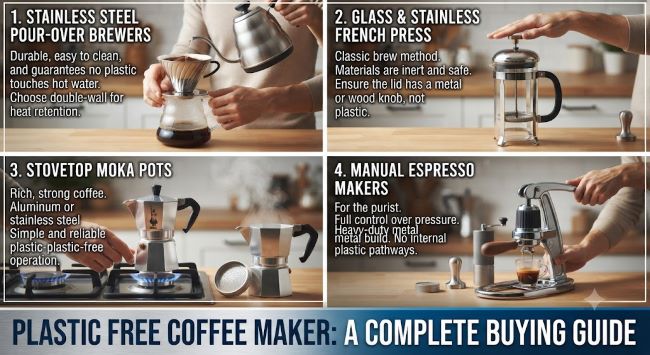
French press. Glass or stainless steel French press models are among the most widely available and genuinely plastic-free brewing methods, since the basic mechanism (steeping coarse grounds in hot water, then pressing a metal mesh filter through to separate grounds from brewed coffee) doesn’t inherently require any plastic components in well-made versions, though it’s worth checking the specific handle and lid knob materials on any individual product, since some otherwise glass or steel French press models still incorporate small plastic components in these specific areas.
Pour-over brewers. Ceramic, glass, or stainless steel pour-over drippers (placed over a mug or carafe with a paper or reusable metal filter) represent one of the most straightforwardly plastic-free brewing categories available, since the brewing mechanism itself is simply gravity-driven water flow through grounds and a filter, without any mechanical or electrical components that might otherwise require plastic housing.
Moka pots. Traditional stovetop espresso makers (moka pots), typically constructed from aluminum or stainless steel, represent another genuinely plastic-free brewing option with a long manufacturing history predating the widespread use of plastic in kitchen appliances entirely.
Percolators. Stovetop percolators, similar to moka pots in their pre-plastic-era design heritage, are typically constructed from stainless steel or aluminum throughout.
Plastic-free electric drip coffee makers. This is the more challenging category to find genuinely plastic-free, since standard electric drip machines typically incorporate plastic housing, water reservoirs, and internal components extensively throughout their design. A small number of manufacturers do produce electric drip machines with glass or stainless steel water reservoirs and minimal plastic in water-contact areas specifically, though achieving a fully 100% plastic-free electric machine, including all internal wiring insulation and housing components, is genuinely difficult to find given how integral plastic components have become to standard electric appliance manufacturing more broadly.
What to Actually Check Before Buying
Read the full product specifications, not just marketing language. Products marketed broadly as “eco-friendly” or “sustainable” don’t always mean genuinely plastic-free, and checking the specific materials list for water-contact components (the parts that actually touch your brewing water and coffee) is more reliable than relying on general marketing claims alone.
Pay specific attention to filter materials. Many brewing methods use paper filters (compostable, generally a reasonable choice for genuinely plastic-free brewing) or reusable metal mesh filters, but some pour-over and drip systems use plastic filter baskets or holders even when the body of the brewer itself is glass or ceramic, making this a commonly overlooked detail worth specifically verifying.
Check handle, knob, and seal components. Even predominantly glass or steel coffee makers sometimes incorporate small plastic components in handles, lid knobs, or gasket seals, which may or may not matter to you depending on whether your specific concern is about water contact specifically (in which case non-water-contact plastic components may be acceptable) or about achieving a more comprehensively plastic-free product overall.
Consider the full brewing accessory ecosystem, including your kettle (if using a pour-over or French press method requiring separately heated water), since achieving a genuinely comprehensive plastic-free coffee routine often requires considering your kettle and grinder alongside the brewing vessel itself, not just the single component most directly labeled as your “coffee maker.”
Top Plastic-Free Options by Brewing Method
French press: Bodum’s stainless steel and glass French press models, and similar offerings from other established kitchenware brands, provide reliable, widely available options in this category.
Pour-over: Hario’s ceramic and glass V60 dripper line, along with various stainless steel pour-over dripper options from multiple brands, represent some of the most popular and widely reviewed choices in this specific category.
Moka pot: Bialetti’s classic aluminum stovetop moka pot remains one of the most established and widely used options in this traditional brewing category, alongside various stainless steel alternatives for those specifically wanting to avoid aluminum contact as well.
Maintaining Your Plastic-Free Coffee Maker
Glass, ceramic, and stainless steel brewing equipment generally require similar basic care: regular cleaning to prevent coffee oil buildup that can affect flavor over time, careful handling of glass components specifically to avoid breakage, and for stainless steel and aluminum components, occasional more thorough cleaning to address mineral buildup from your local water hardness, which can affect both performance and longevity over extended regular use.
For broader strategies on managing your overall food and beverage budget while making more deliberate choices about your daily routines like coffee brewing, how to reduce food spending covers practical approaches worth considering alongside any decision to invest in higher-quality, longer-lasting brewing equipment like the plastic-free options covered here.
Key Takeaways
- People seek plastic-free coffee makers primarily due to concerns about microplastic leaching from hot water contact, the greater durability of glass and metal components, and broader environmental sustainability considerations
- French press, pour-over, moka pot, and percolator brewing methods most naturally lend themselves to genuinely plastic-free construction, since their basic mechanisms don’t inherently require plastic components
- Fully plastic-free electric drip coffee makers are genuinely difficult to find, since standard electric appliance manufacturing relies heavily on plastic housing and internal components throughout
- Always check specific materials for water-contact components rather than relying on general “eco-friendly” marketing language, and pay particular attention to filter materials, handles, and seal components that are sometimes overlooked plastic sources even in predominantly glass or metal products
- Popular reliable options include Bodum glass and steel French press models, Hario ceramic and glass pour-over drippers, and Bialetti’s classic aluminum moka pot
- Consider your full brewing accessory ecosystem, including your kettle and grinder, if achieving a comprehensively plastic-free coffee routine beyond just the primary brewing vessel itself matters to you