Medical Pedicure Near Me: What It Is and How to Find One
A medical pedicure is a fundamentally different service from a spa pedicure, even though both involve foot care. The distinction matters because people seek out medical pedicures for specific foot health reasons — calluses, corns, ingrown toenails, fungal issues, cracked heels — where a cosmetic spa treatment isn’t appropriate or sufficient. Knowing what a medical pedicure actually involves, who should perform it, and where to find one near you helps you make a better decision about your foot care.
What a Medical Pedicure Is
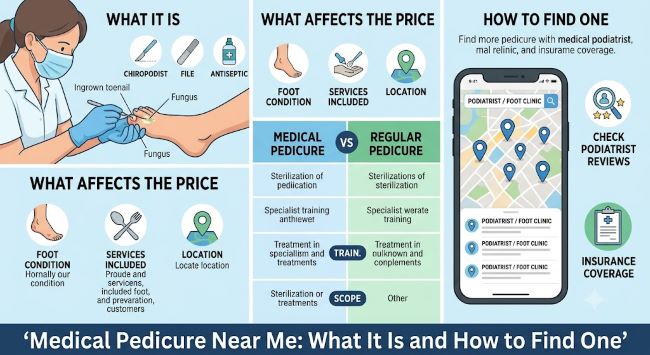
A medical pedicure (also called a medi-pedi, clinical pedicure, or podiatric pedicure) is a foot care treatment performed by or under the supervision of a trained medical foot care professional using sterile, medical-grade instruments. Unlike spa pedicures, which focus primarily on aesthetics and relaxation, medical pedicures address foot health conditions with clinical tools and techniques.
What a medical pedicure typically includes:
Thorough foot assessment. The provider evaluates the overall condition of the feet before beginning, noting any conditions that need special attention or that might contraindicate certain treatments.
Safe nail trimming and shaping. Nails are trimmed and filed correctly — straight across to prevent ingrown nails — using sterile instruments that are either single-use or sterilized between clients via autoclave. This is the most significant safety distinction from nail salons, where instrument sterilization practices vary widely.
Callus and corn removal. Using a medical-grade scalpel or rotary tool, the provider safely removes calluses, corns, and hyperkeratotic (thickened) skin. This is significantly more thorough and precise than the files and pumice stones used in spa settings.
Ingrown toenail treatment. Ingrown toenails can be addressed conservatively (lifting and filing the nail edge) or more definitively in a clinical setting.
Cracked heel treatment. Deep heel fissures that are painful or risk infection are treated with debridement and appropriate moisturizers.
Fungal nail assessment. Discolored or thickened nails can be evaluated and treated with topical antifungals or referred for prescription treatment.
Moisturizing and finishing. After therapeutic work, the feet are moisturized and the nails may be buffed or coated with a breathable finish.
Who Performs Medical Pedicures
The training and credentials of the provider matter significantly. Medical pedicures are performed by:
Podiatrists (DPM). Doctors of Podiatric Medicine are the most highly trained foot health professionals. Some podiatry practices offer medical pedicures as a service alongside medical treatment.
Podiatric nurses and nurses. Registered nurses and licensed practical nurses with specialized foot care training perform medical pedicures in clinical settings, particularly in wound care, diabetic foot care, and geriatric settings.
Certified medical pedicurists. A growing category of professionals who have completed specific training programs in medical foot care, typically including anatomy, pathology, and sterile technique. These providers often work in medical spas or standalone foot care clinics.
Nail technicians with advanced medical pedicure training. Some states allow nail technicians to provide expanded foot care services with additional training. Standards vary significantly by state.
The key question to ask any provider is their specific training and whether instruments are autoclaved between clients.
Who Should Get a Medical Pedicure
Medical pedicures are particularly appropriate for:
People with diabetes. Diabetic neuropathy reduces sensation in the feet, making injuries hard to detect. Poor circulation impairs healing. Standard nail salon pedicures carry meaningful risk for diabetic patients: any nick or cut can become a serious problem. Medical pedicures with sterile instruments and trained clinical oversight are the appropriate standard of foot care for diabetic patients.
People with severe calluses or corns. Calluses that have become thick and painful, or corns that are deep and persistent, benefit from professional debridement that goes beyond what pumice and files achieve.
People with ingrown toenails. Recurring ingrown toenails need more than DIY trimming: a medical pedicure provider can address the underlying nail shape problem and advise on prevention.
People with fungal nail infections. Clinical assessment and appropriate topical or referred prescription treatment is more effective than what a nail salon can offer.
Elderly patients. Reduced mobility, circulation changes, and thickened nails with age make professional foot care more important and a clinical approach more appropriate than salon settings.
Anyone with foot pain or unusual nail or skin changes. These warrant professional assessment rather than cosmetic treatment.
How to Find a Medical Pedicure Near You
Podiatry practices. Search for podiatrists in your area and check whether they offer medical pedicure services. Many practices have added this as a service line. The American Podiatric Medical Association (APMA) has a member finder at apma.org.
Medical spas. High-end medical spas increasingly offer medical pedicures performed by trained clinical staff alongside their aesthetic services. Search “medical spa” in your area and check their service menus.
Diabetic foot care clinics. Clinics specifically serving diabetic patients offer clinical foot care including medical pedicures. Hospitals and diabetes centers often operate these.
Search terms that help: “medical pedicure,” “clinical pedicure,” “medi pedi,” “podiatric pedicure,” and “therapeutic pedicure” all surface different providers depending on your market. Try each term in Google Maps.
Insurance coverage. Routine foot care including nail trimming may be covered under Medicare Part B for qualifying patients (those with diabetes, peripheral vascular disease, or other conditions affecting foot health). Check with your provider and insurance before assuming you’ll pay out of pocket.
What Medical Pedicures Cost
Medical pedicures cost more than spa pedicures because of the clinical expertise and sterile instrument requirements:
Clinical pedicure at a podiatry practice: $60-$150 depending on complexity and location.
Medical spa medical pedicure: $80-$200.
Diabetic foot care visit (if covered by insurance): often covered or with a copay under Medicare/Medicaid for qualifying patients.
The higher cost reflects training, sterile equipment, and genuine therapeutic work rather than cosmetic treatment.
What to Expect at Your First Medical Pedicure Appointment
Your first appointment will typically begin with a health history intake that a standard nail salon doesn’t do. The provider will ask about diabetes or circulation conditions, current medications (blood thinners affect bleeding risk from any sharp instrument near skin), allergies, and any specific concerns about your feet.
The appointment runs longer than a spa pedicure: 45-75 minutes is typical for a complete medical pedicure versus the 30-45 minutes for a standard spa treatment. The pace is deliberate because careful clinical work takes more time than aesthetic treatment.
You may be asked to soak your feet first to soften skin and nails, or the provider may work without soaking depending on what they’re addressing. For callus and corn removal, no anesthesia is needed when the work is done with a properly sharp instrument by a trained professional: most patients are surprised by how little discomfort is involved.
Bring any relevant medical information to your first appointment, particularly if you have diabetes, a blood clotting condition, or are on anticoagulant medications.
Key Takeaways
- A medical pedicure uses sterile, medical-grade instruments and clinical techniques to address foot health conditions: it differs from spa pedicures in safety standards, scope, and clinical training of the provider
- Instruments should be autoclaved between clients: single-use or autoclave-sterilized tools are the standard that distinguishes medical from cosmetic pedicure settings
- People with diabetes, severe calluses, ingrown toenails, fungal nail infections, or foot health concerns should choose a medical pedicure over a standard salon pedicure
- Find medical pedicures near me through podiatry practices (use APMA member finder), medical spas, and diabetic foot care clinics
- Search terms vary by market: try “medical pedicure,” “clinical pedicure,” “medi pedi,” and “therapeutic pedicure” to surface different providers
- Cost ranges from $60-$200 depending on provider type and complexity: Medicare may cover clinical foot care for qualifying patients with diabetes or circulatory conditions