Dolma Grape Leaf Near Me
There’s a moment at every good Mediterranean or Middle Eastern meal when a small plate of stuffed grape leaves hits the table. They’re glossy with olive oil, tight little rolls with a hint of lemon, and gone faster than anyone expects. If you’ve had a great one, you know a bad one when you taste it: mushy rice, tough leaves, and a sour, tinny aftertaste.
So when you type “dolma grape leaf near me” into a search bar, you’re not just looking for any stuffed leaf. You want the good stuff. The trouble is that search results lump together restaurants, delis, and grocery stores with very different quality.
This guide helps you sort them out. You’ll learn the main dolma styles, where to look, what to order, and how to spot a fresh batch before you commit.
What Is a Dolma Grape Leaf?
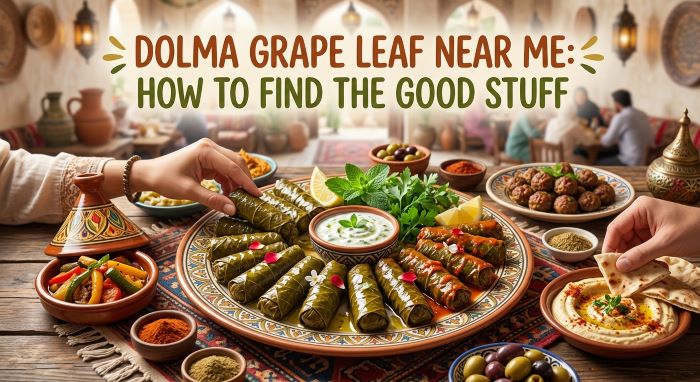
Dolma is a family of stuffed dishes found across Turkey, the Balkans, the Caucasus, Iran, and the Arab world. The word comes from the Turkish verb “dolmak,” which means “to be filled.” Technically, dolma covers stuffed peppers, zucchini, and eggplant too. When most people search for dolma, though, they mean stuffed grape leaves.
In Turkish, rolled grape leaves are often called “yaprak sarma,” where “sarma” means “wrapped.” In Greece, they’re dolmades. In Lebanon and Syria, they’re warak enab. In Armenia, tolma. The idea stays the same: tender grape leaves wrapped around a seasoned filling, then slow cooked until soft.
There are two big categories:
- Olive oil dolma (vegetarian): Rice, onion, herbs like dill and mint, sometimes pine nuts and currants, cooked in olive oil and lemon. Served cold or at room temperature as a starter.
- Meat dolma: Rice mixed with ground lamb or beef, onion, and spices. Served warm, often with yogurt or a lemony sauce.
Popular Styles You’ll Find
Different cuisines put their own spin on the dish. Knowing the styles helps you pick the right restaurant when your dolma grape leaf near me search turns up a dozen options.
| Style | Common Name | Filling | How It’s Served |
|---|---|---|---|
| Turkish | Zeytinyağlı yaprak sarma | Rice, onion, pine nuts, currants, dill, mint | Cold, with lemon |
| Turkish (meat) | Etli yaprak sarma | Rice and ground beef or lamb | Warm, with garlic yogurt |
| Greek | Dolmades | Rice and herbs, sometimes ground meat | Cold or warm, often with avgolemono sauce |
| Lebanese / Syrian | Warak enab | Rice, tomato, parsley, lemon; some versions with lamb | Cold (vegetarian) or warm (with meat) |
| Armenian | Tolma | Ground meat, rice, herbs | Warm, with yogurt |
| Persian | Dolmeh barg | Rice, split peas, herbs, sometimes meat | Sweet and sour sauce |
| Iraqi | Dolma | Mixed stuffed vegetables and leaves, often with meat | Warm, tangy |
If you like a bright, lemony bite, Lebanese warak enab or Turkish olive oil sarma will suit you. If you want something heartier, look for Armenian tolma or Turkish meat dolma with yogurt.
Where to Look for Dolma Grape Leaf Near Me
Stuffed grape leaves show up in more places than you might think. Here’s where to aim your dolma grape leaf near me search.
Turkish Restaurants
Turkish kitchens usually make the best olive oil dolma, since it’s a core part of the meze tradition. Look for it under cold appetizers or meze platters. Many places also offer a warm meat version.
Lebanese, Syrian, and Palestinian Restaurants
These spots often serve warak enab as part of a mezze spread with hummus, baba ghanoush, and tabbouleh. The flavor leans tart, with plenty of lemon and sometimes tomato in the filling.
Greek Tavernas and Diners
Greek restaurants serve dolmades as appetizers, and some top them with avgolemono, a creamy egg and lemon sauce. Quality varies a lot here, so read reviews before you order.
Armenian, Persian, and Iraqi Restaurants
These kitchens tend to serve warm, meat filled versions with richer flavors. Armenian tolma and Persian dolmeh are great if you want dolma as a main course rather than a snack.
Mediterranean Delis and Markets
Many Mediterranean and Middle Eastern grocery stores sell house made dolma by the pound in their deli case. These are often fresher and cheaper than restaurant portions. They also stock canned or jarred dolma, which work in a pinch but rarely match the homemade kind.
Grocery Store Olive Bars
Some larger supermarkets carry dolma at their olive or antipasto bars. They’re convenient, but these are usually the canned variety repackaged. Check the texture before buying in bulk.
Restaurants Serving Great Dolma in Major Cities
These spots stood out for their stuffed grape leaves based on menus and what diners say. Menus change, so call ahead before you go.
New York City
Antalia, Midtown Manhattan (17 W 45th St) A Turkish restaurant where diners single out the dolma, served larger than usual and paired with yogurt. Try them with Ali Nazik, a smoky eggplant and yogurt dish topped with meat.
NAR, Flatiron (34 E 20th St) A modern Turkish and Mediterranean spot. Diners praise the dolma alongside the çiğ köfte, a spicy bulgur starter.
Taci’s Beyti, Sheepshead Bay, Brooklyn (1953 Coney Island Ave) A longtime Turkish favorite. Dolma come as part of a generous mixed meze with hummus, baba ghanoush, and salads.
Washington, DC
Villa Yara, Georgetown (2815 M St NW) A Lebanese restaurant where grape leaves rank among the dishes regulars come back for, along with kibbeh nayyeh and sujuk flatbread.
Chicago
Antepli Mediterranean Grill, Lincoln Square (5324 N Kedzie Ave) A Turkish grill with grape leaves on the starter menu. Pair them with lentil soup and an Adana kebab wrap.
Los Angeles Area
Adana Restaurant, Glendale (6918 San Fernando Rd) An Armenian and Persian kitchen in a city known for its large Armenian community. Diners name the dolma as a crowd favorite among the appetizers.
San Francisco
Yemeni Kabab & Mediterranean, Tenderloin (39 Taylor St) A budget friendly spot where dolma arrive on a big appetizer platter with falafel, hummus, and baba ghanoush.
How to Tell Fresh Dolma From Tired Ones
When you find a dolma grape leaf near me option that looks promising, use these checks before you commit to a big order:
- Tight, even rolls. Good dolma are rolled snug, about the size of a finger, with no loose leaf ends.
- Tender leaves. The leaf should bite through easily. Tough or stringy leaves mean they weren’t cooked long enough or the leaves were poor quality.
- Distinct rice grains. The filling should hold together, but you should still see individual grains. Mushy, paste like rice is a red flag.
- Glossy, not soggy. A light sheen of olive oil is good. A pool of liquid underneath suggests they’ve been sitting too long.
- Bright flavor. You should taste lemon, herbs, and a little sweetness from onion or currants. A metallic or briny taste often points to canned dolma.
If you’re buying from a deli, ask when the batch was made. Most places will tell you, and same day or next day is ideal.
How to Order Like a Regular
Once your dolma grape leaf near me search points you to a promising spot, a few tips help you get the most from your visit:
- Ask which version they make. Some restaurants serve both cold vegetarian and warm meat dolma. If the menu doesn’t say, ask.
- Request yogurt on the side. Even cold dolma pair nicely with garlic yogurt.
- Order as part of a meze or mezze platter. You’ll get to try dolma alongside dips, salads, and bread.
- Squeeze fresh lemon. If your plate comes with lemon wedges, use them. Acid brightens the whole dish.
- Buy extra to take home. Olive oil dolma keep well in the fridge for a few days and make an easy lunch.
Search Tips for Better Results
To get more useful results from your dolma grape leaf near me search, try these approaches:
- Use multiple names. Search “stuffed grape leaves,” “dolmades,” “warak enab,” “yaprak sarma,” and “tolma” along with your city or neighborhood.
- Search by cuisine. Try “Turkish restaurant,” “Lebanese restaurant,” or “Armenian bakery” near you, then check their menus.
- Read recent reviews. Look for comments that mention dolma or grape leaves by name, especially ones that describe them as homemade.
- Check photos. Menu photos and customer pictures show you portion size and whether the rolls look fresh.
- Look for Mediterranean markets. Many neighborhoods have small grocery stores with excellent house made dolma that don’t show up high in restaurant searches.
If you enjoy exploring regional comfort dishes, you might also like this guide to the Best Ropa Vieja Canaria Near Me, a hearty Canary Islands stew with its own loyal following.
Making Dolma at Home
If your dolma grape leaf near me search doesn’t turn up anything good, homemade dolma is easier than it looks. You’ll need:
- A jar of brined grape leaves or fresh young grape leaves
- Short or medium grain rice
- Onion, olive oil, lemon, and salt
- Fresh dill, mint, and parsley
- Optional: pine nuts, currants, allspice, or ground meat
Basic steps:
- Rinse brined leaves well to remove extra salt. If using fresh leaves, blanch them for a minute or two.
- Sauté onion in olive oil, add rice, herbs, and spices, and cook briefly.
- Place a spoonful of filling near the stem end of each leaf, fold in the sides, and roll tight.
- Pack the rolls seam side down in a pot lined with extra leaves.
- Add water, lemon juice, and olive oil, then weigh the rolls down with a plate.
- Simmer gently for 40 to 50 minutes, until the rice is tender.
- Let them cool in the pot for the best texture.
Homemade dolma taste even better the next day, after the flavors settle.
Final Thoughts
Good stuffed grape leaves are worth seeking out. Turkish, Lebanese, Greek, Armenian, and Persian kitchens each offer their own take, and Mediterranean markets often sell fresh batches by the pound. Use the checks above to spot quality, ask a few simple questions, and you’ll find a dolma grape leaf near me result that’s worth coming back to.
Key Takeaways
- Dolma are stuffed dishes from Turkey, the Balkans, the Caucasus, Iran, and the Arab world. Most people searching for dolma mean stuffed grape leaves.
- The two main types are cold olive oil dolma with rice and herbs, and warm meat dolma, often served with yogurt.
- Regional names include yaprak sarma (Turkish), dolmades (Greek), warak enab (Lebanese and Syrian), tolma (Armenian), and dolmeh (Persian).
- The best places to look are Turkish, Lebanese, Greek, Armenian, and Persian restaurants, plus Mediterranean delis and markets.
- Standout restaurants include Antalia, NAR, and Taci’s Beyti in New York, Villa Yara in DC, Antepli in Chicago, Adana in Glendale, and Yemeni Kabab & Mediterranean in San Francisco.
- Fresh dolma have tight rolls, tender leaves, distinct rice grains, and a bright lemon and herb flavor. Mushy rice or a metallic taste often signals canned dolma.
- Search with several names, such as “stuffed grape leaves,” “warak enab,” and “dolmades,” and check recent reviews and photos.
- Ask whether a restaurant serves vegetarian or meat dolma, and request garlic yogurt and lemon on the side.
- Homemade dolma are simple to make with brined grape leaves, rice, herbs, olive oil, and lemon, and they taste even better the next day.